Motor Vehicle Accident Rehabilitation: Your Essential Recovery Checklist
With over 300,000 motor vehicle accidents occurring annually in Ontario, the transition from a sudden collision to a structured motor vehicle accident rehabilitation process is a path far too many residents must walk. If you’re currently dealing with the persistent fog of a concussion or the sharp restriction of whiplash, the physical pain is often compounded by the stress of administrative hurdles. You might find yourself staring at complex OCF-1 and OCF-18 forms, wondering how to secure the support you need while worrying about your long-term ability to return to work. It’s a heavy burden, and it’s one you shouldn’t have to carry alone.
We believe that effective recovery requires a sophisticated balance of clinical precision and proactive advocacy. You deserve a process that is transparent, evidence-based, and focused on your unique musculoskeletal needs. This article provides a comprehensive checklist designed to simplify the Ontario recovery landscape. We’ll preview the essential milestones of your healing journey, explain the significant impact of the July 2026 insurance reforms, and show you how a collaborative, multi-disciplinary approach can help you regain your mobility and peace of mind.
Key Takeaways
- Navigate the complexities of the Ontario insurance system, including the Statutory Accident Benefits Schedule (SABS), to secure the coverage necessary for your recovery.
- Identify the clinical signs of often-overlooked injuries like concussions and whiplash to ensure your motor vehicle accident rehabilitation plan is comprehensive and effective.
- Discover the benefits of an integrated care model that combines physiotherapy, chiropractic care, and registered massage therapy for a more efficient return to wellness.
- Use our essential recovery checklist to manage every step of the post-collision process, from seeking immediate medical attention to notifying your insurance provider.
- Learn how professional clinical support can streamline your administrative burden by handling complex HCAI billing on your behalf.
Understanding Motor Vehicle Accident Rehabilitation in Ontario
Motor vehicle accident rehabilitation is a specialized branch of Physical medicine and rehabilitation specifically designed to address the unique musculoskeletal and neurological trauma caused by a collision. It isn’t a single treatment; instead, it’s a multi-disciplinary effort that integrates physiotherapy, chiropractic care, and massage therapy to restore your functional independence. In Ontario, this process is governed by the Statutory Accident Benefits Schedule (SABS). Every treatment plan must be submitted through the Health Claims for Auto Insurance (HCAI) system, which is the digital gateway connecting your healthcare team to your insurance provider.
Recent changes to Ontario auto insurance, effective July 1, 2026, have shifted the landscape significantly. Auto insurance is now the “first payer” for medical and rehabilitation benefits. This means your car insurance policy must be exhausted before you can access any private workplace health plans. Understanding these regulatory nuances is essential to ensure your care remains uninterrupted and fully funded.
The Importance of Early Intervention
Waiting for pain to “just go away” is a risky strategy that often leads to chronic dysfunction. Soft tissue injuries, particularly those involving the spine or joints, can result in long-term mobility issues if scar tissue is allowed to form without professional guidance. Early clinical documentation is also the backbone of a successful insurance claim. When you seek an assessment immediately after a collision, you create a clear timeline of injury that insurers require to validate your need for care. Starting gentle, evidence-based movement shortly after an accident helps maintain blood flow to damaged tissues, reduces inflammation, and prevents the development of secondary compensation patterns in your body.
Navigating the Minor Injury Guideline (MIG)
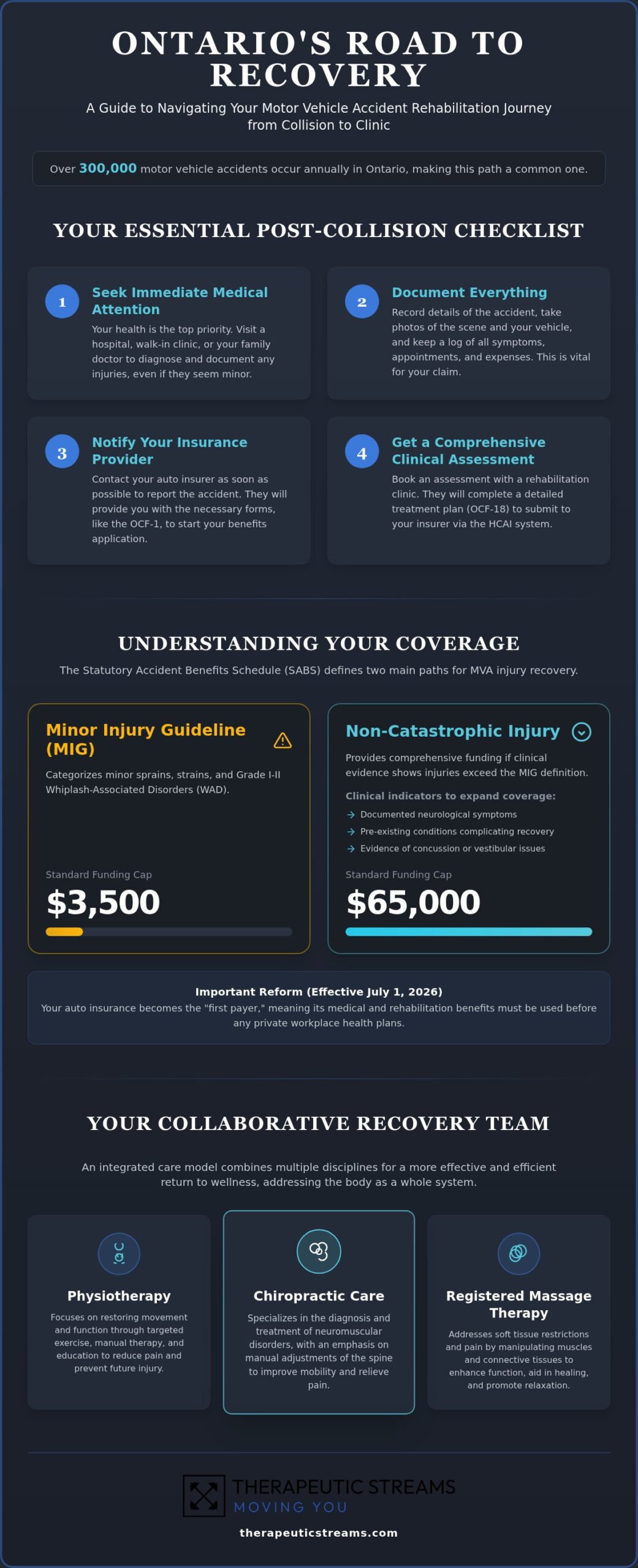
The Minor Injury Guideline (MIG) is a framework used by Ontario insurers to categorize injuries like simple strains, sprains, or grade I and II whiplash. If your injuries fall within this category, your funding for treatment is typically capped at $3,500. While this amount covers initial care, many patients require more intensive support to achieve a full recovery. Your clinical team at Therapeutic Streams acts as your advocate during this process. We look for specific clinical indicators, such as:
- Neurological symptoms like numbness or radiating pain.
- Pre-existing medical conditions that might complicate your recovery.
- Evidence of a concussion or vestibular dysfunction.
If these complexities are documented, we can assist in moving your claim into the non-minor injury category. This transition expands your available funding to the $65,000 limit for non-catastrophic injuries, ensuring you have the resources needed for a comprehensive recovery journey.
Identifying Common MVA Injuries: Beyond Whiplash
While whiplash is the most frequently cited injury following a collision, a sophisticated motor vehicle accident rehabilitation plan must account for a much broader spectrum of trauma. The kinetic energy of a crash affects the body in layers, often impacting the spine, internal organs, and the central nervous system simultaneously. It isn’t uncommon for patients to present with a combination of musculoskeletal strain and neurological deficits that require a highly coordinated clinical response.
Whiplash-Associated Disorders (WAD) are typically categorized by their clinical severity. Grade I involves subjective stiffness and pain; Grade II includes musculoskeletal signs like point tenderness and decreased range of motion; Grade III involves neurological symptoms such as diminished reflexes or muscle weakness. Beyond the cervical spine, many individuals suffer from significant lower back pain caused by the lumbar spine compressing against the seat. Seatbelt-related bruising on the chest or abdomen is also a common indicator of the high forces involved, which can lead to deeper soft tissue restrictions.
We also prioritize the psychological dimension of recovery. Driving-related anxiety or post-traumatic stress can create a cycle of physical guarding and muscle tension. Addressing these concerns is a vital part of the healing process, as mental distress can significantly amplify the perception of physical pain and delay a return to daily activities.
Concussion and Vestibular Concerns
The sudden deceleration of a car crash often causes the brain to move rapidly within the skull, resulting in a concussion or mild traumatic brain injury (mTBI). These conditions are frequently overlooked because standard X-rays and imaging are designed to detect bone fractures rather than functional brain deficits. Symptoms like light sensitivity, persistent mental “fog,” or a loss of balance suggest that the inner ear and balance centres have been disrupted. For patients experiencing these challenges, specialized vestibular therapy is essential to recalibrate the body’s orientation and reclaim cognitive clarity.
Soft Tissue and Nerve Damage
Many people feel relatively fine immediately after an accident, only to experience a significant increase in pain 48 hours later. This delayed onset is the result of systemic inflammation as the body attempts to stabilize injured ligaments and tendons. In more severe cases, spinal compression can lead to radiculopathy, which manifests as shooting pain or tingling that radiates into the extremities. To accelerate the repair of these stubborn injuries, we often incorporate shockwave therapy to stimulate cellular regeneration and break down restrictive scar tissue. If you’re noticing new symptoms in the days following your accident, booking a comprehensive assessment is the first step toward preventing long-term complications.
The Integrated Care Model: Why One Discipline Isn’t Enough
A motor vehicle accident is a systemic event that impacts the body across multiple layers. Relying on a single discipline often results in an incomplete recovery, as different tissues require different clinical interventions. Effective motor vehicle accident rehabilitation thrives on a collaborative model where various experts synchronize their efforts to address the whole person. This “team approach” ensures that your chiropractic adjustments, physiotherapy exercises, and massage therapy sessions work in harmony rather than in isolation.
Modern clinical standards distinguish between passive and active treatments. Passive modalities, such as heat, ice, or TENS, are useful for immediate pain modulation but do not address the underlying cause of dysfunction. Active rehabilitation, which includes guided exercise and patient education, empowers you to regain control over your mobility. Evidence-based research into complex trauma recovery suggests that patients who engage in a multi-modal plan-combining manual therapy with active movement-experience a more efficient and lasting return to their pre-accident lifestyle.
Physiotherapy and Chiropractic Synergy
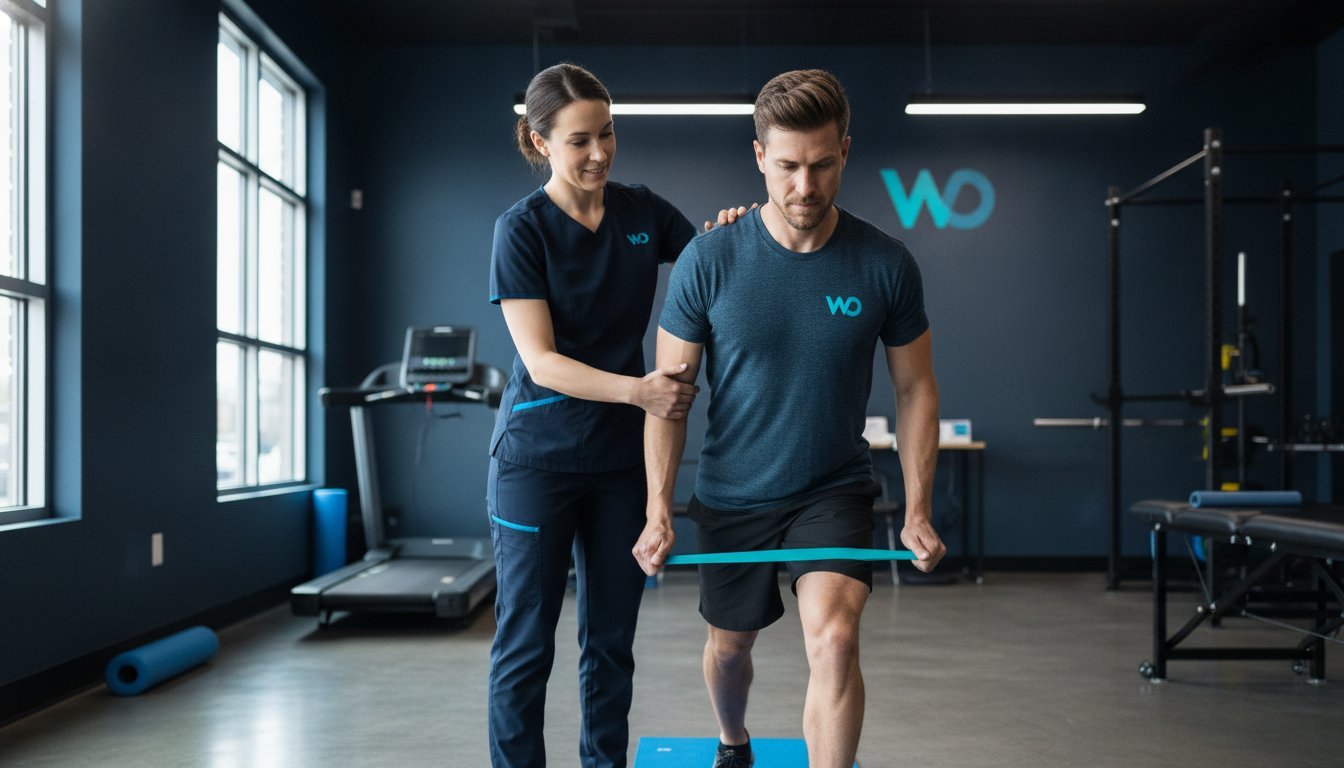
Expert Whitby chiropractors focus on restoring joint mechanics and nervous system integrity, while physiotherapists specialize in muscle function and movement patterns. This synergy is powerful. When both assessments occur under one roof, there is no risk of conflicting advice or overlapping treatments. Consider a complex hip injury: a chiropractor may ensure the sacroiliac joint is moving correctly, while the physiotherapist develops a targeted strengthening program to support that new-found mobility. This integrated approach ensures every facet of the injury is managed with clinical precision.
The Role of Registered Massage Therapy (RMT)
The physiological impact of a collision extends beyond physical bruising. High cortisol levels and chronic muscle tension are common barriers to healing. Registered Massage Therapy serves as a medical necessity in the MVA context, moving beyond simple relaxation to address deep tissue restrictions and myofascial pain. By modulating the nervous system and reducing protective muscle guarding, RMT prepares your body for the more demanding phases of rehabilitation. It ensures that when you begin your physiotherapy exercises, your tissues are pliable and your pain levels are manageable, allowing for deeper and more effective movement.
The Essential MVA Rehabilitation Checklist: Collision to Clinic
The moments following a collision are often a blur of adrenaline and stress. While your immediate focus may be on vehicle repairs, your physical recovery requires a structured clinical roadmap. Following a precise checklist ensures that your motor vehicle accident rehabilitation starts without delay and that your insurance coverage remains secure. This proactive approach prevents administrative errors from hindering your access to essential care.
- Step 1: Seek Medical Attention. Visit an emergency room or your family physician immediately. Even if pain feels minor, a medical record of the event is vital for your health and your claim.
- Step 2: Notify Your Insurer. Contact your auto insurance provider to initiate an “Accident Benefits” claim. They will assign an adjuster to your case.
- Step 3: Submit the OCF-1. Complete the Application for Accident Benefits (OCF-1) as soon as possible. This form is the key that unlocks your funding.
- Step 4: Book Your Assessment. Schedule a comprehensive evaluation at an integrated clinic like Therapeutic Streams. Our team specializes in documenting the complexities of MVA injuries.
- Step 5: Approve the OCF-18. We will collaborate with you to submit the Treatment and Assessment Plan (OCF-18). This document outlines our evidence-based strategy for your recovery and seeks funding approval from your insurer.
Insurance Documentation Simplified
Managing paperwork can feel overwhelming when you’re dealing with pain. In the first 30 days, the OCF-1 is your primary focus, but you must also track all out-of-pocket expenses. Keep a detailed log of medication costs and mileage for trips to and from your appointments. These incidental costs are often reimbursable under your policy. During your clinical assessment, total transparency is your best asset. Being thorough about your symptoms, including cognitive fog or sleep disturbances, allows us to build a more accurate case for the level of care you truly require.
Preparing for Your First Assessment
Your first visit is the foundation of your recovery. To make the most of this time, bring your insurance claim number, your adjuster’s contact information, and any discharge papers from the hospital. Wear comfortable, loose-fitting clothing that allows our clinicians to examine your range of motion and assess the injured areas directly. The Initial Assessment is a 60-minute deep dive into your physical and neurological health that allows us to craft a personalized recovery strategy. To begin this process with an expert team, you can book your assessment at Therapeutic Streams today and let us handle the administrative heavy lifting.
Personalized MVA Recovery at Therapeutic Streams in Whitby
Choosing the right environment for your motor vehicle accident rehabilitation can make the difference between a frustrating plateau and a successful return to your active lifestyle. At Therapeutic Streams, we reject the “assembly line” model of healthcare. You’ll never experience double-booking or rushed 15-minute windows. Instead, we prioritize dedicated one-on-one sessions that allow our clinicians to focus entirely on your physiological progress and clinical goals. This focus ensures that every manual therapy technique and guided exercise is executed with the precision your recovery demands.
We understand that the administrative side of an insurance claim is often as taxing as the physical injury itself. To alleviate this burden, our team handles all HCAI billing directly. We coordinate with your insurance adjuster and manage the submission of all necessary paperwork, ensuring your treatment plans are tracked and updated without you needing to play the middleman. This dedicated advocacy allows you to dedicate your mental and physical energy where it belongs: on your healing journey.
Why Whitby Families Trust Our Integrated Team
Families across the Durham Region, including those in Oshawa, Ajax, and Bowmanville, trust our Whitby facility because of our commitment to evidence-based results. Our integrated team combines the expertise of physiotherapists, chiropractors, and registered massage therapists under one roof. This proximity fosters real-time collaboration, ensuring your care is consistent and thorough. We believe an informed patient is a more successful one. We prioritize education throughout your sessions, empowering you to understand the mechanics of your recovery and the “why” behind every step of your treatment plan.
Beyond the Clinic: Returning to Your Life
Recovery doesn’t end when the acute pain subsides. Our goal is to transition you from clinical rehabilitation back to the activities you love. Whether that involves returning to a demanding workplace or rejoining a competitive sports team, we customize your plan to meet those specific functional milestones. For the local cycling community, we offer specialized BikeFIT Whitby sessions to ensure your return to the road is safe and ergonomically sound. We also provide a clear pathway into functional fitness and group classes to maintain your long-term musculoskeletal health and prevent future relapses.
Your path to wellness starts with a single, professional step. To secure a comprehensive evaluation with a team that acts as your passionate advocate, book your MVA assessment at Therapeutic Streams today and experience the benefits of a dedicated, multi-disciplinary team.
Take the Next Step Toward Your Recovery
Navigating the aftermath of a collision is a significant challenge, but you don’t have to manage it in isolation. Successful motor vehicle accident rehabilitation requires more than just treating symptoms; it demands a structured, evidence-based strategy that addresses both your physical healing and the administrative complexities of the Ontario insurance system. By following a clear recovery checklist and embracing an integrated care model, you can transition from the frustration of persistent pain to the confidence of a full recovery.
Our team at Therapeutic Streams acts as your advocate throughout this journey. We provide a collaborative environment where specialized one-on-one sessions and assessment-driven plans ensure your progress is steady and measurable. We simplify the process by offering direct billing to most major auto insurers, allowing you to focus entirely on your wellness rather than paperwork.
When you’re ready to reclaim your mobility and return to the activities you love, our integrated PT, Chiro, and RMT team is here to support you. Book Your MVA Assessment in Whitby to begin your personalized path to healing. Your recovery is possible, and with the right clinical support, you can thrive again.
Frequently Asked Questions
How soon after a car accident should I start rehabilitation?
You should ideally begin treatment within 24 to 72 hours after your collision. Early intervention is crucial for managing systemic inflammation and preventing the development of chronic musculoskeletal issues. Starting your motor vehicle accident rehabilitation quickly also ensures that your clinical team can document your symptoms accurately from the outset. This early record is essential for validating your insurance claim and securing the funding you need for a comprehensive recovery.
Do I need a doctor’s referral for MVA rehabilitation in Ontario?
You don’t require a physician’s referral to begin treatment at an integrated clinic in Ontario. While your family doctor is a vital part of your healthcare team, you have direct access to physiotherapy, chiropractic care, and massage therapy. We perform a thorough initial assessment to determine your specific needs. We then submit the necessary OCF-18 treatment plan directly to your insurer to ensure your care is authorized without unnecessary delays.
Will my car insurance pay for my physiotherapy and massage therapy?
Yes, your mandatory auto insurance benefits are designed to cover these professional services. As of the July 1, 2026, reforms, auto insurance acts as the “first payer” for medical and rehabilitation expenses. This means your policy covers your treatment before any private or workplace health plans are accessed. We handle the direct billing through the HCAI system, so you don’t have to worry about the financial logistics of your recovery sessions.
What happens if my injuries are more serious than the Minor Injury Guideline (MIG) allows?
If your injuries are complex, your clinical team will document the evidence needed to move your claim out of the Minor Injury Guideline. This transition is vital if you have neurological symptoms, concussions, or pre-existing conditions that complicate your healing. Moving to the “Non-Minor” category increases your available funding from the $3,500 cap to a limit of $65,000, ensuring your motor vehicle accident rehabilitation is fully supported by the necessary resources.
Can I switch clinics if I am not happy with my current MVA treatment?
You have the absolute right to choose your healthcare provider and can switch clinics at any time during your recovery. If you feel your current treatment isn’t meeting your needs or lacks an integrated approach, we can assist with the transition. We handle the administrative transfer through the HCAI system to ensure your care continues seamlessly. It’s your recovery journey, and you deserve a team that acts as your passionate advocate.
How long does a typical motor vehicle accident rehabilitation program last?
Recovery timelines are highly individualized and depend on the severity of your injuries and your pre-accident health status. A typical program for minor injuries often spans approximately 12 weeks of structured care. However, more complex cases involving nerve damage or concussions may require a longer duration. We focus on functional milestones rather than just the calendar, ensuring you’re strong enough to return to your work or sport safely and confidently.
Is vestibular therapy covered under my MVA insurance claim?
Yes, vestibular therapy is a covered benefit if you’re experiencing dizziness, vertigo, or balance issues following a crash. These symptoms often indicate a concussion or a disruption to the inner ear’s balance centres. Since these are recognized functional deficits, they’re included in your rehabilitation funding. We incorporate vestibular exercises into your personalized plan to help you regain your orientation and cognitive clarity as you move through the different phases of recovery.
What if I have driving-related anxiety after my accident?
Driving-related anxiety is a common and valid response to the trauma of a collision. While we don’t provide psychotherapy, our integrated approach recognizes how mental stress creates physical tension and guarding in the body. We work with you to manage the physiological symptoms of anxiety through breathing techniques and gentle movement. Our goal is to support your transition back to daily life, ensuring you feel both physically capable and confident behind the wheel.