Whiplash Treatment After a Car Accident in Whitby: What to Expect
Could a sore neck after a car accident need more than rest? Whiplash symptoms can affect turning your head, driving, working, or sleeping, and discomfort may not be obvious right away. Symptoms can also change over time. If you’re searching for whiplash treatment after car accident Whitby, take new or worsening symptoms seriously and seek prompt medical attention when needed.
It’s understandable to feel unsure about what to do next, especially when pain disrupts your routine and accident-related insurance paperwork adds stress. Start with your safety, then consider care based on your symptoms, comfort, and recovery goals. A clinical assessment can help identify which movements are limited and guide recommendations suited to your needs.
In this article, you’ll learn which symptoms call for urgent evaluation, what to expect during an assessment, and how physiotherapy, chiropractic care, or registered massage therapy may fit into a personalized plan. We’ll also cover practical questions to ask a Whitby provider about documentation and insurance processes, whether you live in Whitby, Ajax, Oshawa, or Bowmanville. Clear information can help you decide on your next steps.
Key Takeaways
- Learn which symptoms after a collision call for prompt medical evaluation and why experiences can vary.
- See how a clinical assessment reviews your symptoms, movement, health history, and everyday concerns to help guide next steps.
- Compare physiotherapy, chiropractic care, and registered massage therapy by their roles, and consider whether coordinated care may suit your needs.
- Use these questions to prepare for whiplash treatment after car accident Whitby, including what to ask about follow-up, provider communication, and insurance documentation.
- Find out how Therapeutic Streams’ Whitby clinic can discuss a personalized plan based on your assessed needs and comfort.
Whiplash After a Whitby Car Accident: Symptoms, Safety, and When to Seek Help
Neck symptoms after a collision deserve attention, even if they seem mild at first. Experiences vary: discomfort may appear soon after an accident or become noticeable later, and not everyone has the same symptoms. An online article can’t determine the cause of your symptoms or rule out a serious injury. If you’re unsure, seek advice from a qualified health professional.
Whiplash-associated disorder is a term used to describe neck symptoms that can follow a rapid back-and-forth movement of the head and neck, such as during a collision. For a general overview of whiplash and its terminology, see Whiplash (medicine).
Which symptoms can follow a car accident?
Possible symptoms include neck pain or stiffness, reduced ability to turn your head, and muscle tension. Some people also report headaches, shoulder discomfort, or difficulty with everyday activities. These symptoms can have different causes, so don’t assume you have whiplash based on a checklist. If concerns persist, worsen, or interfere with driving, work, sleep, or routine movement, arrange an assessment with an appropriate health professional.
Keep a simple record of when each symptom began, how it changes, and which activities affect it. For example, note whether looking over your shoulder while driving or sitting at a desk makes your neck feel worse. These details can help you explain what you’re experiencing during an assessment.
When should you seek urgent medical attention?
Seek emergency medical attention for serious or rapidly worsening symptoms, including loss of consciousness, confusion, repeated vomiting, a severe or worsening headache, new weakness or numbness, difficulty walking, or trouble breathing. Call 911 if you believe you or someone else is in immediate danger or needs urgent help. Don’t wait for a rehabilitation appointment if urgent symptoms are present.
For symptoms that aren’t urgent but remain concerning, contact a physician or another appropriate health professional for advice about next steps. A rehabilitation appointment can help assess musculoskeletal concerns, but it doesn’t replace emergency care or a physician’s assessment when those are needed. When considering whiplash treatment after car accident Whitby, put safety first, then choose care based on an in-person review of your symptoms and needs.
What a Whiplash Clinical Assessment in Whitby Can Help Clarify
A clinical assessment is a structured review of your symptoms, health history, movement, and day-to-day concerns. After a collision, it helps a clinician understand what’s affecting you and consider appropriate next steps. It doesn’t guarantee a diagnosis or a particular recovery outcome, and it can’t replace urgent medical care when that’s needed.
What information should you share at your first appointment?
A clear picture of what you’re experiencing can guide the conversation. Before your visit, jot down:
- The collision date and when each symptom began
- How symptoms have changed since the accident
- Activities or positions that increase discomfort or limit movement
- Other injuries, relevant health history, medications, and any previous assessments
You can ask what each examination step involves and share any concerns about comfort or movement. You may also ask about consent before an examination begins and discuss alternatives if a position or movement feels difficult. A clinician may adjust the assessment to your needs within their professional scope. For general background on whiplash symptoms and causes, consult the Mayo Clinic.
How can the assessment shape a care plan?
Your clinician may review neck movement, comfort, and how symptoms affect activities such as working, sleeping, or turning your head. Recommendations depend on the findings, your goals, and what falls within the clinician’s scope of practice. If your symptoms or assessment findings call for medical attention beyond that scope, the clinician may recommend that you consult a physician or another appropriate provider.
A useful care plan reflects the assessment findings, what matters to you, and how your symptoms and function change over time. Follow-up reassessments can help you and your clinician review those changes and discuss whether the next steps still fit your needs. If you’re considering chiropractic care, learn what to expect from chiropractic care in Whitby, then ask the provider how an assessment will inform recommendations for your situation.
For more information about the clinic’s services, visit the Whitby rehabilitation clinic at Therapeutic Streams. For whiplash treatment after car accident Whitby, bring your notes and questions so you can discuss your needs and next steps.
Whiplash Treatment Options: How to Compare Care Without Guesswork
Chiropractic care, physiotherapy, and registered massage therapy aren’t interchangeable. Each has a different focus, and whether an option is appropriate depends on your clinical assessment, symptoms, goals, comfort, and the clinician’s judgement. Ask for a clear explanation of the proposed approach so you can decide whether it feels like a suitable next step.
A multidisciplinary approach may be considered if your needs involve different aspects of movement or muscle tension. Coordinated care should still have a clear purpose. Ask how each provider’s role relates to your assessment and how they’ll communicate about your plan.
| Care option | Possible role | Questions and suitability factors |
|---|---|---|
| Chiropractic care | May address movement or joint-related concerns identified in the assessment. | What approach do you recommend, and why? Ask whether low‑force mobilization may be an option if forceful techniques aren’t appropriate or aren’t your preference. |
| Physiotherapy | May focus on movement and how symptoms affect everyday function. | How will the plan relate to your goals and current abilities? Ask how progress will be reviewed and what alternatives are available. |
| Registered massage therapy | May address muscle tension or soft tissue concerns, if suitable after assessment. | What will the session involve? Discuss areas of sensitivity, pressure, positioning, and whether hands-on care fits your needs. |
What questions help you compare treatment options?
Before agreeing to treatment, ask how it connects to the assessment findings and the activities you want to manage. Ask what you might feel during or after care, what alternatives are available, and how you and the clinician will review your response. If a proposed technique feels too forceful, raise that concern and ask whether a gentler option, such as low‑force mobilization, is appropriate.
How can comfort and choice shape treatment?
Your comfort matters. You can ask to pause, seek clarification, or discuss a different approach at any point. If lying face down is uncomfortable, ask whether a side-lying position could be considered. Suitability depends on the treatment and your circumstances. Consent is part of the conversation throughout care.
If you’re weighing whiplash treatment after car accident Whitby, base your choices on your own assessment rather than assuming one modality is necessary for every presentation. Learn more about local services at Therapeutic Streams’ Whitby rehabilitation clinic.
Choosing Whiplash Care in Whitby: Booking, Follow-Up, and Insurance Questions
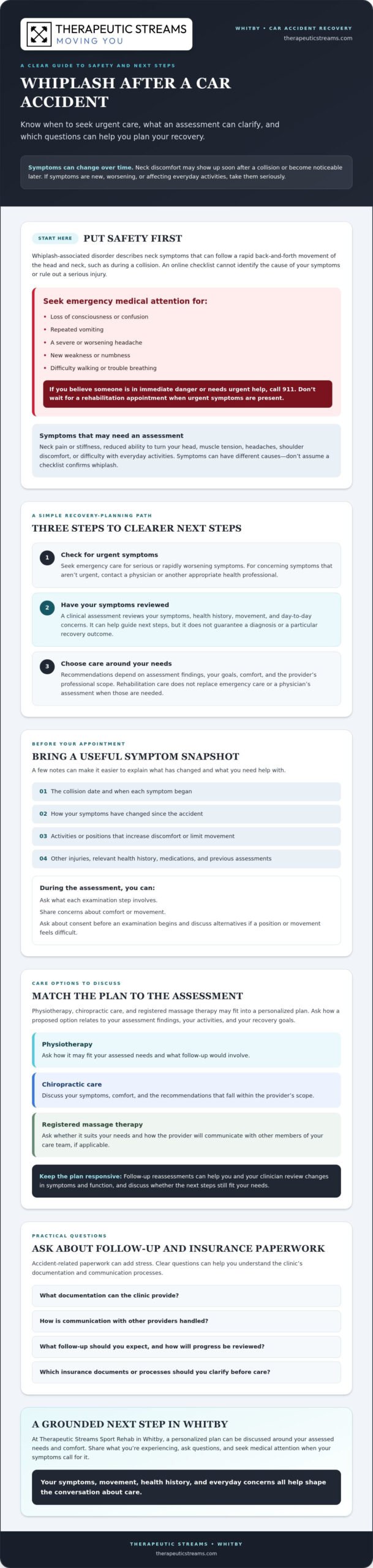
A clear plan can make the next steps feel more manageable. Start with safety: if you have urgent symptoms, seek emergency medical attention rather than waiting for a rehabilitation appointment. For symptoms that need assessment but aren’t an emergency, arrange appropriate care, gather relevant information, and clarify what will happen after your first visit.
What should you ask about accident-related insurance?
Insurance details depend on your policy and circumstances. Contact your insurer to ask which benefits, approvals, provider details, and documents apply to your claim. Don’t assume a particular treatment is covered or that a clinic can submit paperwork on your behalf.
You can also ask Therapeutic Streams which accident-related forms or clinical records it may be able to provide, if any, and how to request them. Confirm these details before your appointment if documentation is important to you. WSIB relates to workplace injury processes, not auto insurance coverage. If the collision happened while you were working, ask the relevant organizations which process applies to your situation.
How can you prepare for care in Whitby?
Bring information that may help the clinician understand your situation, such as collision details, relevant medical records, insurer correspondence, or symptom notes, if available and appropriate. You don’t need to have every document ready to ask for an assessment. A short list of questions can help you make the most of the conversation.
- What does the clinical assessment involve, and what falls within the clinician’s scope?
- How will recommendations relate to my symptoms and goals?
- How will we review my progress and decide on follow-up?
- With my consent, how can the clinic communicate with other providers involved in my care?
- Which insurer forms or clinical records can the clinic provide, if any?
Before treatment begins, discuss your preferences, comfort, consent, and any questions about the proposed approach. Ask what to expect next, including whether the clinician recommends follow-up or consultation with another provider. These conversations can help you make informed choices without assuming that everyone needs the same care.
If you’re looking into whiplash treatment after car accident Whitby, take the process one step at a time: check safety, arrange an appropriate assessment, prepare what you can, and confirm insurance details directly. You can explore care options in Whitby at Therapeutic Streams’ Whitby clinic, serving people from Whitby, Oshawa, Bowmanville, and Ajax.
Whiplash Care at Therapeutic Streams Sport Rehab in Whitby: A Personalized Next Step
Therapeutic Streams is a sports rehabilitation clinic located in Whitby. Its services include chiropractic care, physiotherapy, registered massage therapy, and vestibular rehabilitation. Which option, if any, fits your situation depends on a clinical assessment, your symptoms and goals, and the provider’s professional judgement. The focus is on discussing appropriate next steps, not promising a particular result.
What can you expect from a personalized care discussion?
A clinician can review how your symptoms affect daily activities, what you hope to work towards, and what feels comfortable for you. They can explain how a recommended service relates to the assessment and discuss other options if an approach doesn’t suit your needs. If your assessment points to concerns with balance, ask whether vestibular rehabilitation is relevant to discuss. It isn’t automatically part of whiplash care.
You can ask how treatment choices will be explained, what positioning may be involved, and how you can give or withdraw consent. If lying in a certain position is uncomfortable, ask whether side-lying could be considered for the specific treatment. You can also ask how the clinician will review changes in your symptoms and function over time.
If chiropractic care is being considered, learn more about chiropractic care in Whitby and ask how the proposed approach relates to your assessment findings. A useful discussion should leave you with a clearer understanding of the plan and room to raise concerns before care begins.
How do you take the next step?
If you’re considering whiplash treatment after car accident Whitby, use Therapeutic Streams’ online booking option to check appointment availability. Confirm the appointment details directly with the clinic, including which service may be appropriate for your concerns. If accident-related paperwork matters to you, ask the clinic which forms or clinical records it can provide, if any, and check coverage or approval details with your insurer.
Bring your symptom notes and any relevant records you have, and share what you want help addressing, whether that’s turning your head more comfortably, managing work activities, or discussing sleep disruption. If symptoms change before your appointment or urgent warning signs develop, seek appropriate medical care rather than waiting for rehabilitation.
For a clear conversation about your options and next steps, contact Therapeutic Streams.
Take Your Next Step Towards Whiplash Care in Whitby
After a collision, pay attention to symptoms that persist, worsen, or affect everyday activities. Seek urgent medical attention for serious warning signs, and remember that a rehabilitation appointment doesn’t replace emergency or physician assessment when needed.
A clinical assessment can help clarify how your symptoms affect movement and daily function. Treatment recommendations should reflect those findings, your goals, comfort, and consent. Therapeutic Streams offers chiropractic care, physiotherapy, and registered massage therapy at its Whitby clinic. The right option depends on your individual needs. Ask the clinic and your insurer directly about any accident-related records, forms, or coverage details you need to confirm.
If you’re considering whiplash treatment after car accident Whitby, take the next step with questions and relevant symptom notes ready. Contact Therapeutic Streams about whiplash care in Whitby to discuss your options and confirm appointment details. With an assessment and a plan shaped around your needs, you can move forward with a clearer understanding of your next steps.
Frequently Asked Questions About Whiplash Care in Whitby
Is it normal for whiplash symptoms to appear after a car accident?
Symptoms may not be clear immediately after a collision, but their timing varies from person to person. Neck pain, stiffness, or other changes alone can’t confirm whiplash or show how serious an injury is. Seek prompt medical advice if symptoms are new, worsening, or concerning. For urgent warning signs such as trouble breathing, new weakness, confusion, or loss of consciousness, contact emergency services rather than waiting for a clinic appointment.
Can I get whiplash treatment in Whitby without a doctor’s referral?
Referral requirements can vary by provider, service, and insurer, so ask the Whitby clinic whether you need one for the specific appointment and check your insurer’s requirements. If you live in Oshawa, Bowmanville, or Ajax, note that Therapeutic Streams’ clinic is in Whitby. Concerning symptoms may need medical assessment before rehabilitation care. The clinic can clarify its appointment process when you contact it.
How soon should I seek whiplash treatment after a car accident?
Seek prompt medical assessment if symptoms are concerning, worsening, or accompanied by urgent warning signs. For other symptoms, speak with an appropriate healthcare professional in a timely way rather than waiting a set number of days. If you’re seeking whiplash treatment after car accident Whitby, an assessment can help guide next steps. An online article can’t determine injury severity or replace clinical advice.
What happens at a whiplash assessment in Whitby?
A clinician will typically ask about the collision, when symptoms began, how they’ve changed, your health history, and any effects on daily activities. They may then examine movement or other concerns within their scope of practice. Recommendations depend on the findings and your preferences. You can ask what each step involves, discuss comfort and consent, and ask about alternatives if a movement or position is difficult.
Does auto insurance cover whiplash treatment in Ontario?
Coverage isn’t guaranteed. Benefits and required documentation depend on your policy and claim circumstances. Ask your insurer which benefits, approvals, and provider details apply to your situation. You can also contact the clinic to confirm which accident-related forms or clinical records it can provide, if any. Check these details directly rather than assuming a service is covered or that the clinic can bill your insurer.
Is chiropractic care appropriate for whiplash after a car accident?
Chiropractic care may be considered if a clinical assessment suggests it fits your symptoms, health history, and preferences. Ask the chiropractor to explain the proposed approach, what you may feel, and any alternatives before treatment begins. You can discuss consent and raise concerns about techniques or positioning. If symptoms are concerning or worsening, seek medical assessment rather than assuming chiropractic care is suitable or necessary.
Can whiplash treatment include physiotherapy or massage therapy?
A clinician may consider physiotherapy, registered massage therapy, or another option based on your assessed needs and goals. These services have different purposes, so ask how each recommendation relates to your concerns and whether it fits the care plan. You can also ask how your symptoms and everyday function will be reviewed over time. The appropriate approach varies; not everyone needs the same combination of care.
To discuss assessment and care options at Therapeutic Streams’ Whitby clinic, contact the clinic or book an appointment online.