Therapeutic Streams: Your Integrated Sports Rehab Clinic in Whitby
A nagging ache behind your kneecap stalls your morning run. A persistent stiffness in your lower back makes sitting at your desk a daily challenge. You’ve tried a single approach—maybe massage, maybe an adjustment—but the relief is temporary, the root of the problem still stubbornly in place. This cycle of recurring discomfort is where many journeys to our Whitby clinic begin. It’s also where that cycle ends.
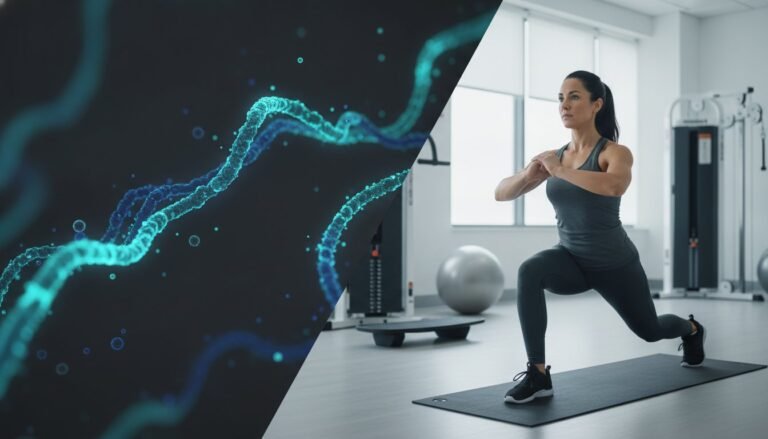
At Therapeutic Streams, our name is our philosophy. We recognize that the human body is a complex, interconnected system, and lasting recovery rarely flows from a single source. Instead, we create a confluence of clinical expertise, where different therapeutic currents—physiotherapy, chiropractic, and registered massage therapy—merge to form a single, powerful stream directed at your health and performance goals.
The Philosophy Behind Our Name: More Than a Clinic
Why “Therapeutic Streams”? The name was chosen to represent a fundamental belief about healing: optimal recovery is rarely linear. It involves addressing multiple systems simultaneously. A tight hip flexor (muscular) might be causing poor pelvic alignment (skeletal), which in turn creates a dysfunctional running gait (biomechanical). Treating just one of these issues in isolation provides incomplete relief. Our model is built to see the entire picture.
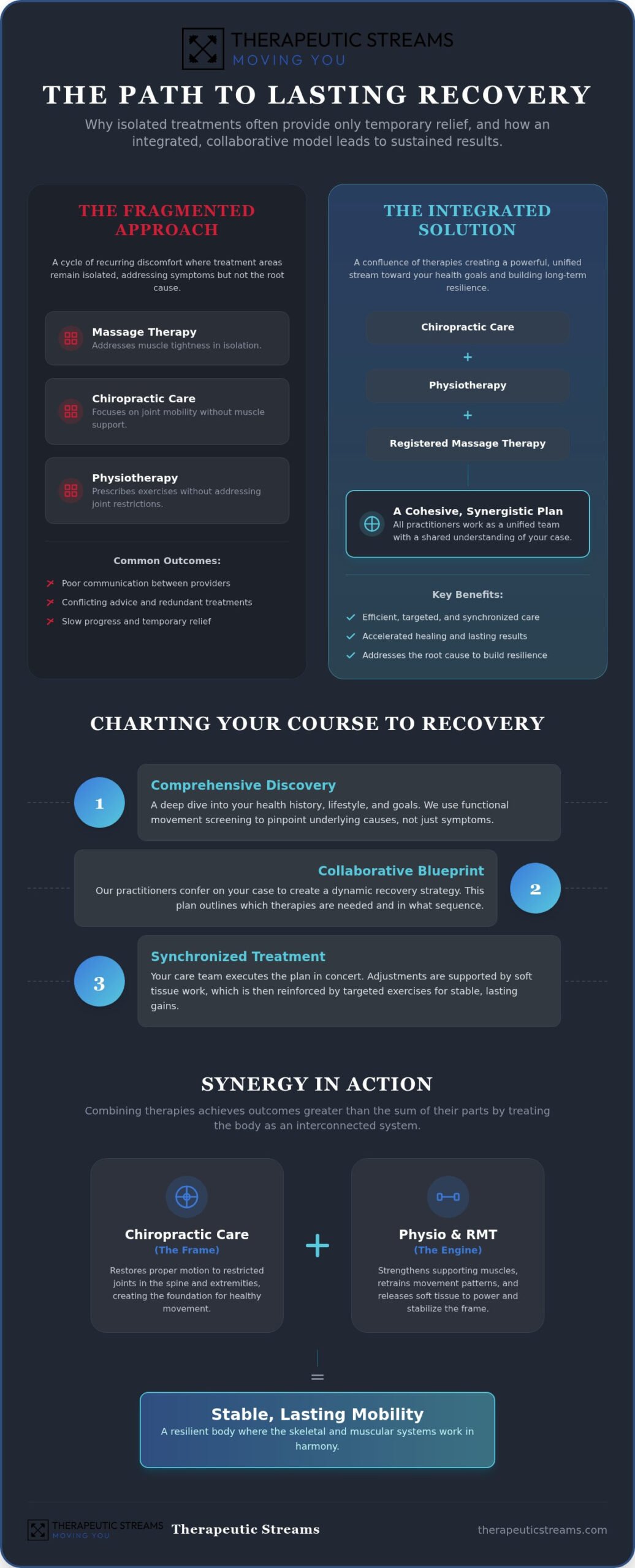
This approach moves beyond simply treating the site of pain. It’s about understanding the complex interplay between your muscles, joints, and nervous system. By integrating different clinical perspectives from the very beginning, we design a recovery plan that is cohesive, efficient, and tailored to your unique physiology. Our practitioners don’t work in silos; they function as a unified team with a shared understanding of your case, ensuring every aspect of your care is synchronized.
From Isolated Fixes to an Interconnected Solution
Many people arrive at our clinic having experienced a fragmented approach to their health. They might see a massage therapist for muscle tightness, a chiropractor for joint mobility, and a physiotherapist for rehabilitative exercises, with little to no communication between the providers. This can lead to conflicting advice, redundant treatments, and slow progress.
The Therapeutic Streams model solves this. Here, your registered massage therapist understands the specific adjustments your chiropractor is making, allowing them to release the corresponding soft tissue. Your physiotherapist knows the mobility gains you’ve achieved and can prescribe exercises that reinforce and build upon that progress. This synergy is the core of our philosophy—a continuous, collaborative flow of care that accelerates healing and builds resilience.
Charting Your Course to Recovery: Our Collaborative Blueprint
Your journey with us begins not with a predetermined treatment, but with a comprehensive discovery process. The initial consultation is the cornerstone of your entire recovery plan. This is a dedicated session with a lead clinician designed to go deep into your health history, lifestyle, and specific goals. We listen to understand not just what hurts, but how it impacts your life. Are you an athlete striving for a new personal best, a new parent navigating postpartum recovery, or a professional seeking to work without pain?
This initial evaluation involves a detailed physical examination, functional movement screening, and a thorough discussion of your objectives. We look at how you move, identify patterns of compensation, and pinpoint the underlying biomechanical or neurological causes of your symptoms. Based on this deep diagnostic dive, we map out a clinical blueprint for your recovery. This plan isn’t a static document; it’s a dynamic strategy that outlines which therapeutic streams are most critical for you and in what sequence.
A Team-Based Approach from Day One
In many cases, your blueprint will involve input from multiple practitioners. For complex conditions like chronic back pain or post-MVA recovery, our physiotherapists and chiropractors may confer on your case to determine the most effective combination of care. For example, a patient with sciatica may benefit from chiropractic adjustments to decompress the lumbar spine, followed by physiotherapy to stabilize the core and correct postural habits that contributed to the issue.
This collaborative planning ensures that your treatment is efficient and targeted from your very first session. It eliminates guesswork and provides you with a clear, logical path forward, with every member of your care team aligned on the strategy and your goals.
The Power of Convergence: How Our Disciplines Work in Concert
The true strength of the Therapeutic Streams model is revealed when our clinical disciplines are applied in concert. By layering and sequencing treatments, we can often achieve outcomes that are greater than the sum of their parts. This integrated approach is particularly effective for stubborn, multi-faceted conditions that haven’t responded to single-modality care.
Research increasingly supports the value of a multi-pronged strategy for complex musculoskeletal issues. For instance, a major systematic review found that multidisciplinary rehabilitation for chronic low back pain was more effective at reducing pain and improving function than standard, single-discipline treatments.
- Source: Kamper, S. J., Apeldoorn, A. T., Chiarotto, A., Smeets, R. J., Ostelo, R. W., Guzman, J., & van Tulder, M. W. (2015). Multidisciplinary biopsychosocial rehabilitation for chronic low back pain. Cochrane Database of Systematic Reviews, (2). https://doi.org/10.1002/14651858.CD000963.pub3
Synergizing Joint Health and Muscle Function
Imagine your body as a high-performance machine. Your skeleton is the frame, and your muscles are the engine. For the machine to run smoothly, both must be in perfect working order. This is where the synergy between chiropractic care and physiotherapy shines.
A chiropractor can use precise adjustments to restore proper motion to a restricted joint in the spine or an extremity. This is a crucial first step, but it’s only part of the solution. If the surrounding muscles have become weak, inhibited, or locked in a pattern of compensation, the joint is likely to become restricted again. This is where physiotherapy comes in. A physiotherapist can design a program of targeted exercises to strengthen the supporting musculature, retrain proper movement patterns, and ensure the mobility gained through chiropractic care is stable and lasting. This dual approach addresses both the “hardware” and the “software” of your body’s movement system.
Preparing the Canvas for Movement
Registered Massage Therapy (RMT) plays a vital role in this integrated model, acting as a facilitator for other treatments. Clinical massage can reduce hypertonicity (excessive muscle tightness), break down adhesions in fascia, and improve circulation to injured tissues. When performed before a chiropractic adjustment, RMT can make the treatment more comfortable and effective by relaxing the muscles that guard a restricted joint.
Similarly, when used in conjunction with physiotherapy, massage therapy can prepare the body for therapeutic exercise. By releasing trigger points and improving tissue pliability, it allows for greater range of motion and more effective muscle activation during rehab exercises. It’s not just about relaxation; it’s about strategically preparing the body’s soft tissues to accept change and adapt to new demands.
Specialized Currents: Advanced Therapies for Persistent Conditions
While our core disciplines form the foundation of most treatment plans, some conditions require more specialized interventions. Therapeutic Streams is equipped with advanced modalities and expertise to manage complex and persistent cases, ensuring we have the right tools for even the most challenging recovery journeys.
Restoring Balance with Vestibular Rehabilitation
Dizziness, vertigo, and balance issues can be debilitating, often stemming from dysfunction in the inner ear’s vestibular system. This can be the result of a concussion, infection, or age-related changes. Our clinicians are trained in vestibular therapy, a specialized form of rehabilitation that uses specific head, body, and eye exercises to retrain the brain and restore equilibrium. For individuals in our community recovering from head injuries or struggling with persistent vertigo, this targeted therapy can be life-changing.
Optimizing Performance with Clinical BikeFIT
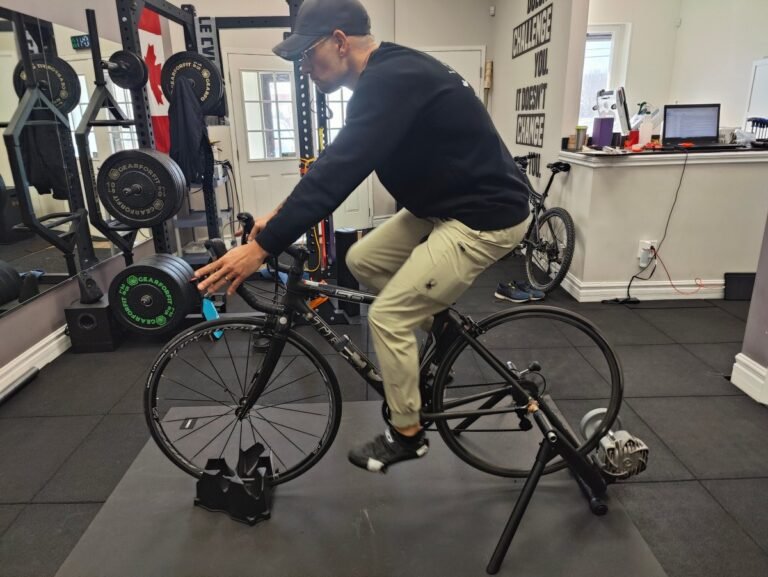
For the avid cyclists in our community, pain or inefficiency on the bike is often a matter of biomechanics. A suboptimal bike setup can lead to repetitive strain injuries in the knees, back, and neck. Our Professional BikeFIT service is a clinical assessment that analyzes your body’s interaction with your bicycle. We make precise adjustments to your bike and provide recommendations for technique and conditioning to improve comfort, enhance power output, and prevent injuries, allowing you to ride longer and stronger.
Targeting Chronic Injury with Shockwave Therapy
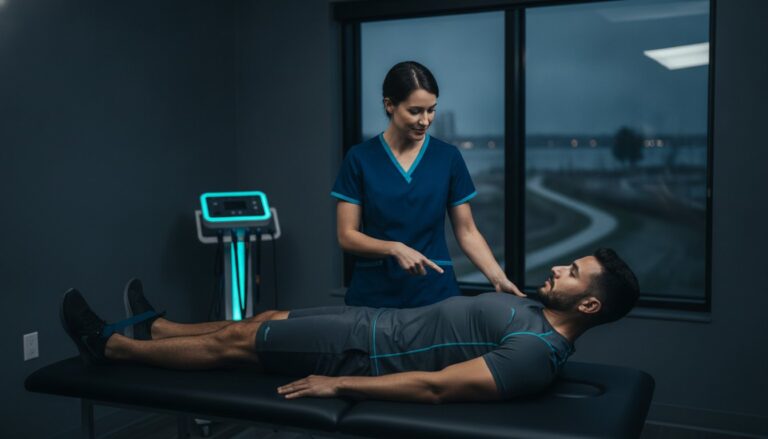
For chronic tendinopathies like plantar fasciitis, tennis elbow, or Achilles tendinitis, Shockwave Therapy offers a powerful, non-invasive solution. This technology uses acoustic waves to stimulate a healing response in stubborn, slow-to-heal tissues. It helps to break down scar tissue, increase blood flow, and accelerate regeneration. When integrated into a comprehensive physiotherapy plan, it can often resolve conditions that have failed to improve with other treatments.
Beyond Treatment: Sustaining Your Momentum
Our ultimate goal at Therapeutic Streams is not just to resolve your current issue, but to empower you with the knowledge and tools to prevent its return. Recovery doesn’t end when the pain subsides; that’s when the work of building resilience begins. We place a strong emphasis on patient education, helping you understand the factors that contributed to your injury and how you can manage them proactively.
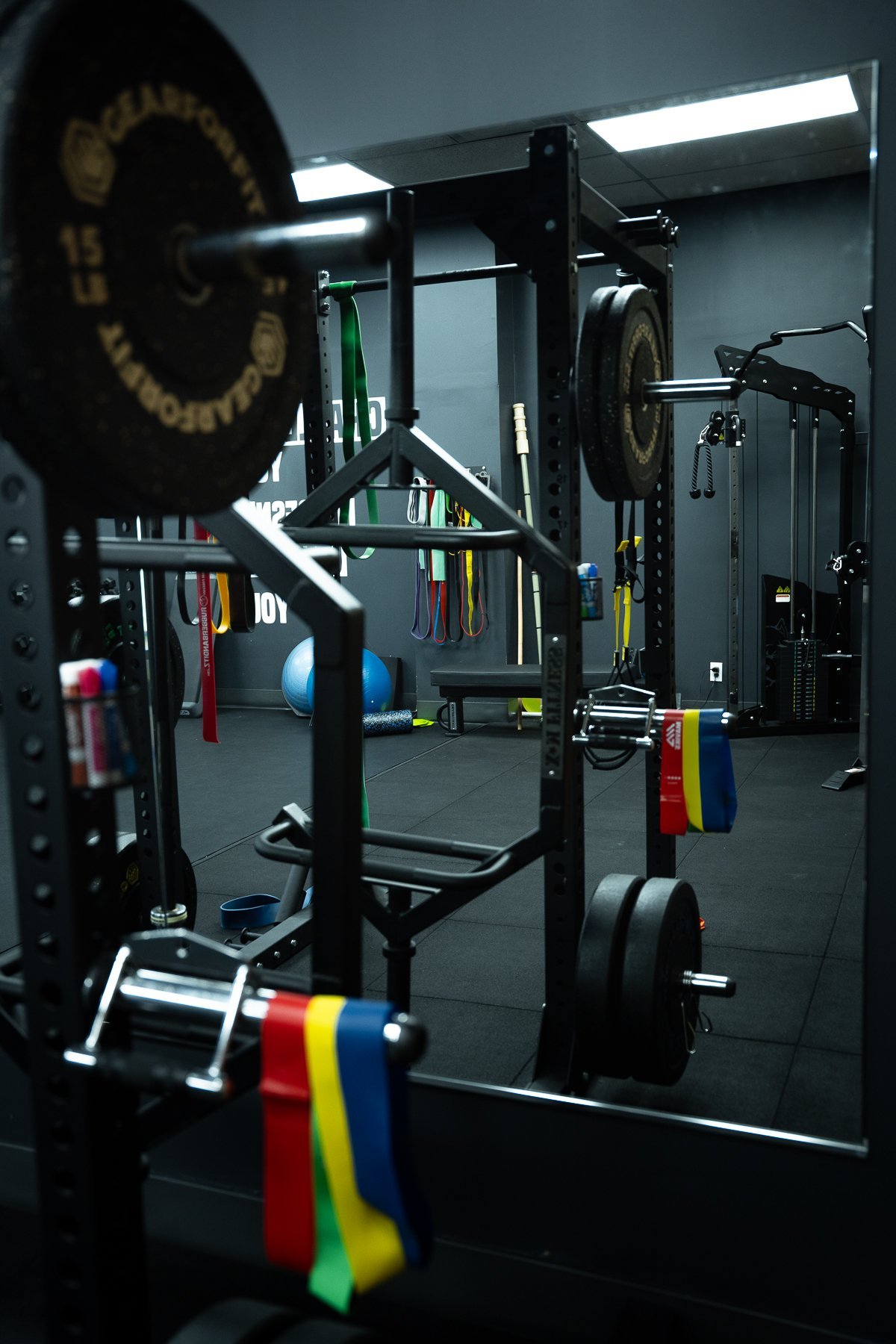
This phase of care often involves transitioning from corrective exercises to more holistic movement practices. Our in-house yoga and pilates classes are specifically designed with rehabilitation in mind. Led by instructors with a deep understanding of anatomy and biomechanics, these classes provide a safe and effective way to improve core stability, flexibility, and body awareness—key components of long-term musculoskeletal health.
By participating in these programs, you remain connected to our clinical environment while taking an active role in your ongoing wellness. It’s the final and most important stream: the one where you become the primary driver of your own health and performance.
Your First Step: Connecting with Therapeutic Streams
If you’re feeling stuck in a cycle of pain and temporary fixes, it may be time to explore a different approach. Connecting with our team is simple. Your first step is to book an initial consultation at our Whitby clinic. During this visit, you will have the dedicated time to share your story, undergo a thorough clinical evaluation, and receive a clear explanation of how our integrated model can be applied to your specific situation. We will answer your questions, outline a proposed plan, and ensure you feel confident and informed before beginning any treatment. Let us show you how the right combination of therapeutic streams can help you achieve lasting relief and get back to doing what you love.
Frequently Asked Questions
- How does the team at Therapeutic Streams collaborate on a patient’s file?
- Our practitioners use a shared clinical record system and conduct regular case conferences. This ensures that every professional involved in your care—from your RMT to your physiotherapist—is aware of your progress, recent findings, and the overall treatment strategy. This constant communication allows us to adapt your plan in real-time for the best possible results.
- I’ve tried physiotherapy before without success. How is your approach different?
- While we offer expert physiotherapy, our distinctiveness lies in our integrated framework. If a previous attempt at physiotherapy stalled, it may be because an underlying joint restriction or significant soft tissue dysfunction was not addressed first. At Therapeutic Streams, we can combine physiotherapy with chiropractic care or clinical massage to clear these primary roadblocks, making the rehabilitative exercises more effective.
- Is the integrated model at Therapeutic Streams suitable for non-athletic injuries?
- Absolutely. While we have extensive experience with sports rehabilitation, our model is designed to treat the human body, regardless of activity level. The principles of combining joint, muscle, and nervous system therapies are just as effective for treating issues from motor vehicle accidents, repetitive workplace strain, or postpartum recovery as they are for athletic injuries.
- What is the primary goal of the initial comprehensive consultation?
- The primary goal is to establish an accurate diagnosis and a clear “why.” We aim to move beyond just naming your symptoms (e.g., “knee pain”) to understanding the root biomechanical or lifestyle factors causing them. This allows us to build a highly targeted and effective treatment blueprint, ensuring we are solving the actual problem, not just chasing pain.
***
Potential Content Overlap Analysis:
This rewritten article is intended to serve as a foundational “philosophy” page for the brand name “Therapeutic Streams.” It explains the *how* and *why* of the clinic’s integrated model. It may have thematic overlap with the following pages, and a review is recommended to ensure each page serves a distinct purpose:
- https://therapeuticstreams.com/whitby-physiotherapy-from-pain-management-to-performance/: This page is a deep dive into physiotherapy specifically. The new article touches on physiotherapy as one of the “streams,” but its main focus is on how it *integrates* with other services, not the details of physiotherapy itself. The risk of direct cannibalization should be low if this new page remains focused on the integrated model.
- https://therapeuticstreams.com/chiropractors-in-whitby-your-guide-to-evidence-based-integrated-care/: Similar to the physiotherapy page, this focuses on chiropractic care. The new article should be positioned as the overarching “About Us” or “Our Approach” page, which then links out to these more specific service pages.
Consolidation is likely not necessary if the new article is framed as the central pillar explaining the clinic’s unique selling proposition (the integrated model), while the service-specific pages act as detailed explorations of each individual “stream.”