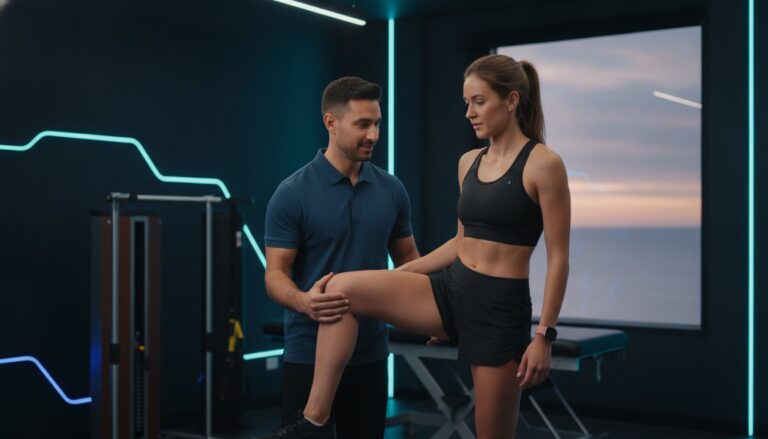
Chiropractic for Athletes
The Athlete’s Dilemma: When Your Body Becomes the Bottleneck
You’ve hit a wall. The training hours are logged, the nutrition is dialled in, but your performance has plateaued. Maybe it’s a nagging hamstring that tightens up on every sprint, a shoulder that aches after every throw, or a persistent stiffness in your back that robs you of power in your swing. For dedicated athletes in Whitby, this is a common and frustrating reality: the point where your own biomechanics become the limiting factor.
This isn’t about a lack of effort. It’s about a system that’s out of tune. High-impact and repetitive movements, essential for any sport, create micro-traumas, joint restrictions, and compensatory patterns. Your body, in its attempt to protect itself, starts moving less efficiently. Power leaks, speed diminishes, and the risk of a season-ending injury climbs. Simply “pushing through it” or resting isn’t a strategy; it’s a gamble. The solution lies in understanding and correcting the underlying mechanical faults that are holding you back.
Unlocking the Kinetic Chain: A Chiropractor’s Blueprint for Athletic Power
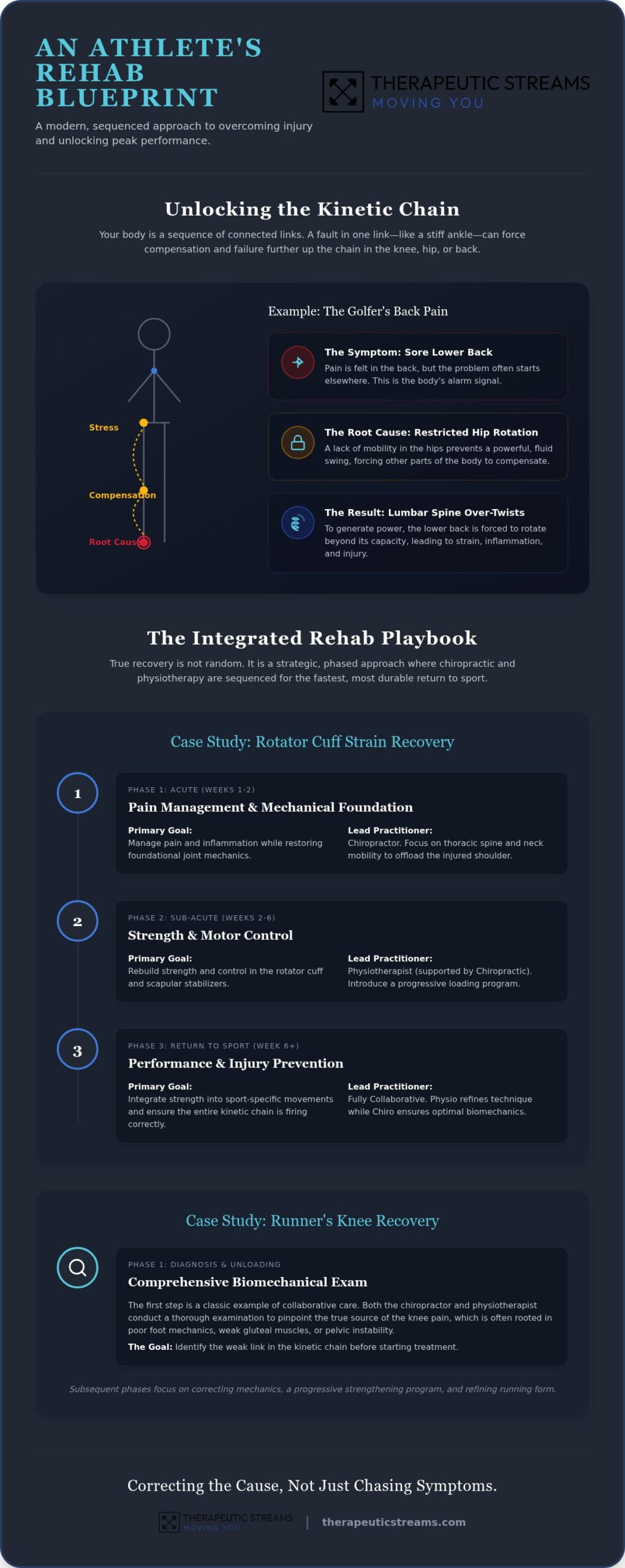
Think of your body as a sequence of connected links—a kinetic chain. The kinetic chain is the series of interconnected joints and muscles that work in sequence to produce movement, where a fault in one link—like a stiff ankle—can force compensation and failure further up the chain in the knee, hip, or back. A powerful slap shot, a quick pivot on the soccer pitch, or an explosive start from the blocks all depend on this chain functioning seamlessly.
When one link in that chain becomes stiff, weak, or misaligned, the entire system is compromised. Your body is forced to find a “workaround,” creating stress on areas not designed to handle that load. This is where a sports-focused chiropractor steps in. Their role isn’t just about addressing the site of pain; it’s about being a biomechanical detective. They analyze your movement to find the root cause of the dysfunction within the kinetic chain and use targeted interventions to restore proper function.
The Core Philosophy: Correcting the Cause, Not Just Chasing Symptoms
A sore lower back in a golfer is rarely just a “back problem.” It’s often the result of restricted hip rotation, forcing the lumbar spine to twist beyond its capacity. Similarly, “runner’s knee” can frequently be traced back to poor foot mechanics or weak gluteal muscles causing the pelvis to drop with each stride. A sports chiropractor’s initial examination is the most critical part of the process, using functional movement screens and orthopedic tests to map out your unique biomechanical signature and identify these weak links before they lead to a catastrophic failure.
From Restriction to Release: The Goal of Neuromuscular Tuning
The ultimate goal is to “tune” your nervous system for optimal performance. Every adjustment and soft tissue technique is designed to improve the communication between your brain and your muscles. By restoring motion to a restricted joint, we reduce interference in the nervous system. This can lead to improved muscle activation patterns and faster reaction times. Research supports this link, showing that spinal manipulation can alter motor control and reflex pathways, essentially helping your body move more intelligently and efficiently. A study published in The Spine Journal highlighted these neurophysiological effects, suggesting that the benefits of manipulation go far beyond simple joint mechanics (Pickar, J. G., 2002, The Spine Journal, doi:10.1016/s1529-9430(02)00403-6).
The Rehab Playbook: Sequencing Care for a Faster Return to Sport
For an athlete, the question isn’t just “Who should I see?” but “In what order should I see them?” True integrated rehab isn’t about getting an adjustment, a massage, and some exercises all in one day. It’s about a strategic, phased approach where different practitioners apply their expertise at the right time. Here’s how chiropractic and physiotherapy can be sequenced for common sports injuries.
Case Scenario: Recovering from Rotator Cuff Strain (Swimmer or Hockey Player)
A common injury for overhead athletes, a rotator cuff strain involves pain and weakness when lifting the arm. A successful recovery requires more than just strengthening the shoulder.
- Phase 1 (Acute – The First 1-2 Weeks): The immediate goals are to manage pain and inflammation while restoring foundational mechanics. The chiropractor takes the lead here, focusing on the thoracic spine (mid-back) and neck. If the thoracic spine is stiff, the shoulder blade can’t move properly, forcing the small rotator cuff muscles to work overtime. Gentle mobilizations and adjustments to the spine and ribs can immediately offload the injured shoulder, creating a better environment for healing.
- Phase 2 (Sub-Acute – Weeks 2-6): As the initial pain subsides, the physiotherapist’s role becomes central. They introduce a progressive loading program to rebuild strength and control in the rotator cuff and scapular stabilizers. During this phase, the chiropractor continues to play a vital supporting role, performing regular adjustments to ensure the thoracic spine and shoulder joint maintain their newfound mobility. This prevents the athlete from reverting to old, harmful movement patterns as they start strengthening.
- Phase 3 (Return to Sport – Week 6+): This is a fully collaborative phase. The physiotherapist analyzes the athlete’s swimming stroke or slap shot, prescribing sport-specific drills. The chiropractor ensures that the entire kinetic chain—from the hips through the core to the shoulder—is firing in the correct sequence to generate power, protecting the repaired tissues from re-injury. You can learn more about how physiotherapy targets shoulder issues in our guide to shoulder pain recovery.
Case Scenario: Overcoming Patellofemoral Pain Syndrome (Runner’s Knee)
This persistent ache around the kneecap often sidelines runners. It is a classic example of pain being the victim of dysfunction elsewhere in the kinetic chain.
- Phase 1 (Diagnosis and Unloading): The process begins with a comprehensive biomechanical exam from both the chiropractor and physiotherapist. The chiropractor assesses for joint restrictions in the feet, sacroiliac (SI) joints, and lumbar spine that could be altering the runner’s gait. An adjustment to a fixated SI joint, for example, can instantly change pelvic mechanics. The physiotherapist evaluates muscle firing patterns, often finding weak gluteal muscles and overactive quadriceps.
- Phase 2 (Re-Patterning and Strengthening): While the physiotherapist implements a targeted program to activate the glutes and improve neuromuscular control, the chiropractor works on the soft tissues. Using techniques like Active Release Technique (ART) on the tight hip flexors and IT band can complement the strengthening work. This dual approach ensures you are not trying to strengthen a dysfunctional pattern. We address the “why” behind knee pain in detail in our Whitby guide to knee pain physiotherapy.
- Phase 3 (Load Management and Gait Retraining): As the runner returns to training, the team works together. The physiotherapist might use video analysis to provide real-time cues for improving running form, while the chiropractor performs pre-run adjustments to ensure the pelvis and spine are moving optimally, preventing the faulty mechanics from creeping back in under fatigue.
The Sports Chiropractor’s Toolkit: Techniques for Peak Condition
A modern sports chiropractor utilizes a range of techniques to diagnose, treat, and prevent injury. It’s a hands-on discipline focused on tangible results, moving far beyond a simple “crack” of the back.
Spinal and Extremity Manipulative Therapy
This is the cornerstone of chiropractic care. A specific, high-velocity, low-amplitude thrust is applied to a restricted joint—whether in the spine, ankle, shoulder, or wrist. The goal is to restore normal movement, which in turn can reduce pain and improve nerve function. For athletes, this is crucial for maintaining the full range of motion necessary for their sport.
Myofascial and Active Release Techniques
Muscles and the connective tissue (fascia) that surrounds them can develop adhesions and scar tissue from repetitive strain. This creates tightness and limits movement. Techniques like Myofascial Release Therapy involve applying sustained pressure to these tight spots to break down adhesions and restore tissue health, which is critical for both flexibility and power. Unlock your mobility with our specialized myofascial release therapy in Whitby.
Instrument-Assisted Soft Tissue Mobilization (IASTM)
Using specially designed stainless steel tools, clinicians can effectively detect and treat fascial restrictions and scar tissue. For athletes, this can be particularly effective for chronic conditions like plantar fasciitis or tendinopathies, helping to stimulate a healing response in stubborn tissues.
Functional Movement Screening
Before any treatment begins, a top-tier clinician needs a baseline. A Functional Movement Screen (FMS) or similar assessment tool is used to evaluate an athlete’s movement patterns, identifying limitations, asymmetries, and imbalances. This objective data helps create a precise and personalized treatment plan, ensuring the care you receive is tailored directly to your body’s needs.
Building a Winning Rehab Team in Whitby: What to Ask Before You Commit
Choosing the right rehab clinic is as important as choosing the right coach. The quality of your care team can be the difference between a quick return to form and a season plagued by recurring issues. As a young athlete or a parent, you need to be an informed consumer.
Signs of a Truly Integrated Clinic
Many clinics list multiple services, but true integration is about culture, not just a menu. Look for a centre where practitioners actively collaborate on your case.
- Shared Charting and Communication: Does your chiropractor have access to your physiotherapist’s notes, and vice versa? Do they meet to discuss your progress? This is the hallmark of a team approach.
- A Unified Plan: Your treatment plan should feel cohesive. The exercises from your physiotherapist should complement the mobilizations from your chiropractor. If you feel like you’re receiving two separate, disconnected treatments, that’s a red flag.
- Cross-Referrals Within the Clinic: A great clinician knows the limits of their scope. Look for a clinic where your chiropractor might say, “I’ve restored the mobility here; now I want you to see our RMT to address the surrounding muscle tension before your next session with the physiotherapist.”
Questions to Ask a Prospective Chiropractor
Before your first appointment, don’t be afraid to ask critical questions. A confident practitioner will welcome them.
- “What does your initial examination for an athlete like me involve?” (Look for answers that include functional movement testing, not just a posture check.)
- “How do you collaborate with the other therapists in the clinic on a patient’s case?”
- “What is your philosophy on active care vs. passive modalities? How much of my treatment will involve me actively participating?”
- “Can you describe a time you co-managed an injury similar to mine with a physiotherapist?”
For more guidance on what separates an exceptional clinician from an average one, review our checklist on how to know if a chiropractor is good.
Therapeutic Streams: Your Performance Partner in Whitby
At Therapeutic Streams, we’ve built our clinic around the needs of the Whitby athlete. We understand that you don’t just want to be out of pain—you want to be better, stronger, and more resilient than you were before your injury. Our model is built on the principles of true collaboration, where your recovery and performance plan is managed by a dedicated team, not just a single practitioner.
We are clinicians who are also athletes. We understand the physical and mental demands of training and competition. We provide dedicated, private sessions where your clinician’s full attention is focused on you, allowing for the in-depth diagnostic work and hands-on care required to solve complex biomechanical issues. From your initial functional screen to your final return-to-sport testing, your journey is guided by a team committed to helping you realize your full athletic potential.
Ready to move beyond your performance plateau and build a more resilient body? It’s time to get your team in your corner.
Frequently Asked Questions for Whitby Athletes
- My coach told me to just rest an injury. Why is seeing a chiropractor a better option?
- Rest can decrease inflammation, but it doesn’t correct the underlying biomechanical fault that caused the injury in the first place. Without correcting the issue—like a stiff joint or a muscle imbalance—the injury is highly likely to recur as soon as you return to full training intensity. A sports chiropractor diagnoses and fixes the root cause for a more permanent solution.
- Can chiropractic adjustments actually help with my reaction time or agility?
- Yes, potentially. Agility and reaction time are dependent on the speed and accuracy of communication between your brain and your body. By improving joint mechanics and reducing interference in the nervous system, chiropractic care can enhance proprioception (your body’s awareness in space) and improve the efficiency of motor pathways, which are critical components of quick, coordinated movements. Studies on this topic suggest that spinal manipulation can lead to measurable improvements in sensorimotor integration (Haavik, H., & Murphy, B., 2012, Journal of Electromyography and Kinesiology