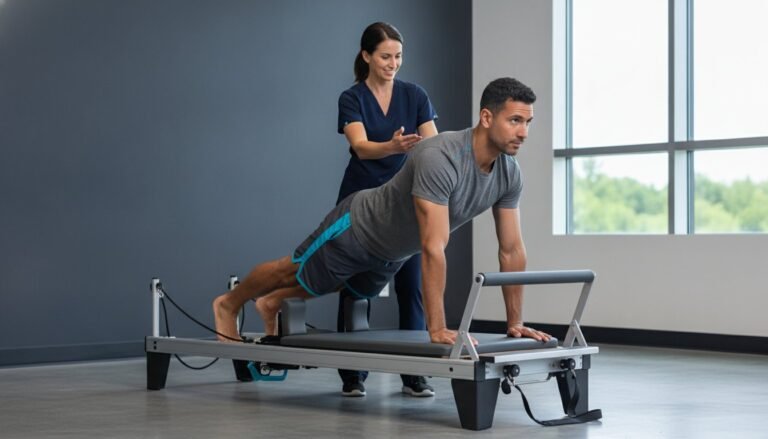
Sports clinic in Whitby for athlete assessments and care
For athletes looking for the best sports clinic recommended by athletes in Whitby, start with care built around a personalized clinical assessment. A plan should reflect your symptoms, movement, training demands and goals. The right next step depends on what is limiting you, whether that is pain during activity, reduced mobility or a setback in recovery.
Returning to sport takes more than waiting for discomfort to fade. You need clear guidance on what may be contributing to the problem and how to progress. This article explains what to expect at an initial assessment, how practitioners can support injury care and where to find a sports rehabilitation clinic in Whitby.
You’ll also learn how physiotherapy, chiropractic care and registered massage therapy may fit into a coordinated plan. Understanding the process can help you prepare and take a more confident step towards moving more comfortably and confidently.
Key Takeaways
- Find the Whitby clinic and learn what to know about getting there before your visit.
- Prepare for an initial assessment by noting your symptoms, activity demands and recovery goals.
- Understand how practitioners can shape injury care around your movement needs and sport.
- Learn what to look for in athlete reviews, including comments about communication and care.
- See how chiropractic care may fit into a personalized plan for sports-related concerns.
Whitby clinic location
Before you leave, enter the clinic’s street address in Whitby, Ontario, into your preferred map app. Check that the destination pin matches the address, rather than relying on the clinic name alone. Save the address with your appointment details, especially if you’re travelling from Oshawa, Ajax or Bowmanville.
Plan the final part of your trip as carefully as the drive. Check the destination street, nearby intersections and building entrance on the map. If you’re driving, identify where to park and which entrance leads to the clinic. If someone is dropping you off, share the address and agree on a pickup point. These steps can make arrival less stressful.
When comparing Whitby sports clinics, don’t use ratings alone to decide which one suits you. Consider the rating alongside the review count, how recent the reviews are and whether athletes describe care relevant to their sport. Review totals vary by platform, so note the platform and date when making comparisons.
Insurance coverage depends on your plan and the service. A doctor’s referral is not always needed for physiotherapy, though some insurance plans may require one for reimbursement. Review your benefits information for eligible services and referral requirements, and bring any relevant paperwork to your appointment.
Before travelling, make a short arrival checklist. Save the Whitby address, check your route and allow time to find the entrance. Bring your appointment confirmation and any insurance documents relevant to your visit. If you’re coming from another community, check the return route too. A clear plan can help you focus on your appointment.
Location can affect how practical ongoing visits feel. Consider your usual route from work, home or training, and whether the clinic is manageable to reach when movement feels uncomfortable. For example, a runner coming from Ajax might plan a direct drive, while an athlete in central Whitby might fit a visit between work and training. Think about how the location fits your routine and care needs.
If you’re visiting Athlete’s Care Whitby, note that the parking lot behind Athlete’s Care Whitby is accessed through Euclid Street. Use that access detail when planning the final approach, rather than assuming the lot is reached from the clinic’s main street address. Before setting out, check your route to Euclid Street and consider where you will turn so you can arrive without needing to search at the last moment. If someone is driving you, share the lot access point as well as the clinic address. Once nearby, follow your planned route and confirm the entrance before heading inside. Keeping the parking approach in your notes can make arrival simpler.
Practitioner information
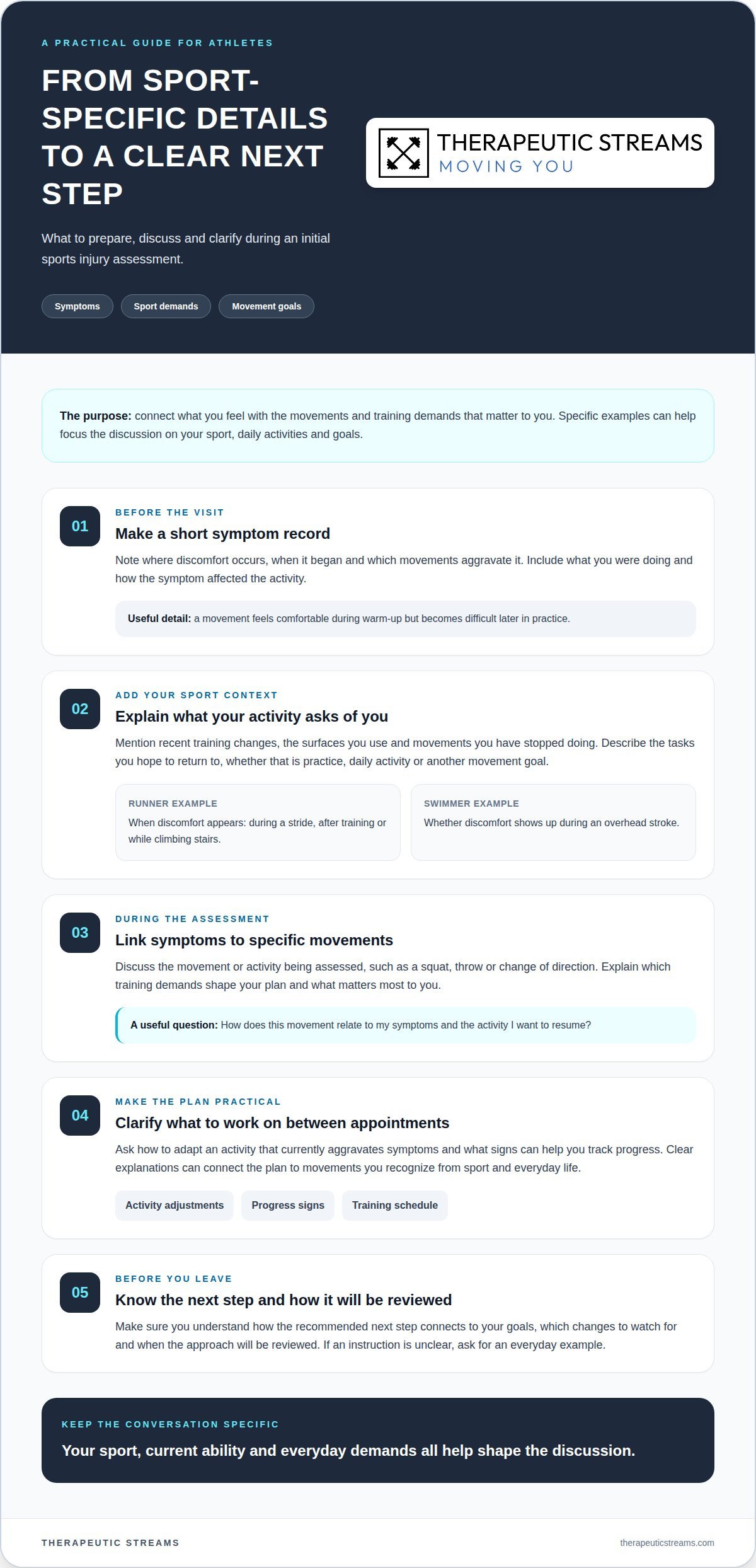
An initial assessment should connect your symptoms with the demands of your sport. Expect to describe where discomfort occurs, when it began and which movements aggravate it. A runner, for example, might explain whether pain appears during a stride, after training or while climbing stairs. These details help focus the discussion on your movement and goals.
Bring useful context, not just a label for the injury. Note recent changes in training, the surfaces you use and movements you have stopped doing. A swimmer could describe whether discomfort appears during an overhead stroke, while a tennis player might identify serves or lateral movement as triggers. These examples help the practitioner understand how your sport loads the affected area.
A productive appointment should leave room for your questions. Explain what matters most to you, whether that is returning to practice, managing daily activities or understanding a movement limitation. Ask how the findings relate to your symptoms and what the next step involves. Clear explanations make it easier to take part in decisions about your care.
As you discuss the plan, focus on how it relates to your situation. Useful points to clarify include:
- Which movement or activity is being assessed, such as a squat, throw or change of direction.
- How your symptoms and training schedule shape the plan.
- What signs will help you track progress between appointments.
- How to adapt an activity that currently aggravates symptoms.
These questions can turn general advice into practical steps. For instance, a volleyball player with discomfort during a jump can ask how the assessment considers take-off, landing and repeated practice. The relevant details may differ for a cyclist who notices symptoms on longer rides. Your sport, current ability and everyday demands all inform the conversation.
Bring a concise record if symptoms change across activities. You might note that a movement feels comfortable during warm-up but becomes difficult later in practice. Describe what you were doing and how the symptom affected the activity. Specialist terminology isn’t necessary. Specific examples give the practitioner clearer context than saying only, “it hurts when I exercise.”
Before the visit ends, make sure you understand the recommended next step and how it connects to your goals. A clear plan should explain what you can work on, which changes to watch for and when the approach will be reviewed. If an instruction is unclear, ask for an everyday example. This keeps your care grounded in movements you recognize from sport and daily life.
Sports injury care
Sports injury care should connect your symptoms with the demands of your sport. When comparing Whitby clinics, consider how they assess activity, tailor treatment and review functional changes. A thoughtful approach looks at what you need to do, not only where discomfort appears. A sprinter’s push-off, for instance, places different demands on movement than a swimmer’s repeated stroke.
Athlete-focused care
Athlete-focused care takes sport-specific movements, training demands and personal goals into account. A runner and a swimmer may both report shoulder discomfort, but their activities differ. Look for questions about your training, the movements that bring on symptoms and the tasks you hope to resume. These details help make care relevant to your sport and daily activities.
Consider whether the practitioner connects the assessment to movements that matter to you. A tennis player could discuss serving, reaching overhead and changing direction, then ask how those demands inform the plan. The aim is to understand the activity behind the complaint. You can also ask how your training and competition goals will shape the care discussion.
Treatment outcomes
Compare clinics by how they describe and review progress. Useful outcomes may include completing a particular movement, returning to a training activity or managing daily tasks more comfortably. Ask what changes the practitioner will track and how those observations will guide next steps. Clear measures make progress easier to discuss, even when recovery doesn’t follow a straight path.
Ardern and colleagues’ 2016 consensus statement on return to sport, published in the British Journal of Sports Medicine, frames return as a process rather than a single event. That perspective supports asking how readiness will be considered across training and sport demands. For a basketball player, relevant tasks might include jumping, landing and changing direction, not only feeling comfortable at rest.
Use these criteria to compare the approach offered by Whitby clinics:
- Whether assessment considers the movements your sport requires.
- How the practitioner explains the purpose of proposed care.
- Which functional changes will help guide progress discussions.
- How the plan can respond to changing training demands.
Bring a specific example to your appointment. If cycling causes discomfort, describe your riding position and when symptoms begin. For a court sport, identify the movement that interrupts play. Clear details help focus the discussion on your activity and clarify how care relates to your goals.
Sports medicine team
A sports rehabilitation team can bring different perspectives to an athlete’s injury and performance goals. In Whitby, consider how practitioners communicate and coordinate care around your sport.
In Whitby, compare clinics whose practitioner profiles connect injury care with athletic movement, sport-specific rehabilitation and performance goals. A speciality is most useful when the profile explains the clinician’s role and the activities they support.
A team may include physiotherapists, chiropractors and registered massage therapists, each addressing different needs. For example, physiotherapy may focus on movement and exercise, while massage therapy may address muscle tension. The key question is how each service fits your situation, not simply how many services appear on a website.
If your care involves more than one discipline, look for clear communication between practitioners. For a hockey player having difficulty skating after an injury, coordinated care could consider movement, strength and recovery needs together. Ask how practitioners share relevant observations and keep the plan connected to your goals. Clear communication helps you understand who is addressing each part of your care.
Compare team information using practical details:
- Whether practitioner profiles describe experience with athletic injuries or sport-specific movement.
- Which practitioner leads your clinical assessment and explains the findings.
- How the team adapts care to training demands, such as running or court movement.
- How practitioners coordinate if more than one discipline is involved.
These details help distinguish a sports rehabilitation focus from a general list of treatments. A runner returning to hills may need a different discussion from a swimmer working through repeated overhead movement. In either case, the plan should relate to the activity that matters to you. Ask how your training goals inform the next steps.
Team-based care also depends on useful communication between visits. Bring an example of a movement that remains difficult, such as a tennis serve or cycling position. Explain when it occurs and how it affects practice. This gives the practitioner a concrete point to discuss with you and, where appropriate, other members of the team.
Before choosing a clinic, review practitioners’ stated roles and note any questions you have. You might ask who will guide your plan, how progress will be discussed and what happens if your sport-specific needs change. When a team explains its approach in plain language, it’s easier to take an active role in your care and keep your goals in view.
Athlete reviews of the best sports clinics in Whitby
Athlete reviews can show how people describe their care, but they don’t prove which clinic will suit you. In Whitby, look for specific experiences rather than broad praise. A soccer player’s account of support while returning to training may help you understand the experience described, while a comment that says only “great service” offers little detail about sports care.
Notice what reviewers say about being heard. An athlete might describe how a practitioner asked about a recurring problem during sprinting or adapted an exercise when it felt difficult. These details show how the reviewer experienced the conversation and care process. They don’t establish what happened clinically, but they can help you decide what to discuss at your appointment.
Pay attention to how reviewers describe communication. A useful account might explain that instructions were clear enough to follow at home or that the athlete understood how an exercise related to their activity. Another person may value having training goals included in the discussion. Look for interactions that help you feel informed and involved in decisions about your care.
Reviews can also reveal practical aspects of a visit. An athlete may mention how they prepared for an appointment, what they brought or how the clinic experience fit around a training day. Treat these as individual accounts, not a promise that your visit will be identical. Consider whether the details address questions you have about arriving, communicating your needs or taking part in care.
As you read, sort comments by the kind of insight they offer:
- Descriptions of a sport or activity that resembles yours.
- Examples of how a practitioner explained an exercise or care step.
- Comments about how the athlete felt included in decisions.
- Details that help set expectations for the appointment experience.
A review is most useful when it gives specific details. A hockey player’s account may describe skating demands, while a cyclist’s story may focus on riding position. Neither experience predicts your progress. Use these accounts to identify questions, then discuss your symptoms, activities and goals directly with the practitioner.
Keep your own priorities in view as you read. If clear instructions matter to you, look for comments describing how guidance was communicated. If you’re returning to a particular activity, consider whether reviewers discuss similar demands. Reviews offer other people’s perspectives, while your clinical assessment is where your circumstances can be connected with a suitable plan.
Therapeutic Streams Sport Rehab: Chiropractic Care
Therapeutic Streams Sport Rehab offers Chiropractic Care for athletes seeking support with movement-related concerns. A clinical assessment helps connect your symptoms, activity demands and goals with a suitable care plan. Depending on your needs, Physiotherapy or Registered Massage Therapy may also support your recovery. If you’re managing pelvic health concerns alongside training, Pelvic Floor Physiotherapy is another available option. The focus is on understanding what’s affecting your movement and choosing care that fits your circumstances, rather than assuming every athlete needs the same approach.
If you’re ready to discuss your athletic care needs, contact Therapeutic Streams Sport Rehab.
Take your next step towards confident movement
Choosing care is also a chance to define what progress means to you. It might mean returning to a training routine, moving with greater confidence or finding a clearer path through recurring discomfort. If you’re looking for the best sports clinic recommended by athletes in Whitby, let your goals guide the conversation. Describe the activities you want to resume and the movement challenges getting in your way.
Therapeutic Streams provides chiropractic care and physiotherapy for movement-related concerns, along with pelvic floor physiotherapy for pelvic health needs. A practitioner can discuss which approach suits your concerns and how it relates to your goals. You can start by sharing what you’d like support with, without needing to have every answer already.
Contact Therapeutic Streams Sport Rehab to discuss your care needs and take a considered step towards feeling more capable in your chosen activities.
Frequently Asked Questions
Which sports medicine and sports physiotherapy clinics are located in Whitby, Ontario?
Therapeutic Streams is a sports rehabilitation clinic in Whitby, located at 19 Sawdon Drive. Its services include physiotherapy and chiropractic care for movement and musculoskeletal concerns. If you live in Whitby or nearby Oshawa, Ajax or Bowmanville, consider which location and type of care fit your needs. Check the clinic’s address and appointment details before travelling so you can plan your visit.
Which Whitby sports clinics are recommended or used by local athletes?
No single clinic is the best sports clinic recommended by athletes in Whitby for every sport or injury. Therapeutic Streams has 455 Google reviews, though a total review count doesn’t show which reviewers are athletes. Read comments for relevant details, such as the sport involved, communication and the type of support described. Use those accounts as context for your own needs, rather than as a guarantee of similar results.
What services do Whitby sports clinics offer, such as physiotherapy, sports medicine, and rehabilitation?
Whitby clinics may offer physiotherapy, chiropractic care, registered massage therapy and other rehabilitation services. Therapeutic Streams also offers Pelvic Floor Physiotherapy, Vestibular Rehab, Neurofunctional Acupuncture, BikeFIT, Shockwave Therapy, and yoga and Pilates classes. The suitable service depends on your concern and activity goals. For example, a cyclist may seek a BikeFIT assessment, while someone returning to strength training may discuss physiotherapy and movement rehabilitation.
How do the leading sports clinics in Whitby compare for athlete-focused care and treatment outcomes?
Compare clinics by whether they assess sport-specific movements and training demands, explain how care fits your goals and adapt plans as demands change. Ask which functional changes they track, such as returning to training, completing a movement or managing daily tasks more comfortably.