Postpartum Massage: A 2026 Guide to Physical Recovery
Postpartum massage supports maternal physical recovery (clinical assessment) by easing tight muscles (muscle tension), pelvic pain (pelvic girdle discomfort), and postpartum stress after delivery. Clinical assessments ensure every session is tailored safely to your unique birth experience and recovery stage. The decisions that matter most are when care can begin, which techniques fit your stage, how to confirm therapist credentials, and how direct billing keeps treatment practical while you heal.
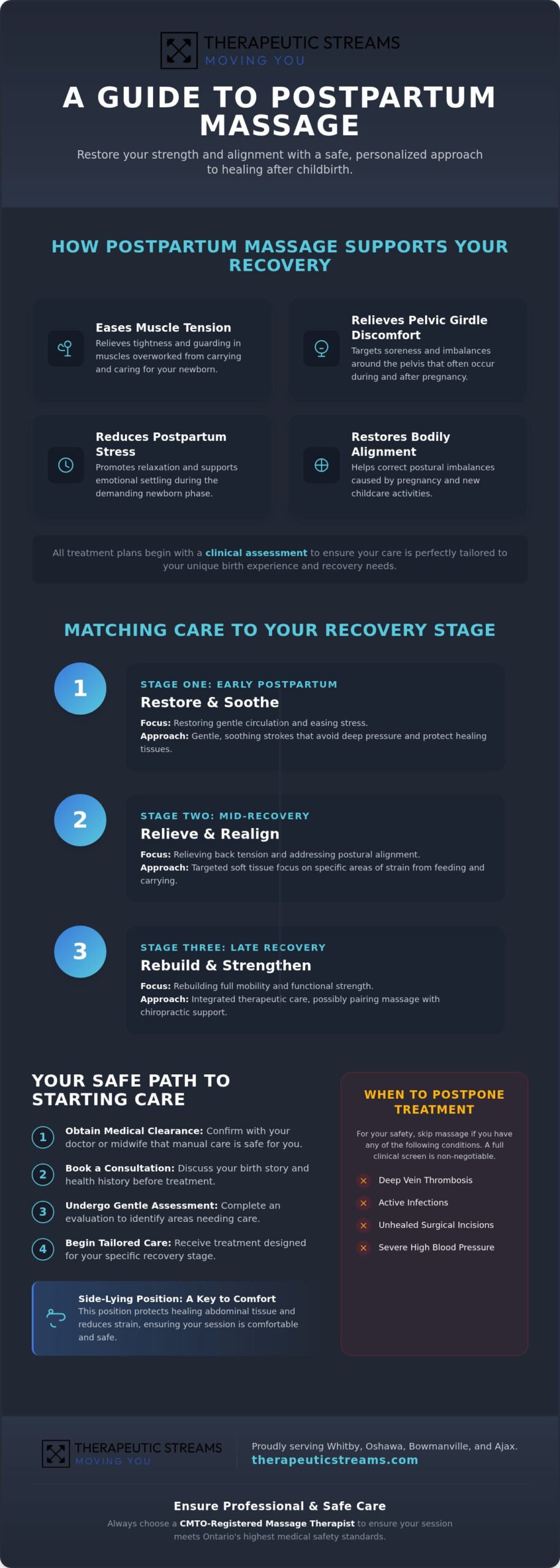
Key Takeaways: Postpartum massage uses clinical assessment and side-lying positioning to resolve pelvic pain and muscle tension while protecting healing tissues after childbirth.
- Avoid treatment if you have deep vein thrombosis, infections, or unhealed surgical incisions.
- Book a CMTO-registered therapist to ensure your session meets Ontario’s medical safety standards.
- The article’s recovery table shows how to transition from gentle circulation to integrated care.
Match each recovery stage to techniques that protect healing tissue
Postpartum recovery moves in distinct phases so you can restore strength, rebuild capacity, and resolve musculoskeletal stress without overloading tissue that is still healing. Clients who start deep pressure too early often aggravate tissues that need more time; pacing the work to your stage keeps progress steady.
Before you book, map your situation to a concrete next step:
- Early weeks after an uncomplicated birth: ask your provider for clearance, then use gentle soothing strokes aimed at circulation and stress relief rather than deep work.
- Mid recovery with lingering back or alignment strain: shift toward targeted soft tissue focus so pelvic girdle discomfort and postural load from feeding or carrying get direct attention.
- Later recovery when mobility still feels limited: move into integrated therapeutic care that pairs registered massage therapist work with chiropractic support so you are not treating one joint in isolation.
| Stage | Recovery Focus | Recommended Approach |
|---|---|---|
| Early Postpartum | Restoring gentle circulation and easing stress | Gentle soothing strokes |
| Mid Recovery | Relieving back tension and alignment issues | Targeted soft tissue focus |
| Late Recovery | Rebuilding full mobility and strength | Integrated therapeutic care |
Your Whitby team emphasizes individual clinical evaluations and adequate session time so your plan matches the birth you had and the stage you are in now. Explore care options in Whitby when you are ready to restore strength with a plan built around your assessment.
How postpartum massage restores comfort and alignment after birth
After weeks of broken sleep and constant lifting, your body can feel heavy and tight before you even reach the treatment room. Postpartum massage is targeted care meant to ease physical discomfort, restore alignment, and support emotional settling after birth; it is not a generic spa add-on.
A registered massage therapist should listen to your birth story and health history before shaping a plan, because working tight muscles alone rarely resolves the broader load you are carrying. Soft tissue techniques and low-force mobilization can ease pelvic pain, while side-lying positioning keeps the abdomen protected and the session tolerable from start to finish.
Manual care also supports comfort beyond sore shoulders: positioning, pacing, and pressure choices help you tolerate treatment while tissues remodel.
That combination of precise technique and a calm front-of-house experience is what you want when pain relief after childbirth is the goal. Learn more about massage therapy in Whitby and how sessions are structured around assessment, not volume.
Safe timing: when gentle care can begin after delivery
You can often start gentle postpartum recovery within days of an uncomplicated birth when your healthcare provider agrees the plan is appropriate. Timing still matters: high-intensity or poorly sequenced treatment can set you back, especially if joints are handled without a full-body view of how you are healing.
Work through these steps in order:
- Obtain medical clearance: Confirm with your midwife or doctor that gentle manual care is safe for your body.
- Book your consultation: Schedule a FREE 15 minute consultation to discuss your specific birth story and health history.
- Undergo gentle assessment: Complete a soft evaluation that identifies areas of pelvic pain or tight muscles.
- Begin gentle positioning: Receive tailored care using comfortable side-lying positions that protect your healing abdomen.
Delivery type and individual risk change the calendar. After a Cesarean birth, waiting six to eight weeks before direct abdominal work protects the incision; gentle upper body relief can be appropriate much sooner once you are cleared. Position during care is part of safety, not an afterthought: side-lying support reduces strain while you rebuild tolerance.
When you want stage-matched pressure in Whitby, a registered massage therapist who offers deep tissue massage should still adapt depth and focus to where you are in healing, not apply a fixed recipe. Book an Appointment when clearance and assessment are in place so your first sessions stay protective.
Confirm contraindications and CMTO credentials before you book
Skip postpartum massage if you have deep vein thrombosis, active infections, unhealed C-section incisions, or severe high blood pressure. A full clinical screen before any hands-on work is non-negotiable.
Vascular shifts after childbirth call for restraint: deep pressure on the lower extremities in early healing can disturb clots, so lower-leg work must stay within safe limits set by your assessment. Regulated care belongs ahead of casual spa visits here. In Ontario, the practitioner should hold active registration with the College of Massage Therapists of Ontario (CMTO) before providing medical massage.
Once you are cleared for warmth-based comfort work, options such as hot stone massage can fit a later-stage plan. Until then, side-lying positioning remains the practical way to unload the back, ease tight muscles, and spare fresh surgical sites. Registered massage therapists who coordinate with chiropractors can restore balance without ignoring systemic risk.
Tip: Always verify that your practitioner is a registered massage therapist in good standing with the CMTO before receiving care.
Direct billing, local rates, and when a home visit fits better
Direct billing simplifies postpartum recovery so you can focus on healing while extended health insurance processes claims. Most private plans cover registered massage therapist services, which lowers out-of-pocket pressure during a demanding season. Therapeutic Streams wants your appointment logistics handled cleanly, which is why direct billing is available for most insurers; some carriers still ask for a doctor’s note before massage coverage applies.
Newborn schedules make attendance harder than the treatment itself. Clinic visits suit you when you want full access to specialized equipment and side-lying setups built for nursing mothers; home visits suit you when leaving the house would cost more energy than the session returns. According to current regional market survey data, session investments follow standard local fee structures across neighbouring communities, so quotes should reflect duration, complexity, and technique rather than a single flat figure.
If you need exact figures for your plan, request a personalized quote and confirm coverage with the front desk before you commit to a series.
Frequently asked questions
When can I start postpartum massage?
You can usually begin gentle postpartum recovery early after birth once your healthcare provider approves. Recovery pace is individual, so a personalized assessment should come before deeper work, and no joint should be treated as if it exists alone. Use the FREE 15 minute consultation to align timing with your birth history.
What benefits does postpartum massage provide?
Targeted care releases tight muscles and eases pelvic pain linked to posture changes while you feed or carry your newborn.
Can I get postpartum massage at home?
Many therapists offer home visits, yet the clinic gives you a dedicated care space and specialized equipment, including side-lying support designed for nursing mothers. Choose home care when rest is the limiting factor; choose the clinic when equipment and full assessment tools will change the quality of the session.
Do you provide direct billing?
Direct billing is available for most major extended health insurance plans so administrative steps stay out of your way while you heal. Contact the front desk to confirm your carrier, any doctor’s note rules, and what your plan will cover before treatment starts.
How do side-lying positions protect me during treatment?
Side-lying setups keep pressure off a healing abdomen or C-section site while still allowing work on the back, shoulders, and pelvic girdle. Your therapist should adjust bolsters and stance to your stage so tight muscles can be addressed without loading vulnerable tissue.
Reclaim Your Strength
Your body changes sharply through postpartum recovery, and the same questions you started with still guide the finish: Is the timing safe, does the technique match your stage, is the therapist CMTO-registered, and will billing stay manageable while you rebuild?
Easing tight muscles and pelvic pain takes specialized, assessment-led care on your timeline. At Therapeutic Streams, registered massage therapists use comfortable side-lying positions and collaborative musculoskeletal care so you regain strength without rushing tissue that is not ready.
Book your clinical assessment today and continue your journey with a plan that respects both your birth recovery and your day-to-day demands as a new parent. More on this: Massage & Physio in Whitby.