Painful Intercourse Treatment in Bowmanville
Painful intercourse treatment in Bowmanville depends on what’s causing the pain. Dyspareunia, the term for pain before, during or after sex, may be addressed with physical therapy, medication, counselling or a combination of approaches. When pelvic floor muscle tension contributes, treatment may focus on helping those muscles relax and lengthen.
Pain can affect more than your body. It may bring worry or pressure into intimacy, even when you want to feel close to your partner. That response is understandable, and it doesn’t mean the discomfort is “all in your head.” Describing what you’re experiencing can be a helpful first step towards care that considers both physical symptoms and emotional well-being.
This article explains possible causes of painful intercourse, what a pelvic health assessment may involve and how pelvic floor physiotherapy can support treatment. You’ll also learn how to prepare for an appointment and what approaches may help ease discomfort, so you can consider your next step with greater clarity and confidence.
Key Takeaways
- Pain during or after sex can have different contributing factors, so noting when and where it occurs can help guide the next step.
- When pelvic floor muscle tension is involved, therapy may focus on learning to release and lengthen the muscles rather than simply strengthening them.
- A pelvic health assessment can explore your symptoms and movement; any internal assessment should only happen with your consent.
- Breathing and relaxation strategies may help you practise easing pelvic floor tension in a gentle, manageable way.
- Physical discomfort can affect intimacy and emotional well-being, so discussing your experience and needs with your partner can reduce pressure.
What is Pelvic Floor Physiotherapy?
Pelvic floor physiotherapy assesses how the muscles and connective tissues work together. For painful intercourse, care may focus on releasing tension and improving comfortable movement.
Pelvic Floor Function and Dysfunction
Your pelvic floor supports the bladder, uterus and rectum while helping coordinate movement and muscle control. Healthy function includes both contracting and releasing when needed. Dysfunction can involve weakness, poor coordination or muscles that remain tense. For example, difficulty relaxing these muscles during penetration may contribute to pain. A pelvic health assessment considers how your symptoms relate to daily activities and muscle function.
Muscle Overactivity and Tension
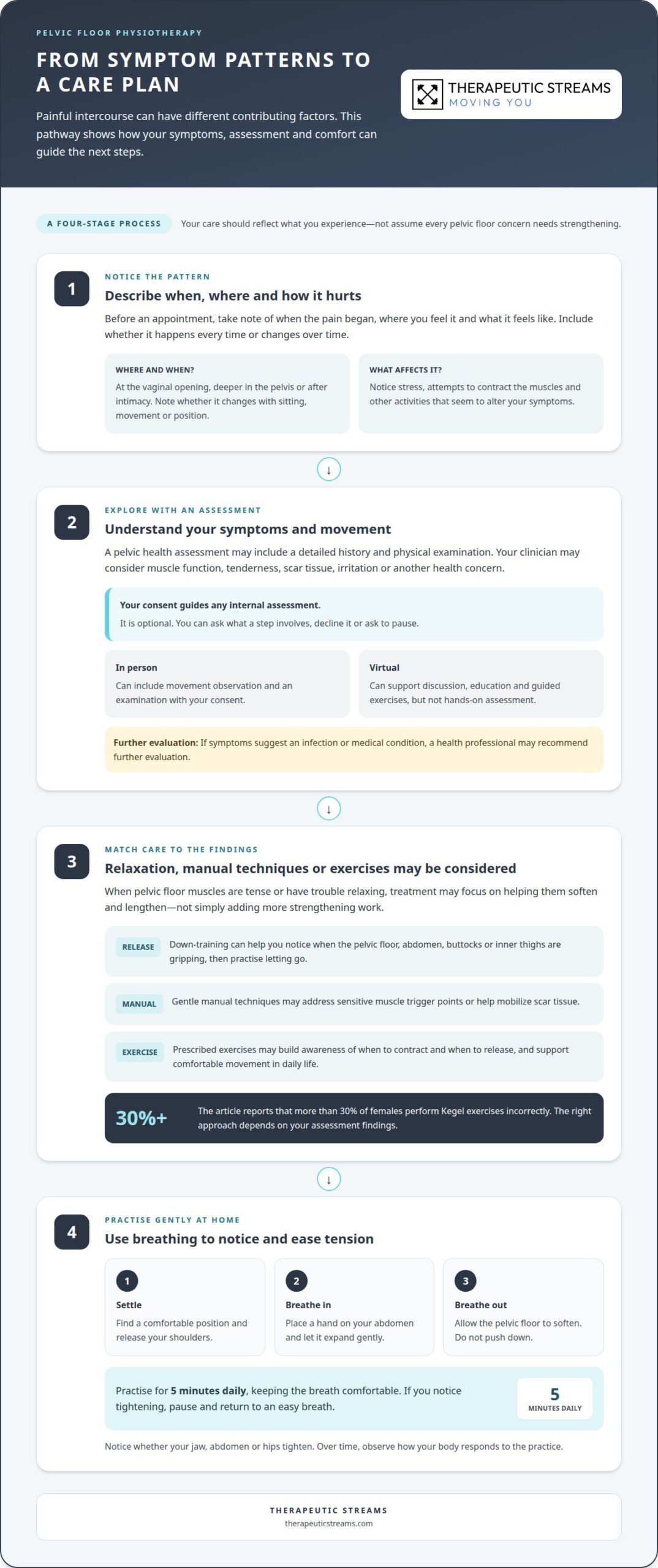
Pelvic floor muscle overactivity means the muscles remain guarded or have trouble relaxing. This tension may affect activities such as sitting, urinating or sexual intimacy. Notice whether discomfort changes with position, stress or attempts to contract the muscles. These patterns can help distinguish a relaxation challenge from a strength concern. Treatment should match the findings rather than assume every pelvic floor problem needs more strengthening.
Down-Training for Tight Pelvic Floor Muscles
Down-training teaches the pelvic floor to soften, lengthen and release. For painful intercourse linked with tight muscles, the focus may be relaxation rather than repeated Kegel exercises. A therapist can guide you to notice whether you’re gripping your abdomen, buttocks or inner thighs while trying to release the pelvic floor. More than 30% of females perform Kegel exercises incorrectly, according to the research findings summarized for this topic.
Breathing to Support Relaxation
Deep belly breathing offers a practical way to practise letting go of unnecessary muscle tension. Try placing a hand on your abdomen, then breathe in gently and feel it expand. As you exhale, allow your pelvic floor to soften without pushing down. Practise for 5 minutes daily, as recommended for this topic. Keep the breath comfortable, and notice whether your jaw, abdomen or hips tighten during the exercise.
What Pelvic Floor Physiotherapy Involves
Pelvic floor physiotherapy can combine manual techniques with prescribed exercises to support pelvic function. Manual therapy may address sensitive muscle trigger points or help mobilize scar tissue. Exercises can build awareness of when to contract and when to release. For example, your plan may pair gentle breathing with a relaxed pelvic floor rather than add strengthening work. The focus depends on the movement and tension patterns identified during care.
Building a Practical Routine
Use a simple practice sequence: settle into a comfortable position, release your shoulders, then take slow belly breaths. Spend 5 minutes noticing whether your pelvic floor can soften as you exhale. If you find yourself tightening, pause and return to an easy breath instead of forcing a stretch. This gives you a clear way to practise relaxation and observe how your body responds over time.
Therapy’s role in identifying contributing factors
Pain during sex can have more than one contributor, so therapy begins by exploring symptoms rather than assuming a single cause. At an appointment, note when the pain started, where you feel it, how it feels and whether it happens every time. These details help a health professional assess patterns and decide which parts of your history or physical function need attention.
Assessment and next steps
A pelvic health assessment may include a detailed history and physical examination. You can describe whether discomfort occurs at the vaginal opening, deeper in the pelvis or after intimacy. Mention changes over time and activities that affect symptoms, such as sitting or movement. An internal pelvic assessment is optional and requires your consent. You can ask what a step involves, decline it or ask to pause.
Assessment findings help shape the next steps. For example, muscle tenderness or difficulty relaxing may lead to a plan focused on pelvic muscle function. A clinician may also consider whether scar tissue, irritation or another health concern could contribute. If symptoms suggest an infection or medical condition, further evaluation may be appropriate. The aim is to connect your specific symptoms with suitable care, not treat every case the same way.
Manual therapy and exercises
Pelvic floor therapy may pair manual techniques with prescribed exercises. A therapist may use gentle manual work to address tender muscle trigger points or mobilize scar tissue. Exercises can help you practise coordinated movement in daily life. For instance, a plan may include relaxing the pelvic muscles while breathing or gradually returning to a movement that feels comfortable. Techniques should reflect your assessment findings and comfort.
Scar tissue can follow surgery, childbirth or another injury. Its location and sensitivity matter: restricted tissue may affect movement or contribute to discomfort. Manual treatment aims to address the affected area, while exercises support functional movement. You should be able to discuss what a technique involves before it begins and communicate if the pressure feels uncomfortable.
Therapy format and broader goals
In-person care allows a clinician to observe movement and perform an examination with your consent. Virtual appointments can support discussion, education and guided exercises, though they cannot include hands-on assessment. The right format depends on what needs assessing and which parts of care can be delivered remotely. For Bowmanville residents, travel and the need for a physical examination can also shape that choice.
Emotional stress may influence how you experience intimacy alongside physical symptoms. A clinician can ask what you want to change, such as moving more comfortably or reducing pressure around intimacy. Counselling may be part of care when appropriate, but pelvic floor therapy focuses on physical assessment and treatment. If muscle tension elsewhere is also affecting your comfort, explore care for muscle tension as part of a broader plan.
Pelvic health physiotherapy in Bowmanville and Oshawa
For residents of Bowmanville and Oshawa, pelvic health physiotherapy can focus on how pelvic symptoms affect everyday movement and intimacy. Painful intercourse treatment in Bowmanville should reflect the specific activity limits and personal goals you want addressed. Rather than measuring progress only by pain, you might also track comfort with sitting, walking, exercise or closeness with a partner.
Start with your symptoms and health history
A practical way to prepare is to note how symptoms affect your routine. For example, record whether you change how you sit at work, avoid cycling or shorten a walk because of pelvic discomfort. These examples connect symptoms with function. You can also identify a meaningful goal, such as returning to a preferred activity or feeling less guarded during intimacy. Clear goals give care a useful direction.
Keep the focus on what you want to regain, not on meeting someone else’s timeline. One person may prioritize comfortable movement; another may want to feel more at ease during sexual activity. Those aims can shape the exercises and strategies chosen for care. If your priorities shift, share the change so the plan stays relevant to your life.
What a pelvic examination may involve
Physical findings are useful when they explain a functional difficulty, rather than stand alone as a label. A clinician may relate muscle response or tissue sensitivity to a movement that matters to you. For instance, the discussion can connect a finding with discomfort during a particular position or activity. This helps clarify the purpose of each treatment step and keeps your priorities central.
Consider asking how a proposed treatment connects to your goal. You might ask whether an exercise is intended to improve coordination, build confidence with movement or help you return to a chosen activity. Understanding that link can make it easier to practise consistently and notice what changes. Share any increase in discomfort or change in function so the approach can be adjusted thoughtfully.
Connecting findings with sexual health goals
Sexual health goals can be specific and gradual. You may want to tolerate a position more comfortably, feel less apprehensive about intimacy or resume a form of closeness you have paused. A plan can focus on the physical skills and movement confidence that support your chosen goal. You decide which outcome matters most and can revisit it as your needs evolve.
For painful intercourse treatment in Bowmanville, pelvic health physiotherapy can be one part of care when pelvic function affects comfort. Progress can include changes in movement, daily activity and confidence, not only changes during sex. Tracking one meaningful activity between appointments can help you describe what is improving and where you still need support. That gives future care a clear, personal focus.
Emotional and psychological effects of painful intercourse
Dyspareunia can influence how you feel about intimacy, not just what happens physically. If sex has hurt before, you may anticipate pain, feel tense or avoid an activity you once enjoyed. That response can add emotional pressure, even when you want closeness. Recognizing this pattern can help separate the pain from feelings of blame or failure.
Talk with your partner outside an intimate moment, when there’s room to listen without pressure. You might explain which activity causes discomfort, what you’d like to pause and which forms of closeness feel comfortable. Kissing, sensual massage or mutual masturbation can offer alternatives while intercourse hurts. Agreeing on a signal to stop can make boundaries clear and reduce uncertainty during intimacy.
Physical changes can also affect confidence and desire. Vaginal dryness may increase friction and irritation; reduced estrogen after menopause can contribute to dryness and painful intercourse. A water-based lubricant may help reduce friction, while an over-the-counter vaginal moisturizer may ease dryness. If a medicine seems to affect lubrication, speak with a healthcare professional before changing its dose or form.
Emotional support can be part of care. Cognitive behavioural therapy may help you recognize and change negative thoughts or behaviours connected with sex. For example, a therapist may help you notice when fear of pain leads you to avoid discussing your needs. This support doesn’t mean the pain is imagined. It addresses the emotional strain that can accompany physical discomfort.
How can someone get a referral for painful intercourse treatment in Ontario? Discuss your symptoms with a family doctor or nurse practitioner and ask whether a referral to pelvic health physiotherapy or another service fits your needs. Bring a short list of symptoms, medicines and supplements, relevant health details, and questions for the appointment.
What symptoms with painful intercourse require urgent medical attention? Pain accompanied by abnormal vaginal discharge, vulvar redness or itching needs prompt medical assessment; the World Health Organization lists these among symptoms that can occur with trichomoniasis. Tell the healthcare professional assessing you when the symptoms began and about any other changes.
Choose a small next step that respects your comfort. You could write down one question for an appointment, talk with your partner about pausing or trying an alternative activity, or note whether dryness or irritation accompanies the pain. These details can help you describe the emotional and physical effects clearly and work towards intimacy that feels safer and more comfortable.
What causes painful intercourse (dyspareunia) and when should someone seek medical care?
Dyspareunia means pain felt before, during or after sex. Possible contributors include pelvic floor muscle tension, vaginal dryness, irritation or a medical condition. Pain may be felt near the vaginal opening or deeper in the pelvis. The location, timing and sensation can help a healthcare professional decide what to assess. Notice whether pain occurs with particular activities or continues afterwards.
Pelvic floor muscles that remain tense may make penetration painful or difficult. Dryness can increase friction, including when reduced estrogen after menopause affects lubrication. After childbirth, healing and changes in pelvic tissues may also contribute. A randomized controlled clinical trial by Ghaderi and colleagues, published in the International Urogynecology Journal in 2019, studied pelvic floor rehabilitation for women with dyspareunia. It provides research on rehabilitation as a treatment approach, while individual care still depends on assessment.
Infection is another possible cause. The World Health Organization notes that trichomoniasis can cause painful intercourse, often alongside abnormal vaginal discharge, vulvar redness and itching. These symptoms warrant medical assessment. A healthcare professional may arrange a vaginal swab and laboratory analysis to investigate infection or another condition.
Arrange an appointment if intercourse repeatedly causes pain, symptoms are new or changing, or discomfort affects intimacy or daily activities. Tell the healthcare professional where you feel pain and when it occurs. They may ask whether it happens every time and whether it begins before, during or after sex. A pelvic ultrasound may be considered when a particular cause is suspected.
Before your appointment, write down:
- When the pain began and where you feel it.
- Whether it occurs with every sexual activity or particular movements.
- Any accompanying symptoms, medicines or supplements.
- Questions about assessment and possible treatment options.
These notes can help you describe your experience clearly. Treatment depends on the suspected cause and may involve medication, physical therapy, counselling or a combination. Dryness associated with low estrogen calls for different considerations than pelvic muscle tension or infection. Avoid assuming one approach will suit every cause. A clear discussion of your symptoms helps guide the next step.
Consider the pattern you’ve noticed and bring it to your appointment. For example, note whether discomfort appears only with penetration or also during other activities. Sharing these details helps the healthcare professional assess possible contributing factors and discuss care suited to your needs.
Therapeutic Streams Sport Rehab: Chiropractic Care
Therapeutic Streams offers Pelvic Floor Physiotherapy to help address pelvic muscle concerns linked with painful intercourse. If your symptoms affect intimacy or daily movement, this care can explore pelvic floor function and guide exercises suited to your assessment. Physiotherapy may also support related movement concerns, while Registered Massage Therapy can address muscle tension where appropriate. Chiropractic Care is another available service, but treatment choices should reflect your symptoms and assessment findings.
Start by describing where discomfort occurs, what activities affect it and what you hope to change. This gives your care team useful context for discussing a suitable next step. If you’re ready to explore care, contact Therapeutic Streams Sport Rehab.
Choose a next step that respects your comfort
Progress can begin with a goal that matters to you, whether that means feeling more at ease with intimacy or understanding which movements feel comfortable. You can set the pace and talk openly about what you want from care. A personalized assessment helps shape a plan around your symptoms and priorities.
For painful intercourse treatment in Bowmanville, Therapeutic Streams Sport Rehab offers Pelvic Floor Physiotherapy and Physiotherapy, alongside Chiropractic Care. The right starting point depends on your concerns and assessment findings. If you’re ready to discuss a path forward, contact Therapeutic Streams Sport Rehab.
You deserve care that listens to your experience and supports your next step. With clear goals and thoughtful guidance, you can move towards greater comfort with confidence.
Frequently Asked Questions
What Is Dyspareunia?
If you encounter “dyspareunia” on a form or in clinical notes, you can use the term when describing your concern, but plain language works just as well. Explain what you notice and how it affects you. You don’t need to find a medical label before seeking help. A clear description of your experience gives the conversation a useful starting point.
How Can Therapy Help?
Therapy can give you a structured way to notice how your body responds to relevant activities. Between appointments, record what you tried, how comfortable it felt and what changed afterwards. For example, note whether a walk or movement practice felt different from the previous week. This personal record can help you and your therapist review progress and adjust your goals.
How much does it cost?
This article focuses on treatment information rather than billing details. To prepare for an appointment, write down the care you’re considering, your main health goal and any questions about the session. If you plan to use extended health benefits, review your plan documents for its requirements. Having those details organized can make your discussion more focused and help you understand your next steps.
How to avoid painful sex?
Before intimacy, decide what you feel comfortable trying and how you’ll communicate if you want to pause or change direction. You can also agree that either partner may stop without needing to explain in the moment. Keep the focus on comfort rather than meeting a particular expectation. If pain continues to shape your choices, make that impact part of your next healthcare conversation.
What Other Treatments Are Available?
Available care can involve different health professionals, depending on what your assessment suggests. A useful appointment question is, “What is this treatment intended to address, and how will we review whether it’s helping?” This encourages a clear discussion of the purpose and follow-up for each option. Keep a written record of your questions so you can compare the answers with your priorities.
Why is sex painful after having a baby or during menopause?
Life-stage details can make a clinical discussion more specific. Note when symptoms began in relation to childbirth or menopause, whether they have changed and which activities now feel different. You can also mention relevant changes in your health or routine. This timeline gives a healthcare professional helpful context without requiring you to identify the cause yourself.
What treatments are recommended for painful intercourse, depending on the cause?
The recommendation should match the factors identified during your care, rather than follow the same routine for everyone. Ask how the proposed approach connects to your main concern and what changes you should track between visits. If your symptoms or priorities change, share that information before continuing the same plan. This helps keep decisions connected to your experience and goals.
Can pelvic floor physiotherapy help painful intercourse in Bowmanville or Clarington?
Pelvic Floor Physiotherapy is an option to discuss when pelvic function is relevant to your concerns. Therapeutic Streams offers this service in Whitby. If you live in Bowmanville or Clarington, consider how travel to appointments would fit your routine and ongoing participation. Bring your personal goals and questions about care to help guide a focused discussion.