
7 Signs You Need Pelvic Floor Rehab: A Comprehensive Checklist for Wellness
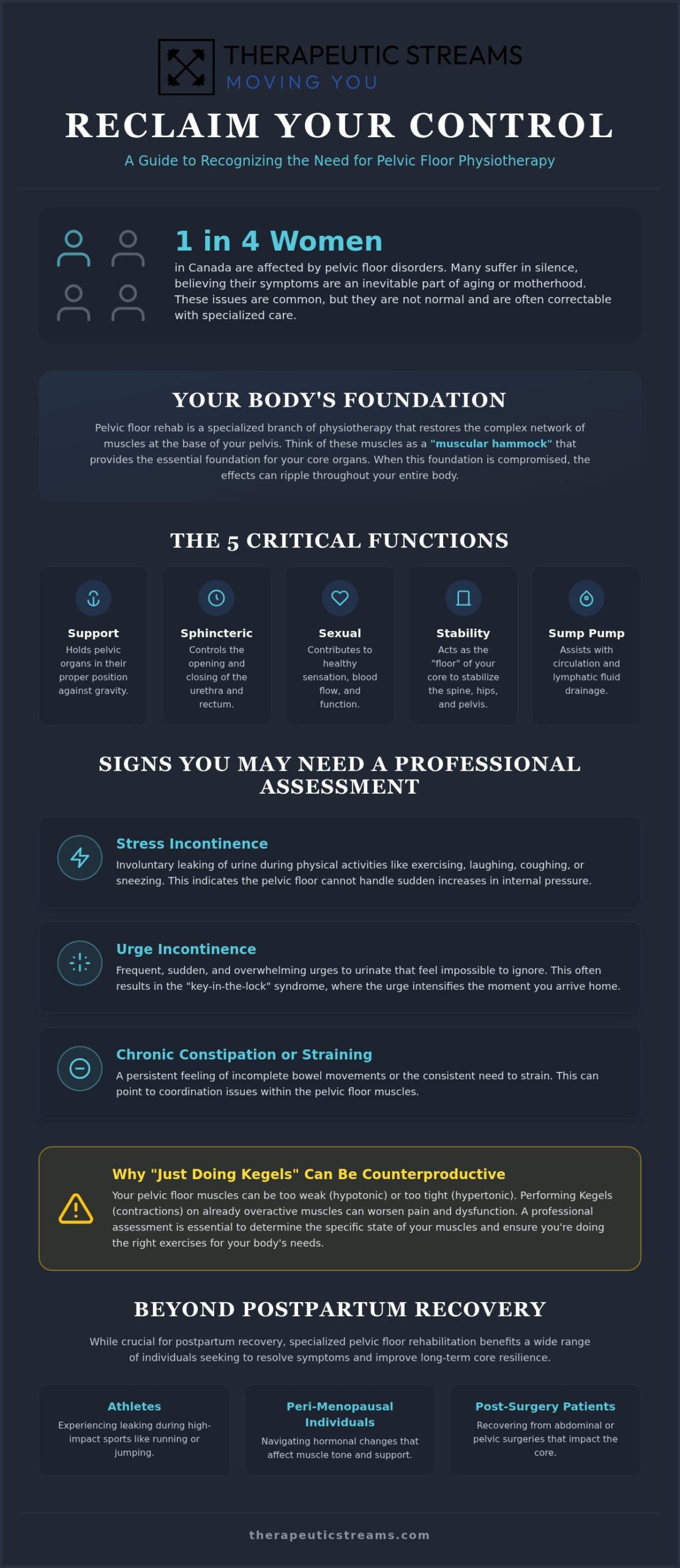
Approximately one in four women in Canada are affected by pelvic floor disorders, yet many suffer in silence because they believe their symptoms are an inevitable part of life. You might feel embarrassed by sudden bladder leaks or frustrated when pain during intimacy makes you feel disconnected from your body. It’s exhausting to feel like your physical health is no longer under your control, especially if you have been told to simply “give it time” or that your discomfort is normal. We believe you deserve to be heard and supported by an expert team that views pelvic health as a vital component of your overall musculoskeletal wellness.
This guide will help you identify the subtle and obvious signs that indicate you need professional pelvic floor rehab to restore your function and confidence. You’ll discover a clear recovery plan that moves beyond generic exercises toward specialized, clinical care. We will explore a comprehensive checklist of symptoms, explain why assessment-driven treatment is essential, and show you how a collaborative approach can help you thrive again.
Key Takeaways
- Recognize that “common” symptoms like leaking while sneezing are not actually normal and often indicate a need for professional intervention.
- Learn how pelvic floor rehab functions as a specialized branch of physiotherapy to recalibrate the “muscular hammock” supporting your core organs.
- Understand the value of an assessment-driven approach, including how optional internal exams provide the clinical data needed for a personalized recovery plan.
- Discover the benefits of integrated care in the Durham Region, where pelvic health is treated alongside lower back and musculoskeletal concerns through a collaborative team approach.
- Gain clarity on what to expect during your first visit to a private clinic in Whitby, from the initial consultation to the ease of online booking.
What is Pelvic Floor Rehab and Why Does it Matter?
Pelvic floor rehab is a clinical process of restoring muscle coordination and strength through targeted assessment. While many people associate this care exclusively with pregnancy, Pelvic floor physical therapy is actually a specialized branch of physiotherapy that addresses the complex network of muscles at the base of the pelvis. Think of these muscles as a “muscular hammock.” They provide the essential foundation that supports your bladder, bowel, and, in women, the uterus. When this foundation is compromised, the effects ripple through your entire body, impacting everything from your posture to your confidence in social settings.
Breaking the stigma surrounding pelvic health is vital for general wellness. For too long, symptoms like urgency or minor leaks have been dismissed as “normal” parts of aging or motherhood. However, these are often signs of mechanical dysfunction that can be corrected. Viewing pelvic health as a pillar of musculoskeletal health allows us to treat these issues with the same clinical rigor we apply to a knee injury or chronic back pain. It’s about moving toward a proactive model of care where you don’t just “manage” symptoms but resolve the underlying cause.
The Functional Role of Your Pelvic Muscles
Your pelvic floor doesn’t work in isolation. It serves five critical functions that are essential for daily life:
- Support: Holding pelvic organs in their proper anatomical positions against gravity.
- Sphincteric: Controlling the opening and closing of the urethra and rectum to prevent accidents.
- Sexual: Contributing to healthy sensation, blood flow, and function.
- Stability: Acting as the “floor” of your core to stabilize the spine, hips, and pelvis.
- Sump: Assisting the lymphatic and venous systems with circulation and fluid drainage.
These muscles must coordinate perfectly with your diaphragm and deep abdominals to manage internal pressure. If they are too tight or too weak, the system fails. This is why “just doing Kegels” can sometimes be counterproductive. If your muscles are already overactive or “hypertonic,” adding more contraction without professional guidance can actually worsen your pain and dysfunction. Effective pelvic floor rehab ensures you are doing the right work for your specific muscle state.
Who Can Benefit from Specialized Rehabilitation?
While postpartum recovery is a common reason to seek care, the scope of specialized rehabilitation is much broader. Athletes who experience leaking during high-impact sports, individuals navigating peri-menopause, and patients recovering from abdominal surgeries all find value in this clinical approach. The goal is to move you from a state of compensating for your symptoms to functioning optimally. Whether you are dealing with chronic pelvic pain or want to ensure your core is resilient for the long term, specialized assessment is the first step toward lasting wellness.
The Checklist: 7 Signs You Should See a Pelvic Floor Physiotherapist
Identifying the need for professional care shouldn’t be a guessing game. While many people believe that minor physical issues are just an expected part of life after childbirth or as they age, clinical reality suggests otherwise. It’s vital to realize that “common” does not mean “normal.” Leaking when you sneeze or having persistent hip pain are signals from your body that the “muscular hammock” we discussed earlier requires specialized attention. Ignoring these signs can lead to long-term musculoskeletal issues that impact your mobility and quality of life. This checklist serves as a clinical starting point for a conversation with a Whitby specialist to help you regain control.
Bladder and Bowel Control Indicators
When the sphincteric and support functions of the pelvic floor are compromised, control becomes a daily struggle. If you recognize any of these three signs, your system may be struggling to manage internal pressure effectively.
- Stress Incontinence: This is involuntary leaking during activities like exercise, laughing, or sneezing. It indicates that the pelvic floor cannot handle sudden increases in intra-abdominal pressure.
- Urge Incontinence: You might experience frequent, sudden urges to urinate that feel impossible to ignore. This often leads to “key-in-the-lock” syndrome, where the urge intensifies the moment you arrive home.
- Chronic Constipation: A persistent feeling of incomplete bowel movements or the need to strain often points to a coordination issue. Pelvic floor therapy is highly effective at retraining these muscles to relax and contract at the appropriate times.
Pain and Physical Discomfort
Dysfunction often manifests as physical discomfort that seems unrelated to the pelvis at first glance. These four signs often indicate that a more specialized assessment is required to find the root cause of your pain.
- Pelvic Heaviness: A sensation of pressure or “heaviness” in the vaginal or rectal area may indicate Pelvic Organ Prolapse. This happens when the support structures have weakened, allowing organs to shift from their anatomical positions.
- Radiating Pain: Unexplained lower back or hip pain that hasn’t responded to traditional therapy often stems from pelvic floor imbalance. Since these muscles help stabilize the spine and pelvis, their dysfunction can cause referred pain in the surrounding joints.
- Intimacy Issues: Pain or significant discomfort during or after sexual intimacy is a major indicator of hypertonic, or overly tight, muscles that cannot relax.
- Abdominal Doming: Visible “doming” or a gap in your abdominal wall when you sit up or exercise suggests Diastasis Recti. This condition means your core is no longer managing pressure effectively, leaving your back and pelvis vulnerable.
If you recognize yourself in these descriptions, starting pelvic floor rehab can provide the clinical clarity and relief you’ve been seeking. You can view our available appointment times to begin your assessment in a private, professional environment.
Beyond the Basics: How Clinical Assessment Works
A comprehensive pelvic floor rehab plan begins with a precise, evidence-based evaluation designed to uncover the mechanical roots of your discomfort. At Therapeutic Streams, our assessment-driven approach moves beyond surface-level symptoms to understand how your pelvic muscles interact with your breathing, posture, and core. We prioritize one-on-one sessions in a private environment, ensuring you feel supported as we gather the clinical data necessary for your recovery. This process is collaborative; we act as your partner in health, providing the education you need to understand your body’s specific requirements.
During your initial evaluation, your physiotherapist will discuss the role of an internal examination. We recognize that this can cause anxiety for some, so it’s vital to understand that these exams are entirely optional. While they are not mandatory, they are highly informative, allowing us to assess muscle strength, endurance, and coordination with a level of accuracy that external observation cannot match. To gather this data, we use professional techniques such as manual palpation or biofeedback to monitor muscle activity in real-time. This standard of Physical Therapy for Pelvic Health ensures that every recommendation we make is grounded in your actual physical state rather than generic assumptions.
The Difference Between Hypertonic and Hypotonic Muscles
Most people assume that pelvic issues always stem from weakness, but clinical evidence shows this is a common misconception. Muscles can be hypotonic, meaning they are weak and underactive, or hypertonic, meaning they are overly tight and unable to relax. If your muscles are already in a state of constant tension, performing repetitive strengthening exercises like Kegels can actually increase your pain and exacerbate symptoms like urgency. Identifying the specific “tone” of your pelvic floor is a primary goal of our assessment, as it dictates whether your therapy should focus on relaxation or strengthening.
Creating Your Personalized Treatment Pathway
Once we establish your baseline, we develop a structured recovery arc tailored to your life. This typically spans a 6-week to 12-week period, depending on the severity of your symptoms and your personal goals. Your pathway includes more than just clinical visits; it incorporates a customized home exercise program to maintain the gains made during your sessions. We focus on functional movements that integrate your pelvic floor with your daily activities, ensuring long-term resilience. A clinical assessment is the only way to distinguish between muscle weakness and muscle tension. This distinction is the foundation of a successful pelvic floor rehab experience that delivers lasting results.
Integrated Care: The Durham Region Advantage
The Durham Region offers a unique clinical environment where patients can access highly collaborative healthcare. At Therapeutic Streams, we recognize that treating the pelvic floor in isolation often leads to incomplete results. This is why we emphasize an integrated, team-based approach for pelvic floor rehab. By combining the expertise of physiotherapists, chiropractors, and massage therapists, we address the complex relationships between your internal muscle function and your external skeletal structure. We serve the Whitby, Oshawa, and Ajax communities with this model, ensuring that our patients receive comprehensive care that considers the whole body rather than just a single symptom.
Pelvic dysfunction rarely exists on its own; it often correlates with chronic lower back pain, hip instability, or postural imbalances. When one part of the system is out of alignment, the rest of the body must compensate. In Ontario, while these specialized services are generally not covered by OHIP, most private and workplace health benefit plans provide coverage under their general physiotherapy or chiropractic benefits. Our integrated model allows our team to communicate directly about your progress, ensuring that every treatment modality supports your primary recovery goals without the need for a physician’s referral.
Chiropractic Care and Pelvic Alignment
Your pelvis acts as the “house” for your pelvic floor muscles, which are the “occupants.” If the house is tilted or the foundation is uneven, the occupants can’t function efficiently. Chiropractic care focuses on the alignment of the spine and pelvis, ensuring that the bony structures provide a stable base for muscle retraining. There’s a powerful synergy between a chiropractic adjustment and pelvic floor exercises. Once the joints are moving correctly, the muscles can be retrained without fighting against structural restrictions. Addressing these foundational issues is often the missing piece for patients who haven’t seen results from exercise alone. For patients who also experience knee pain alongside pelvic instability, understanding the full range of joint support options — including PRP and hyaluronic acid injections — can be an important part of a comprehensive musculoskeletal recovery plan.
RMT and Soft Tissue Support
Registered Massage Therapy plays a critical role in managing the secondary muscle tension that often accompanies pelvic dysfunction. When your pelvic floor is overactive, surrounding muscles like the adductors and hip flexors often become chronically tight as they try to stabilize the area. Our therapists use targeted soft tissue techniques to release this tension, which improves your overall mobility and reduces referred pain.
Beyond physical release, Registered Massage Therapy Whitby helps patients realize the profound connection between systemic stress and physical tension. Stress often manifests as a “holding pattern” in the pelvic floor; massage provides a clinical pathway to down-regulate the nervous system. This holistic view is essential for long-term healing and prevents the recurrence of symptoms. For expecting mothers, combining pelvic floor physiotherapy with antenatal massage offers a comprehensive approach to managing pregnancy-related pelvic discomfort and preparing the body for postpartum recovery. If you’re ready to experience a more comprehensive approach to your recovery, you can book your integrated assessment online today to begin your journey toward wellness.
Taking the First Step: What to Expect in Whitby
Reclaiming your physical agency and comfort is a journey that begins with a single, proactive step. We understand that discussing pelvic health can feel deeply personal, which is why we have streamlined our process to prioritize your privacy and ease. Our clinic in Whitby offers a professional, boutique environment designed to reduce anxiety and foster a sense of security. From the moment you arrive, you’ll notice that our space is far from a cold, sterile facility; it’s a dedicated centre for healing where your journey is treated with the respect and clinical attention it deserves.
We’ve made the initial phase of pelvic floor rehab accessible through our convenient online booking system. This allows residents in Whitby and Oshawa to secure an appointment quickly. While a physician’s referral is not typically required to see a physiotherapist in Ontario, it’s helpful to know that most private and workplace health benefit plans cover these services under their general physiotherapy benefits. Although OHIP coverage is limited to specific circumstances, your private insurance can often be the key to accessing the specialized care you need. Our goal is to ensure you feel supported both clinically and administratively as you begin your recovery.
Preparing for Your Initial Consultation
Your first visit is a collaborative session where we establish your history and set clear, personal goals. We recommend wearing comfortable, loose-fitting clothing that allows for easy movement. During this time, we’ll discuss the specific signs you identified in the checklist earlier and how they impact your daily life. We want to provide you with a clear roadmap for your recovery, ensuring you understand the “why” behind every part of your treatment. It’s important to remember that you are always in control of the pace. Whether we’re discussing your history or moving through a physical assessment, we only proceed with what you find comfortable.
Your Path to Wellness Starts Here
The transition from discomfort to wellness is entirely within reach. By committing to a structured treatment plan, you can expect improved bladder control, a significant reduction in pelvic pain, and enhanced core stability. Our team is proud to serve the communities of Whitby, Oshawa, Bowmanville, and Ajax with evidence-based care that yields measurable results. You don’t have to manage these symptoms in silence or settle for “common” as your “normal.” Book your pelvic floor assessment at Therapeutic Streams today and take the first step toward a more confident, active future.
Reclaiming Your Function and Confidence
Pelvic health is a vital pillar of your overall musculoskeletal wellness. It’s not something you have to manage in isolation or accept as a permanent side effect of aging or motherhood. Professional pelvic floor rehab offers a clinical pathway to restore the coordination and strength of your core foundation, helping you move past the frustration of bladder leaks or persistent pain. By recognizing that common symptoms are not normal, you’ve already taken the first step toward a more active and comfortable life.
At Therapeutic Streams, we provide evidence-based, assessment-driven care within private treatment rooms to ensure your comfort and privacy. Our integrated team of physiotherapists, chiropractors, and RMTs works collaboratively to address the mechanical roots of your dysfunction. We’re dedicated to helping you regain your physical agency through a plan tailored specifically to your goals. You don’t have to navigate this journey alone.
Book Your One-on-one Pelvic Floor Assessment in Whitby today to begin your transition from discomfort to wellness. We look forward to helping you thrive and feel like yourself again.
Frequently Asked Questions
Is pelvic floor rehab covered by my insurance in Ontario?
Yes, most private and workplace health benefit plans in Canada cover these services under their general physiotherapy benefits. While the Ontario Health Insurance Plan (OHIP) does not typically cover pelvic floor physiotherapy for the general population, your individual insurance plan will determine your specific reimbursement. We recommend checking your policy’s annual limits and per-visit maximums for physiotherapy before your first session.
How long does it take to see results from pelvic floor physiotherapy?
Most patients begin to notice functional improvements within 6 to 12 weeks of consistent treatment. This timeline depends on the severity of your symptoms and your adherence to the personalized home exercise program we develop together. Clinical gains in muscle coordination often occur sooner than changes in pure muscle strength, providing early relief from urgency or discomfort.
Do I need a doctor’s referral for pelvic floor rehab in Whitby?
You don’t need a physician’s referral to book an appointment at a private clinic in Ontario. Physiotherapists are primary healthcare providers, meaning you can access pelvic floor rehab directly. However, some private insurance providers still require a doctor’s note to process your reimbursement claims, so it’s best to verify your specific plan’s requirements before your assessment.
Can I attend pelvic floor physio while on my period?
You can absolutely attend your session while on your period. Menstrual cycles can influence pelvic floor tension and symptom intensity, making it a valuable time for clinical observation. If you feel uncomfortable with internal work during this time, your therapist can focus on external manual therapy, core integration, or exercise progression to ensure your progress stays on track.
Is pelvic floor rehab only for people who have given birth?
Pelvic health is essential for everyone, not just those who have experienced pregnancy or childbirth. Athletes, individuals navigating peri-menopause, and those recovering from abdominal or pelvic surgeries often require specialized rehabilitation. We treat any person experiencing bladder issues, pelvic pain, or core instability regardless of their obstetric history, focusing on restoring optimal musculoskeletal function.
What happens if I don’t treat pelvic floor dysfunction?
Untreated dysfunction often leads to a progression of symptoms and secondary musculoskeletal issues. Minor leaks can develop into more significant incontinence, and untreated muscle weakness may contribute to pelvic organ prolapse. Additionally, the body often creates “holding patterns” or compensations in the hips and lower back, leading to chronic pain that becomes more complex to resolve during pelvic floor rehab later on.
How many sessions will I likely need?
The number of sessions required is highly individualized and based on your initial clinical assessment. Many patients find success with an initial evaluation followed by 4 to 8 subsequent visits to monitor progress and advance their treatment plan. We focus on empowering you with the tools to manage your health independently, ensuring you achieve lasting results with an efficient number of clinical visits.
Is the internal exam mandatory during the assessment?
No, an internal examination is never mandatory. While it provides the most accurate clinical data regarding muscle tone and strength, we can still develop an effective treatment plan using external assessment techniques. Your comfort and consent are our highest priorities; you always remain in control of the pace and the methods used during your evaluation.