Back pain after being rear-ended in Ajax: symptoms, care and coverage
Feeling fine after a rear-end collision doesn’t rule out an injury. Back pain after being rear-ended in Ajax may appear hours or days later, and sometimes weeks later. Symptoms can emerge after the initial impact, so seek a medical evaluation the same day if possible.
Discomfort that appears after a collision can be unsettling, especially if you felt well at first. Knowing what to watch for and when to seek care can help you make informed decisions before returning to your usual activities.
This article covers common back-injury symptoms, treatment options and how recovery may unfold. It also explains Ontario auto insurance treatment coverage, so you can better understand what to expect while focusing on healing.
Key Takeaways
- Back pain can emerge hours or days after a rear-end collision, so feeling well at first doesn’t rule out an injury.
- Notice whether pain travels into your legs or comes with numbness, and seek urgent medical attention for new weakness or loss of bladder or bowel control.
- Care may include physiotherapy and other treatment tailored to your symptoms, movement and recovery needs.
- Recovery varies with the type and severity of the injury; track changes in your symptoms and function over time.
- Learn how Ontario auto insurance may cover treatment for 12 weeks and what to know when reporting a collision.
Can Back Pain Be Delayed After a Car Accident?
Yes. Back symptoms may start immediately, hours or days after a rear-end collision, or sometimes weeks later. A prompt assessment can help identify injuries that aren’t obvious at the scene.
Delayed Back Pain
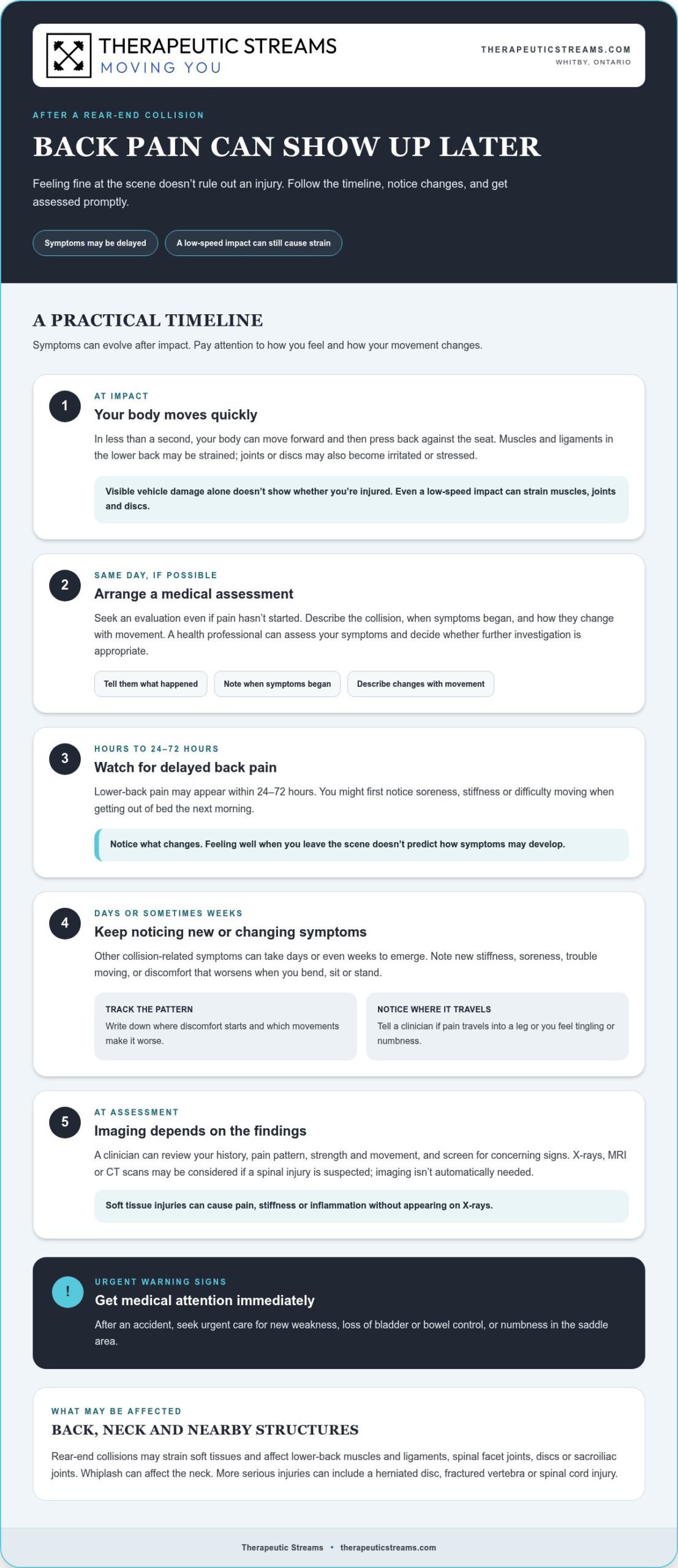
Delayed back pain is discomfort that becomes noticeable after the collision, rather than at impact. The time lag matters because feeling well at the roadside doesn’t tell you how your symptoms may develop. Lower-back pain may appear within 24-72 hours, while other collision-related symptoms can take days or even weeks to emerge.
Watch for new stiffness, soreness or difficulty moving, even if you felt well when you left the scene. You might first notice discomfort getting out of bed the next morning. A low-speed impact can still strain muscles, joints and discs, so visible vehicle damage alone doesn’t show whether you’re injured.
Common Rear-End Collision Injuries
A rear-end collision can strain soft tissues and affect spinal structures as your body moves rapidly forward and backward. That motion can happen in less than a second: your body moves forward, then presses back against the seat. Muscles and ligaments in the lower back may be strained, while spinal facet joints, discs or sacroiliac joints can become irritated or stressed.
Some injuries are more serious. A collision can cause a bulging or herniated disc, a fractured vertebra or, in severe cases, spinal cord injury. Whiplash is also possible, including when vehicles move slowly or one is stopped. The Quebec Task Force’s 1995 research monograph on whiplash-associated disorders describes whiplash as a collision-related injury involving the neck. Soft tissue injuries may not appear on X-rays, even when they cause pain, stiffness or inflammation.
Prompt Medical Assessment
A medical assessment means a health professional evaluates your symptoms and determines what care or further investigation may be appropriate. If possible, seek an evaluation the same day as the collision, even if pain hasn’t appeared. Describe the impact, when symptoms began and how they change with movement.
An assessment helps distinguish soreness from signs that need closer investigation. X-rays, MRI or CT scans may be considered for suspected spinal injuries, but imaging isn’t automatically needed. A clinician can screen for concerning signs and decide whether it’s appropriate. Soft tissue injuries can cause symptoms without showing on X-rays. Note new symptoms and when they began, and seek medical attention promptly if your condition worsens.
What Are the Symptoms of Back Injury After a Car Accident?
After a car accident, symptoms can affect your back, neck, shoulders or nerves, and may change during recovery. Note where discomfort starts, whether it spreads and which movements make it worse. A clear account helps a clinician assess the pattern, not just the pain.
Back symptoms may include aching, stiffness, muscle spasms or pain that worsens when you bend, sit or stand. If discomfort travels from your back into a leg, or you notice tingling or numbness, describe the path and affected area during your medical assessment. These sensations can signal nerve involvement, which a clinician can assess.
Note whether symptoms affect one or both legs or interfere with walking and daily tasks. For example, record whether numbness appears while standing or shooting pain follows a particular movement. Seek medical attention immediately for new weakness, loss of bladder or bowel control, or numbness in the saddle area. These symptoms need urgent attention after an accident.
Rear-end impacts can strain or tear neck muscles, ligaments and tendons, causing whiplash symptoms. Back injuries may affect the lower or middle back, and shoulder discomfort is also worth reporting during an assessment. Don’t assume one sore area explains every symptom. Describe changes from your neck and shoulders down through your back and legs.
A collision can also cause a brain injury, even if your head didn’t strike anything. If you have concerns after an accident, seek medical assessment and describe the collision, your symptoms and when they began. Mention any changes in how you feel or function.
A personal injury lawyer may help organize information relevant to an injury claim, such as medical records, collision photographs and witness statements. Keep your own records of appointments and symptoms, and save any photographs or witness details you already have. Clear documentation can help show how your condition and recovery have changed since the accident.
If symptoms are affecting movement or daily activities, explore care options for musculoskeletal concerns as part of your next steps.
Physical therapy, medication, injections, and surgery
In Ontario, a clinician assesses your symptoms, movement and function, then decides whether imaging is appropriate. Treatment may include physiotherapy, medication or other medical interventions, depending on the injury and its effect on daily activities.
For lower-back pain after a car accident, immediate X-rays or MRI aren’t needed in most cases. A clinician first screens for concerning symptoms and considers your history, pain pattern, strength and movement. Imaging may be appropriate if findings suggest a spinal injury or the results could guide care. A scan isn’t a treatment plan by itself; it’s one part of understanding the problem.
Physiotherapy can assess movement, strength and function, then use targeted exercises to support a gradual return to daily activities. Your plan may start with pain relief and gentle movement, then progress to strengthening and functional training as your ability changes. For example, a clinician may adapt an exercise if bending remains difficult. Follow the prescribed plan and report changes rather than pushing through worsening symptoms.
Medication may be discussed to help manage symptoms alongside movement and rehabilitation. Injections or surgery involve different medical decisions, based on the injury, symptom severity and response to other care. Surgery may be considered when extreme back pain persists for weeks to months. These options aren’t interchangeable: clinical findings and effects on function help shape which approach is considered.
Keep a clear record as care continues. Save appointment details, treatment records, recommendations and receipts for medical expenses. Note changes in pain, mobility and work duties, such as difficulty lifting or sitting through a shift. These details can show how the injury affects recovery and activities over time, particularly if symptoms become chronic.
Rehabilitation may involve appointments, home exercises and changes to your usual routine. Track which activities aggravate symptoms and which movements feel manageable, then share those observations at follow-up visits. If your work schedule changes or you miss shifts, record the dates and lost income. Medical bills, treatment records and income details help keep the practical effects of the accident organized.
After a rear-end collision, muscles and spinal structures may need different care depending on the injury. Follow-up assessments can show whether strength, movement and daily function are improving. If symptoms worsen or new concerns appear, seek medical advice promptly instead of relying on an old imaging result or treatment plan.
How Long Will Symptoms Last?
Recovery depends on the injury and its effect on your movement and daily function. Track symptom changes over time, and treat serious warning signs as urgent.
Nerve-Related Back Pain
Nerve-related back pain can include shooting pain, tingling or numbness that travels into a leg. These symptoms may signal nerve involvement and affect walking, standing or other everyday activities. Record where the sensations begin, where they travel and what activity brings them on. A clinician can assess these patterns and test for nerve involvement.
Neck and Shoulder Symptoms
Neck and shoulder soreness can occur alongside back pain after a collision, including with whiplash. Symptoms may develop or change after the crash, so note stiffness, pain and movement limits as they arise. For example, record whether turning your head or lifting an arm becomes difficult. Describing each affected area helps clarify how the injury affects your function.
Duration varies by injury. Mild back pain may settle within days or weeks, while muscle strains and sprains normally resolve within 1-2 weeks. Herniated disc pain typically subsides in 2-6 weeks. Whiplash recovery usually occurs within three months, though severe symptoms can last years. Fractured or shifted vertebrae may take months to years to recover.
Therapeutic Streams Sport Rehab defines chronic back pain as pain lasting more than three months. That timeframe describes duration, not the cause or severity of your symptoms. If pain continues beyond this point, consult a clinician about changes in movement, sleep, work or daily activities. Persistent pain deserves reassessment, especially when it changes or interferes with function.
Some serious warning signs require immediate medical attention, even if other symptoms seem manageable. Seek medical help immediately after a collision for new weakness, loss of bladder or bowel control, or numbness in the saddle area. These symptoms may indicate a serious problem. Don’t wait to see whether they pass.
Other symptoms may emerge after the initial impact. Whiplash-related discomfort, back stiffness or radiating leg pain may become noticeable later, so note when each symptom starts and how it changes. A simple daily record can track pain location, movement limits and affected activities. Share those details during medical follow-up, particularly if symptoms worsen or new nerve signs appear.
Keep appointment records and notes about treatment, missed work and changes in daily function. These details can document the course of recovery and the practical effects of an injury, including information relevant to a compensation claim. Symptom duration alone doesn’t tell the whole story; the injury, its effects and your progress all matter.
Ontario auto insurance coverage for treatment
In Ajax, seek assessment from a healthcare professional; urgent symptoms need immediate medical attention. Notify your own insurer and report the collision; ask how to apply for accident benefits.
Treatment Coverage and Referrals
Ontario auto insurance treatment coverage helps pay for care after a motor vehicle accident. In Ontario, people involved in a motor vehicle accident are entitled to 12 weeks of treatment paid through their car insurance without a premium increase. This can help you understand the initial treatment period for strain, ligament pain or other tissue injuries. Referral requirements may affect coverage: some insurance plans require a doctor’s referral for treatment.
Reporting an Accident and Applying for Benefits
Reporting means notifying your own insurer about the collision and asking about its accident-benefit application process. Share the collision date, your injuries and the care you’ve received, then complete the insurer’s forms carefully. Keep a copy of each form and supporting record. For example, note when back pain began and include relevant treatment information. Clear, consistent details help connect your application to the collision and its effects.
Communicating with Insurers
Keep communication with your insurer factual and organized. Describe what happened and the symptoms you’ve experienced, without guessing about injuries or causes. Write down the date of each call, the representative’s name and any requested documents. If an adjuster asks about treatment, refer to your records rather than relying on memory. A personal injury lawyer can help you understand claim-related questions before speaking with an adjuster.
Keep records of medical appointments, therapy, prescriptions, bills and time missed from work. These documents can help you track treatment and lost income after the collision. If your care changes, such as with a recommendation for surgery, save the updated clinical notes and related paperwork. A simple folder or dated log can make it easier to follow your medical and insurance correspondence.
Accident benefits and a personal injury claim are not the same question. Your insurer handles accident-benefit communication, while records of treatment, expenses and lost income can help document the collision’s effects. Keep copies of collision details, medical notes and receipts together. For recovery planning, explore rehabilitation care options alongside your clinical follow-up.
Therapeutic Streams Sport Rehab: Chiropractic Care
For people in Ajax, Therapeutic Streams’ Whitby clinic offers chiropractic care for back discomfort after a collision. If symptoms affect movement or daily activities, a clinical assessment can help identify your needs and guide a suitable care plan. Physiotherapy may also support a gradual return to movement through tailored exercises and functional rehabilitation.
Care should reflect your symptoms, comfort and progress, not follow a fixed routine. If you have new weakness, loss of bladder or bowel control, or numbness in the saddle area, seek urgent medical attention before pursuing rehabilitation.
If you’re ready to discuss care for collision-related back pain, contact Therapeutic Streams Sport Rehab.
Take the next step toward steadier movement
Returning to everyday routines can start with a clear, manageable goal, such as sitting comfortably, walking with ease or resuming a familiar activity. If back pain after being rear-ended in Ajax is still affecting how you move, focus your next conversation on the tasks you want to regain and the changes you’ve noticed. This gives your care team a practical way to shape the next stage around your needs.
Therapeutic Streams Sport Rehab offers Chiropractic Care and Physiotherapy for musculoskeletal concerns, as well as Pelvic Floor Physiotherapy when pelvic health is part of your care needs. The right path begins with a conversation about your symptoms, function and priorities, so your next step feels considered rather than rushed.
Contact Therapeutic Streams Sport Rehab to discuss care options and the movement goals that matter to you. With a thoughtful plan and steady progress, you can work toward feeling more at ease in your daily life.
Frequently Asked Questions
Do I need X-rays or an MRI after my accident?
Not always; lower-back pain after a collision doesn’t automatically require imaging. A clinician can assess your symptoms, movement and strength, then decide whether an X-ray, MRI or CT scan could clarify a suspected injury. Imaging choices depend on the assessment findings and whether a scan would guide care. Tell the clinician about new symptoms, previous back issues and changes in walking or daily function.
Does Back History Matter?
Yes. Share any previous back injury, ongoing condition, past treatment or usual symptoms during your assessment. This helps distinguish familiar discomfort from changes that began after the collision. A pre-existing condition doesn’t automatically rule out compensation if the crash worsened it. For example, explain whether pain now travels farther, lasts longer or limits activities you could manage before. Accurate timelines help clarify what changed.
Should I See a Chiropractor or an Orthopedist?
The right starting point depends on your symptoms and assessment findings. Chiropractic care addresses musculoskeletal concerns through manual care, while a suspected fracture, spinal cord injury or urgent warning sign needs prompt medical evaluation. Don’t choose based only on a treatment or specialist’s name. Describe your pain, movement limits and any numbness or weakness so the appropriate next step can be identified.
What Can I Do at Home to Support My Back Injury Recovery?
Use gentle movement rather than prolonged bed rest; short walks can help you stay mobile. Ice may be used during the first 2-3 days, followed by heat, if that suits your symptoms. Avoid heavy lifting and twisting during recovery, and follow the activity guidance you receive. For example, pause an activity that sharply increases pain and record what triggered it for your next appointment.
What Causes Back Injuries?
In a rear-end crash, your body can move quickly forward and backward, placing force on the muscles, ligaments and joints in your back. This movement may strain soft tissues or irritate spinal structures, including discs and facet joints. The impact’s direction and the way your body moves help explain why symptoms differ. Visible vehicle damage alone doesn’t show which tissues were affected.
What causes back pain after a rear-end collision?
Back pain can follow the rapid movement of your body during impact. Muscles and ligaments may be strained, while spinal joints or discs can become irritated. Pain may stay in one area or travel into a leg if nerves are involved. If you have back pain after being rear-ended in Ajax, note where it starts, where it spreads and which movements change it. Those details help guide an assessment.
When should you seek emergency care for back pain after a car accident?
Seek emergency medical attention immediately for new weakness, loss of bladder or bowel control, or numbness around the saddle area. These warning signs require urgent assessment, even if your back pain seems manageable. Don’t wait for a routine appointment or try home treatment first. If symptoms are rapidly worsening or you’re unsure how urgent they are, contact emergency services for guidance.
Can whiplash or spinal injuries cause delayed back pain after a rear-end collision?
Yes. Whiplash symptoms and some spinal-injury symptoms may appear after the collision rather than at the scene. Neck stiffness, back soreness or new pain with movement can become noticeable later. Keep a dated note of when each symptom begins and how it affects daily tasks. Seek an assessment if symptoms develop, worsen or include nerve changes, rather than assuming a delay means the injury is minor.