Ways to Garden With Less Strain as a Senior
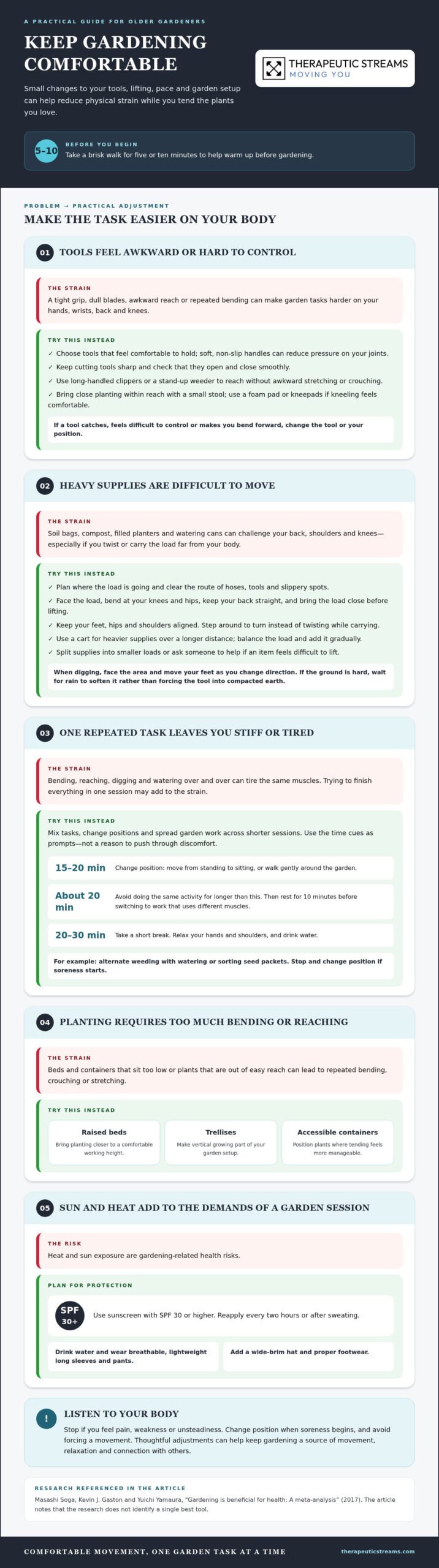
Comfort doesn’t have to come at the cost of time in the garden. The most useful pain-free gardening tips for seniors are to choose comfortable, sharp tools, keep loads close to your body, and alternate tasks with rest. A brisk walk for five or ten minutes can help warm you up before you begin.
If bending, kneeling, or carrying supplies leaves you sore, it’s natural to wonder whether gardening is still manageable. Small changes to your routine and garden setup can ease physical strain while helping you keep the pleasure of tending plants.
Learn how to choose and use tools, move soil and other materials more comfortably, pace your work, and adapt beds and pathways to suit you. You’ll also see how gardening can add movement, focus, enjoyment, and time with others to your day, so you can keep cultivating the things you love.
Key Takeaways
- Choose tools that feel comfortable in your hands, and use sharp, long-handled options to reach without unnecessary bending.
- Keep gardening loads close to your body, move your feet instead of twisting, and use a cart for heavier supplies.
- Break up repetitive tasks, change positions, and pause when your back or knees begin to feel sore.
- Raised beds, trellises, and accessible containers can bring planting and tending closer to a comfortable working height.
- With thoughtful adjustments, gardening can remain a source of movement, relaxation, and connection with others.
1. Choosing sharp, appropriately sized tools
For pain-free gardening tips for seniors, start by matching each tool to your grip and the task. Hold a hand trowel or pruner and see whether you can control it without squeezing tightly. Soft, non-slip handles can reduce pressure on your joints, while work gloves protect your skin around rough stems. If a handle feels awkward, try a different shape before taking it into the garden.
A 2017 meta-analysis by Masashi Soga, Kevin J. Gaston, and Yuichi Yamaura, “Gardening is beneficial for health: A meta-analysis,” examined gardening and health outcomes. It doesn’t identify a single best tool, so choose based on the movement and plant involved. For example, use hand pruners for reachable stems, rather than stretching to reach them with an unsuitable tool.
Keep cutting tools sharp so you can cut without forcing the blades. Before pruning, check that the tool opens and closes smoothly. Choose a different pair if it catches or feels hard to control. Long-handled clippers can extend your reach for some branches. For weeds, a stand-up weeder lets you work without crouching or crawling.
To help limit back, knee, and wrist strain, choose tools that let you work upright, feel comfortable to hold, and reduce repeated bending. A small stool can bring close planting within reach. If kneeling feels comfortable, a foam pad or kneepads can cushion your knees. Stop and change position if soreness starts.
Heat and sun exposure are gardening-related health risks. Stay hydrated and protected from the heat, wear breathable, lightweight long sleeves and pants, and use sunscreen with SPF 30 or higher. Reapply sunscreen every two hours or after sweating. A wide-brim hat and proper footwear are practical additions for a garden session.
Before starting, check that handles are secure and cutting edges are sharp. Keep the tools you need close by in a stable container instead of carrying several at once. These pain-free gardening tips for seniors can help you choose equipment for the task, whether you’re trimming herbs or tending flower beds. A comfortable grip and suitable tool let you focus on the plants and the pleasure of seeing them grow.
When a task is beyond easy reach, let the tool do more of the reaching. A long handle can extend your reach and help you avoid awkward stretching. For cutting or pulling, notice whether the handle lets you keep your wrist in a comfortable position. Matching the tool to the movement can help limit strain and prevent you from compensating with an awkward wrist position.
For weeding and clipping, choose stand-up tools that let you work upright and limit fatigue from bending forward. Stand-up weeders and clippers can also help you avoid crouching, kneeling, or crawling. Match the tool to the task and the area you need to reach. If it makes you bend forward, try a stand-up option or one with a longer handle.
2. Lifting and moving heavy materials
Soil bags, filled planters, compost, and watering cans can challenge your back, shoulders, and knees. Digging and repeated bending also create strain, especially when you lift while twisting or carry a load far from your body. These are common gardening tasks that can lead to pain or injury for seniors.
Before lifting a soil bag, decide where it will go and clear the route of slippery spots, hoses, and tools. Stand with both feet firmly on the ground, facing the bag and its destination. Bend your knees and hinge forward from your hips, keeping your back straight and chest open. Bring the load close to your body before lifting, then use your legs to rise.
Keep your feet, hips, and shoulders aligned as you move. If you need to turn, step around instead of twisting your spine while holding the bag. Set it down just as carefully: bend at your knees and hips, keep the load close, and avoid turning your upper body. Twisting while placing soil can leave your back sore for days.
A cart can make it easier to move soil bags or other heavy supplies over a longer distance. Load it gradually and balance the weight so it doesn’t tip or pull you off position. If an item feels difficult to lift, ask someone to help rather than forcing the movement. You can also split the task into smaller loads, such as carrying a little compost at a time in a sturdy container.
When digging, keep your back straight and use your legs to drive the spade into the soil. Face the area you’re working on and move your feet when you change direction. If the ground is hard, wait for rain to soften it before digging; forcing a tool into compacted earth adds unnecessary strain. Plan where you’ll place each pile before you begin.
Pay attention to your body’s signals as you lift and carry. Stop if you feel pain, weakness, or unsteadiness, and avoid holding a bent position with your back rounded longer than needed to reposition. Simple strength exercises may support everyday movement, but choose movements that suit your abilities and health. Good positioning, help with heavier loads, and a steady pace can make garden chores more manageable.
3. Pacing gardening activity and taking breaks
Gardening often involves bending, reaching, digging, and watering, so repeating one movement can tire the same muscles. Plan a mix of tasks instead of trying to finish every chore in one session. For example, alternate weeding with watering or sorting seed packets, then change position before stiffness builds. Short sessions spread across the week can be easier to manage than a long garden marathon.
Use the clock as a prompt, not a reason to push through discomfort. Take a short break every 20-30 minutes, and avoid doing the same activity for more than 20 minutes at a time. After about 20 minutes of one task, rest for 10 minutes before switching to work that uses different muscles. You can also change positions every 15-20 minutes, moving from standing to sitting or walking gently around the garden.
During each break, relax your hands and shoulders, drink water, and notice how your back and knees feel. If soreness begins, stop that task and rest rather than finishing “just one more” row. If leaning forward for a few minutes makes your back uncomfortable, slowly stand and gently lean backward a few times. Return to the task only if the movement feels comfortable.
Gentle stretches can help you loosen up before and during garden work. After a short warm-up, try a comfortable back stretch and hold it only as long as feels comfortable. A hamstring stretch or shoulder stretch can each be held for 10-15 seconds. Keep each movement controlled; stop if it causes pain, and avoid bouncing. Repeat a stretch only while it feels easy and steady.
When watering, switch hands or use a wand to reduce prolonged reaching overhead. Alternate watering with a seated task, such as removing dead leaves from a nearby planter. When digging, pause to stand upright and move your shoulders before starting another patch. These changes break up repeated bending and give working muscles time to recover between efforts.
Finish a session with a short walk and gentle stretches similar to those you did beforehand. After an active afternoon of planting, notice how you feel later that day and the next morning. If pain lasts more than a day or two, you may have overdone the workload. Next time, shorten the task, take breaks sooner, or spread it across another day.
4. Raised beds and vertical gardening
Raised beds bring soil and plants closer, reducing repeated bending and kneeling. For seated gardening, a bed height of 24-36 inches can make planting easier to reach. For standing work, beds around 30-36 inches high can support a more upright posture. Adjust the height to your reach and the position you find comfortable.
For wheelchair or seated gardening, aim for a raised bed 24-36 inches high. Keep it no more than 4 feet wide, so you can reach the centre from either side. Leave clear space around the bed for approaching and turning; garden paths should be at least 36 inches wide, with 60 inches ideal for turning.
Bed width affects how far you must reach, so plan access from both sides before building. A bed no wider than 4 feet lets you tend its centre without leaning far across the soil. Keep frequently tended plants near the edge, and place taller plants farther back. This layout can reduce awkward reaching while keeping the garden productive.
For a lower-maintenance Whitby garden, choose locally hardy perennials or herbs suited to your sunlight and soil. Group plants with similar watering needs, and select varieties that don’t require frequent pruning. Microgreens are another compact option for containers; they typically take 7-14 days from planting to harvest. Match each plant to the space and care routine you can comfortably maintain.
Trellises and vertical supports extend growing space upward, helping keep climbing plants within reach. Place a trellis beside a raised bed and guide stems along it as they grow. Secure supports firmly before plants become heavy, and keep the main tending area clear. This setup can reduce ground-level work and make plant care more enjoyable.
If arthritis, limited mobility, or balance concerns make ground-level gardening difficult, bring the work closer instead of kneeling. Use elevated planters, a stable seat, and lightweight containers within easy reach. Choose paths with firm, textured surfaces, such as compacted crushed stone or suitable pavers, for steadier movement. Keep hoses and tools out of the route between beds.
Test the layout before filling a new bed: reach across its width from your usual seated or standing position, then check whether you can turn safely. A small container near a doorway can hold herbs or microgreens without a trip across the garden. These practical adaptations can protect your posture and joints while preserving the pleasure of tending fresh growth.
5. Gardening’s physical, mental and cognitive benefits
Gardening can bring gentle physical activity into an ordinary day. Raking leaves, planting seedlings, and walking between beds all involve movement, while tending a few plants gives each task a clear purpose. The effort varies by task, so choose activities that suit your energy and comfort. A small garden can offer meaningful activity without turning the afternoon into strenuous work.
Different garden jobs call for different movements. Watering containers, trimming herbs, and sorting seed packets each engage your body in their own way. This variety can make outdoor activity feel less repetitive than doing one exercise alone. Focus on comfortable movement rather than measuring performance, and stop if discomfort changes how you move.
A garden can also offer welcome focus when daily stress feels distracting. Notice the scent of fresh herbs, the feel of soil, or the first flowers opening in spring. Choose a simple task, such as deadheading blooms or checking leaves for new growth, and give it your attention. These sensory details can make gardening absorbing, not just another chore.
Planning and caring for plants can engage memory and attention. You might decide where to place seedlings, remember which pots need water, or notice changes in a leaf from one visit to the next. A brief garden journal can help: write down the plant, the task, and what you observed. These small decisions give your mind something purposeful to follow without suggesting that gardening prevents cognitive decline.
Gardening can be more enjoyable when you share it. Invite a friend, neighbour, or family member to plant herbs, exchange ideas, or admire what’s blooming. In Whitby, the changing seasons offer natural milestones, from spring shoots to autumn leaves. Shared outdoor time can bring conversation and companionship alongside gentle activity.
Keep the aim flexible: tend a few plants, enjoy the fresh air, and let your comfort guide the session. Ergonomic changes can help reduce strain, but persistent pain or repeated injuries may need individual attention. If discomfort is stopping you from enjoying garden activities, explore support for movement-related discomfort and find a suitable next step.
Thirty minutes of moderate gardening activity can burn 125-300 calories. Raking, digging, planting, or weeding for 30 to 45 minutes is moderate cardiovascular exercise that may burn approximately 150 to 300 calories, depending on age and health. An estimate for 30 to 45 minutes of gardening likewise gives approximately 150 to 300 calories, depending on a person’s age and health. These figures describe possible energy use, not a target or a reason to work at a fixed pace. The actual effort depends on the task and the person, so a comfortable session can still be worthwhile without tracking calories.
A study found that 55.5% of home gardeners considered gardening good exercise, while 69% found gardening relaxing. Gardening with friends, family, or neighbours can make it a shared activity that brings joy and companionship. Sharing a session can leave room for both tending plants and conversation: people can choose tasks that suit them, pause when needed, and enjoy what is growing together. This keeps the emphasis on an experience that feels pleasant and manageable, rather than on how much work gets done.
Therapeutic Streams Sport Rehab: Chiropractic Care
Therapeutic Streams Sport Rehab can help address discomfort that makes gardening movements harder. If back or joint soreness continues after you adjust your tools, workload, and garden setup, chiropractic care or physiotherapy may be a helpful next step. A clinical assessment can consider your symptoms, mobility, and the tasks that aggravate discomfort, then guide care suited to your needs.
Care can focus on practical goals, such as moving more comfortably while planting or reaching, or returning to garden tasks after a break. The right approach depends on your concerns and how they affect daily movement. You don’t have to wait until gardening feels impossible to seek support.
Contact Therapeutic Streams Sport Rehab or visit therapeuticstreams.com to learn about your next step.
Keep Making Room for the Garden
Your relationship with gardening can evolve over time. Think about what you most enjoy, whether that’s growing fresh herbs, watching flowers open, or spending quiet moments outdoors. Let those priorities shape the garden you create instead of feeling you must maintain every corner. The best pain-free gardening tips for seniors are the ones that help you keep a meaningful place for plants in your everyday life.
If discomfort continues to interfere with activities you value, consider getting guidance tailored to your movement and goals. A clinical assessment can help clarify what may be contributing and identify a suitable path forward. You deserve to make informed choices about your comfort and the activities that matter to you.
Contact Therapeutic Streams Sport Rehab to discuss your next step. Keep your plans flexible, follow what feels manageable, and make room for the garden in a way that works for you.
Frequently Asked Questions
Which ergonomic gardening tools work well for older adults in Canada?
Choose a tool by testing the movement you’ll use, not just judging its appearance. If you wear gardening gloves, keep them on while trying to open and close pruners. Notice whether the handles fit your hand span and whether you can control the cutting action smoothly. If your garden involves different tasks, consider which tools can serve more than one purpose without becoming difficult to handle.
Are raised garden beds or container gardens easier on seniors’ joints?
Either option can suit you; the better choice depends on your space and what you want to grow. A raised bed can accommodate several plants in one growing area, while containers let you start small with options such as herbs for cooking. Before choosing, consider how much space you can tend and whether you’d prefer one bed or several separate pots.
How should seniors pace gardening, take breaks, and warm up safely?
Use a familiar, gentle warm-up, then let comfort guide your pace through the session. A simple garden log can help you notice patterns: jot down the task, how it felt, and whether discomfort lingered afterward. If a particular job repeatedly leaves you sore, adjust it next time or leave it for another day. This makes pacing personal rather than tied to a fixed schedule.
What are safe techniques for lifting soil bags, kneeling, bending, and reaching?
For ground-level work, plan how you’ll rise before kneeling. Keep a stable seat or fixed support within reach, and don’t pull yourself up using a plant, loose table, or gardening tool. For reaching, bring individual pots or supplies closer before starting instead of stretching across a crowded work area. These small setup choices can make transitions between tasks easier to manage.