BPPV Treatment in Oshawa with Epley Maneuver and Vestibular Therapy
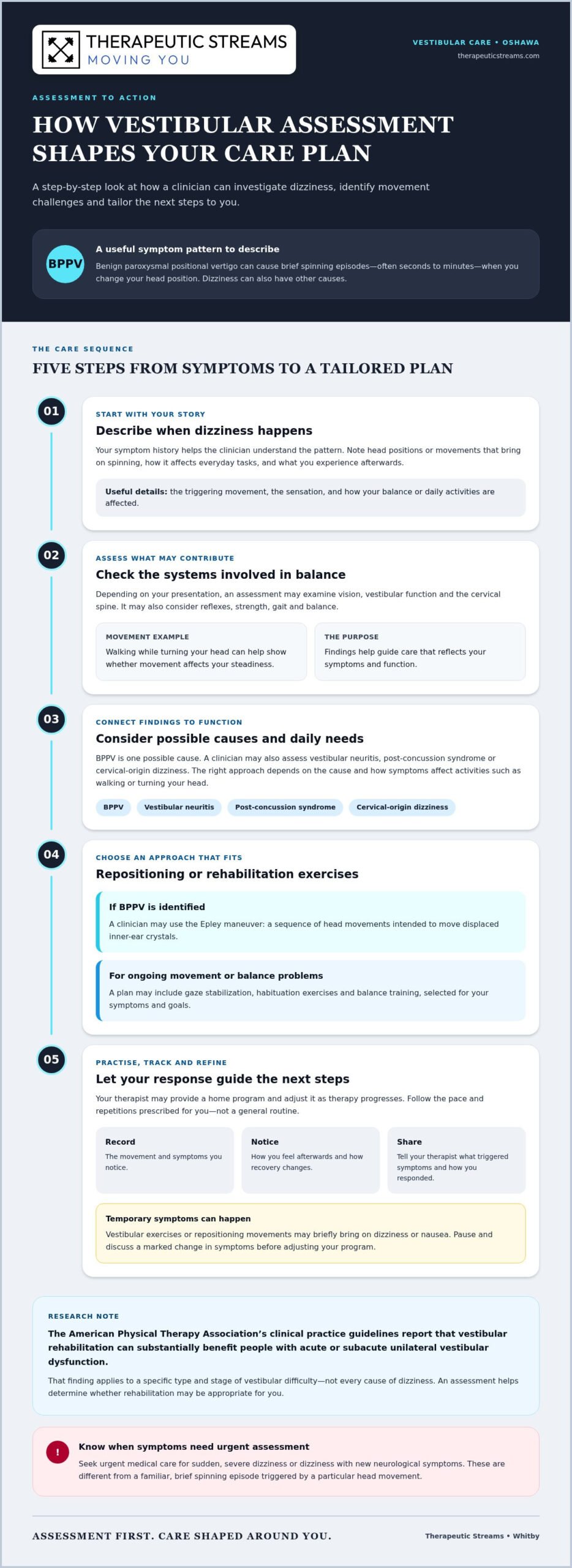
For BPPV treatment in Oshawa, the Epley maneuver may help move displaced inner-ear crystals through a sequence of head movements. BPPV can cause brief spinning episodes, often lasting seconds to minutes, when you change your head position. Dizziness can have other causes, so identifying what may be behind your symptoms is an important first step.
A sudden wave of vertigo can make familiar routines feel like walking a forest path in shifting light. Here, you’ll learn what may cause dizziness, how clinicians assess BPPV, and when the Epley maneuver or vestibular therapy may help.
We’ll also explain how vestibular rehabilitation exercises support balance and movement, what to expect as treatment progresses, and how personalized care can help you move forward with greater confidence.
Key Takeaways
- BPPV can cause brief spinning episodes when you change head position, but dizziness may also have other causes.
- A clinical assessment can help identify the pattern of your symptoms and guide the next step in care.
- The Epley maneuver uses a sequence of head movements to reposition inner-ear crystals associated with BPPV.
- Vestibular therapy may include habituation exercises, gaze stabilization, and balance training to support everyday movement.
- Learn how physiotherapy at Therapeutic Streams Sport Rehab can support a personalized plan for dizziness and balance concerns.
Can vestibular therapy help with vertigo from BPPV?
Yes, vestibular therapy may help manage vertigo and balance difficulties, including symptoms caused by BPPV. The approach depends on your symptoms: a clinician may use repositioning for BPPV and exercises for ongoing movement or balance problems.
Vestibular and Home Exercises
Vestibular physiotherapy uses tailored activities to support balance, vision, and movement. Gaze stabilization exercises train you to keep a target clear while your head moves, such as looking at a letter while gently turning your head from side to side. Habituation exercises repeat specific movements that trigger symptoms, helping reduce your response over time.
A therapist selects exercises based on your symptoms and function, then may provide a home program. Follow the movement, pace, and repetitions prescribed for you rather than copying a general routine. For example, if turning your head brings on dizziness, your program may include a controlled version of that movement.
Temporary Symptoms During Exercises
Some people feel temporarily more dizzy or nauseated during vestibular exercises. This can happen when a movement challenges the system responsible for balance, such as looking up or turning your head. Symptoms often ease as therapy progresses, but tell your therapist which movement triggered them and how you felt afterward.
Use the prescribed pace and take breaks as directed. If an exercise causes a marked change in your symptoms, pause and discuss your response before adjusting the program. Tracking the movement, symptoms, and recovery can help your therapist refine your home exercises.
Do Oshawa clinics require a doctor’s referral for BPPV treatment? Referral requirements can vary by clinic and coverage route. When arranging physiotherapy, ask whether you can book directly and whether your insurer requires a referral for reimbursement.
Does OHIP or private insurance cover BPPV treatment in Ontario? Coverage depends on eligibility for publicly funded services and the terms of your private plan. Review your plan’s physiotherapy coverage and referral requirements before booking.
Which clinics in Oshawa treat BPPV and provide vestibular physiotherapy? Look for physiotherapy clinics that offer vestibular rehabilitation and assess positional vertigo. An assessment and personalized exercise plan can help ensure care addresses your symptoms, rather than relying on exercises alone.
How can I find a vestibular therapist or BPPV specialist near Oshawa? Search for vestibular physiotherapy in Oshawa and nearby communities, including Whitby, Bowmanville, and Ajax. Look for clinicians who assess dizziness and balance and explain their approach to positional symptoms, home exercises, and follow-up.
What are the risks or side effects of BPPV repositioning maneuvers? Head movements during a repositioning maneuver can briefly bring on vertigo or nausea. Tell the clinician how you respond, especially if symptoms continue after the maneuver or differ from your usual positional episodes.
When should someone with dizziness seek urgent medical care instead of BPPV treatment? Seek urgent assessment for sudden, severe dizziness or dizziness with new neurological symptoms. A familiar, brief spinning episode triggered by a particular head movement is different from a sudden change in symptoms.
Vestibular rehabilitation therapy
Vestibular rehabilitation uses planned exercises and activities to help your central nervous system adapt to vestibular difficulties. The assessment and treatment plan should reflect your symptoms, balance needs, and daily activities.
Conditions Addressed by Rehabilitation
BPPV is one cause of vertigo that may lead to a vestibular rehabilitation assessment. Vestibular neuritis, post-concussion syndrome, and cervical-origin dizziness are other conditions a clinician may assess and treat. Rehabilitation exercises aim to help the nervous system compensate for inner-ear difficulties. The right approach depends on the cause and how symptoms affect your function, such as walking or turning your head.
Vestibular Assessment
An assessment begins with your symptom history and may include specialized tests. The clinician may examine vision, vestibular function, and the cervical spine to help identify what contributes to dizziness. Depending on your presentation, the assessment can also consider reflexes, strength, gait, and balance. For example, walking while turning your head can show whether movement affects your steadiness. These findings help shape the rehabilitation plan.
Individualized Plans and Education
Your therapist uses assessment findings to choose activities suited to your symptoms and goals. A plan may focus on steadier walking, clearer vision during head movement, or confidence with daily tasks. Education helps you understand why an exercise is included, how to perform it, and how to follow your home program. Your response guides adjustments as therapy progresses, keeping the plan relevant to your needs.
How many BPPV treatment sessions are usually needed? There’s no single session count for everyone. Acute-onset vertigo may resolve after a single or very few vestibular physiotherapy sessions, while some people notice improvement within a few weeks.
The American Physical Therapy Association’s clinical practice guidelines state that vestibular rehabilitation can substantially benefit people with acute or subacute unilateral vestibular dysfunction. This finding concerns a specific type and stage of vestibular difficulty, not every cause of dizziness. An assessment helps determine whether rehabilitation is appropriate and which activities best match your symptoms.
Keep a brief record of your exercises, balance challenges, and changes in daily function. For instance, note whether you can walk through a busy shop more comfortably or turn your head while crossing a room. Sharing these observations gives your therapist practical information for progressing or adapting your plan. Explore vestibular rehabilitation care as a way to address ongoing dizziness and movement concerns.
Canalith repositioning and the Epley maneuver
For BPPV, canalith repositioning uses a sequence of head movements to move inner-ear crystals associated with vertigo. The Epley maneuver is one repositioning technique; an assessment helps determine whether it fits your symptoms.
Canalith Repositioning Techniques
In BPPV, displaced inner-ear crystals can affect how the balance system responds to head movement. The Epley maneuver guides those crystals through a series of positions. Other canalith repositioning maneuvers may be selected according to the test findings and suspected location of the crystals. These procedures address positional vertigo, not every disorder that can affect dizziness, vision, or stability.
The maneuver’s sequence matters. A clinician identifies the side and pattern that provoke symptoms, then guides your head and body through the corresponding positions. You may briefly experience spinning during a movement. Describe how the sensation changes as you move, since that response helps the clinician assess whether the technique is appropriate.
Assessment and Repositioning Appointment
What happens during a BPPV assessment and canalith repositioning appointment? The clinician reviews your symptom history, including which head movements bring on vertigo and how long episodes last. They may use the Dix-Hallpike test or Supine Head Roll test to assess positional symptoms before choosing a maneuver.
During the Dix-Hallpike test, your head is turned 45 degrees to one side. In a Supine Head Roll test, the first head rotation is 90 degrees in one direction. These positions help the clinician observe your response and determine whether a repositioning technique may fit. Share any concerns about movement before the test begins.
A repositioning appointment focuses on your assessment findings, rather than treating all dizziness as the same problem. The Epley maneuver may be used when the assessment points to a suitable BPPV pattern. The clinician guides each movement and observes your response. If your symptoms do not match positional BPPV, another cause may need consideration instead of repeating the same maneuver.
After the manoeuvre, describe whether your usual spinning sensation changed during the positions or afterward. That information helps guide the next step, including whether further assessment or a different approach is appropriate. Because dizziness can have causes beyond inner-ear crystals, persistent or changing symptoms warrant reassessment rather than assuming the same maneuver will address them.
For people in Oshawa considering repositioning, the key is matching the manoeuvre to assessment findings. A clinic visit can include a symptom history, positional testing, and guided movements. Ask the clinician to explain which test they plan to use, what each movement checks, and how your response will shape the plan. This makes the appointment easier to follow and keeps the focus on your symptoms.
Where Do Dizziness and Vertigo Come From?
Dizziness can mean lightheadedness, unsteadiness, or a spinning sensation. Vertigo is the feeling that you or your surroundings are moving, even while you’re still. This distinction helps explain your symptoms: feeling faint after standing differs from a room-spinning sensation when you turn your head. Each pattern gives a clinician useful information about what may be affecting your balance.
Your vestibular system is in the inner ear and helps your body sense position and movement. It works with your eyes and muscles to keep you steady and oriented. For example, when you walk while looking toward a shop window, your eyes and balance system coordinate to keep the scene clear. If those signals don’t work together smoothly, you may feel unsteady, nauseated, lightheaded, or visually unsettled.
Vertigo is a symptom, not a disease by itself. Peripheral vertigo, the most common form, is often linked to the inner ear or vestibular nerve. BPPV, Meniere’s disease, and vestibular neuritis are examples of conditions associated with peripheral vertigo. Some episodes arise spontaneously and may last hours or even days, so their duration and triggers can help distinguish one pattern from another.
Central vertigo is less common and relates to the brain, particularly the cerebellum or brainstem. Stroke, migraine, and multiple sclerosis can be potential triggers. These causes differ from inner-ear problems, even when symptoms overlap. Note whether dizziness begins suddenly, follows a head movement, or comes with vision changes. These details help a clinician understand the pattern rather than treating every spinning sensation as BPPV.
The effects can extend beyond a brief dizzy spell. Nausea, visual difficulties, lightheadedness, anxiety, and disrupted daily activities may accompany vestibular problems. You might avoid turning quickly to check traffic, feel unsure on stairs, or struggle to follow a moving screen. These specific challenges show how symptoms affect everyday movement, balance, and confidence.
Rehabilitation therapy can address the functional effects of vestibular problems through exercises matched to your symptoms. Gaze-stabilization practice, for example, trains you to maintain a clear visual target while your head moves. Balance activities can build control during tasks such as standing or walking. The goal is to improve how your eyes, inner ear, and body coordinate, not simply to ignore dizziness.
Track situations that bring on symptoms, such as turning in bed, walking through a busy aisle, or looking up at a shelf. Record whether you feel spinning, lightheadedness, or unsteadiness, and how the episode affects movement. These examples help distinguish patterns and guide an assessment. If dizziness interferes with routine tasks, identifying its triggers is a practical first step toward appropriate care.
Benign Paroxysmal Positional Vertigo (BPPV)
Benign paroxysmal positional vertigo is a specific inner-ear cause of brief spinning episodes. The name describes vertigo linked to head position, with episodes typically lasting seconds to minutes. This pattern can help distinguish BPPV from dizziness that lasts hours or days, though symptoms alone don’t establish the cause.
BPPV can develop after an illness or when inner-ear crystals become displaced. Episodes may arise during familiar routines, such as rolling over in bed or bending to pick something up. Note the movement and whether the spinning settles after you change position. These details help you describe your experience during a clinical assessment.
BPPV typically affects people between 40 and 60 years of age, but it can occur at any age. Your age alone doesn’t determine the cause of dizziness. The timing, duration, and position-related pattern matter too. A brief record of when episodes happen can help distinguish a recurring positional pattern from other symptoms.
A clinician diagnoses BPPV using your symptom history and a physical assessment. They consider how your symptoms relate to head position and what happens during examination. Share whether the sensation feels like spinning, how it affects your balance, and whether it disrupts activities such as walking or getting out of bed.
CT scans and MRIs don’t show BPPV itself. Clinicians may use imaging to rule out other conditions or examine the inner ear more closely. Some people recover from vestibular symptoms after a few weeks of normal activity. Ongoing or changing symptoms still deserve attention, especially when they interfere with daily routines.
For BPPV treatment in Oshawa, assessment findings help guide the next step. Bring a brief symptom record describing triggers, episode duration, and the activities affected. This gives the clinician useful context alongside the examination. If you’re seeking care for positional vertigo, that information can help clarify whether your symptoms fit a BPPV pattern.
BPPV is diagnosed using a symptom history and physical tests such as the Dix-Hallpike or Supine Head Roll maneuvers. These maneuvers assess symptoms related to position.
Therapeutic Streams Sport Rehab: Chiropractic Care
Therapeutic Streams Sport Rehab offers vestibular rehabilitation and physiotherapy for people whose dizziness or balance difficulties affect daily movement. A personalized clinical assessment can help identify your symptoms and guide suitable care. BPPV may call for a specific repositioning maneuver; chiropractic care is not a replacement for that treatment.
Consider physiotherapy when dizziness continues to affect walking, head movement, or confidence with everyday tasks. Care can focus on concerns identified during assessment and support a clearer path forward.
If you’d like to discuss your next steps, contact Therapeutic Streams Sport Rehab.
Take the Next Step Toward Steadier Days
Living with dizziness can make ordinary routines feel less predictable. A practical next step is to describe what you experience, when it happens, and how it affects your day. This gives your care team a clearer starting point for discussing your concerns and planning support suited to your needs.
If you’re considering BPPV treatment in Oshawa, Therapeutic Streams Sport Rehab offers care that includes chiropractic care, physiotherapy, and pelvic floor physiotherapy. A conversation can help you explore which service relates to your concerns and what to do next.
Reach out when you’re ready to discuss your care. Contact Therapeutic Streams Sport Rehab and take a confident step towards feeling steadier in everyday life.
Frequently Asked Questions
What Are the Benefits of Treatment?
For someone in Oshawa, a useful treatment goal is returning to a specific activity dizziness has disrupted, such as walking through a grocery aisle or turning to check traffic. At the start of care, identify the task that matters most to you. Track whether it becomes easier, along with any symptom changes, and share that progress during follow-up.
What is vestibular rehab?
Vestibular rehabilitation is a personalized physiotherapy program for symptoms affecting balance, vision, or movement. Rather than following a standard routine, you practise activities selected for your needs and progress. If you’re travelling from Oshawa for care, bring a list of situations that challenge you, such as busy environments or quick turns. Those examples help connect the program to your daily life.
Can VRT be used in conjunction with other treatments?
Yes. Combining physiotherapy with other treatments is allowed and often beneficial. For coordinated care, tell each practitioner what treatments and home activities you’re already doing. If you’re receiving care in Oshawa or nearby Whitby, bring your current exercise instructions to appointments. This can help your providers understand your routine and keep advice consistent with your goals.
Does clinical evidence support Vestibular Physiotherapy for vertigo?
Yes, clinical guidance supports vestibular physiotherapy for appropriate vestibular conditions, but not every type of vertigo responds in the same way. For your appointment, ask how the planned exercises relate to your assessment findings and what change you’ll track. For example, you might monitor confidence with a particular daily task. This makes progress easier to discuss than relying on a general impression.
How is Benign Paroxysmal Positional Vertigo (BPPV) diagnosed?
A clinician considers your symptom history and physical examination findings together. Before an appointment in the Oshawa area, note when episodes happen, what you were doing, and how they affect your routine. Bring relevant health history and current concerns. This preparation can help you describe your experience accurately and understand how assessment findings inform your care plan.
What is the Epley maneuver and how does it treat BPPV?
The Epley manoeuvre is a clinician-guided repositioning technique used for suitable BPPV patterns. It isn’t a general treatment for every cause of dizziness. During an appointment, tell the clinician how each position feels and whether your usual symptoms change. If you’re arranging care from Oshawa, ask how the clinician will explain the manoeuvre and discuss your response before you leave.
Can I safely do BPPV exercises at home, and when should I avoid them?
Use the home activities prescribed for your assessment rather than choosing a routine from a video. Keep the written instructions handy so you can follow the intended movements and report any difficulty accurately. If your symptoms change from their usual pattern or an exercise feels unsafe, pause it and seek clinical guidance. Oshawa residents can also review insurer referral requirements before booking care.
Which clinics in Oshawa treat BPPV and provide vestibular physiotherapy?
Therapeutic Streams Sport Rehab offers physiotherapy for dizziness and balance concerns, including vestibular rehabilitation. Confirm that the clinic provides a BPPV assessment and personalized exercise plan.