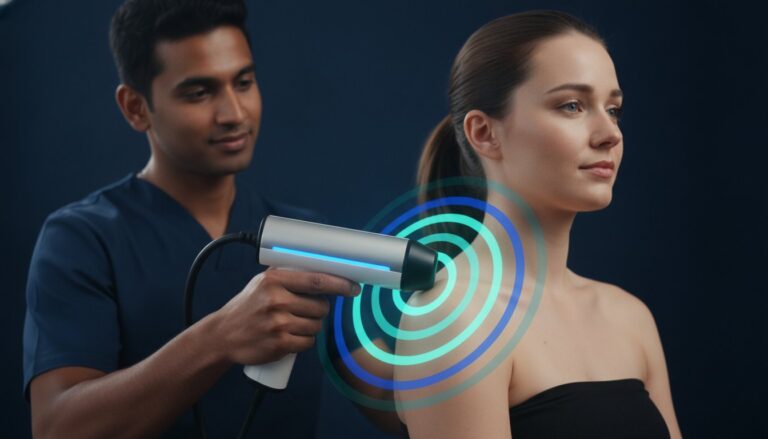
Myofascial Release Therapy in Whitby: Unlock Effortless Mobility and Performance
You might believe that holding a static stretch for thirty seconds is the ultimate solution for flexibility, but for many, the relief lasts only until they walk away from the mat. If you have experienced chronic tightness that returns shortly after stretching, myofascial release therapy Whitby offers a clinical pathway to break that cycle and restore your body’s natural rhythm. It’s common to feel that your body is resisting your efforts to stay active, particularly when long hours at a desk lead to persistent stiffness and frustratingly slow recovery times after a workout.
We’ll show you how specialized myofascial release and Fascial Stretch Therapy (FST) target the 3D web of your connective tissue to eliminate chronic pain and optimize movement. This article explores how an evidence-based, assessment-driven approach can help you realize long-lasting flexibility and enhanced athletic performance. You will discover why addressing the fascia is the missing link in your journey toward effortless, pain-free mobility and how integrated care can help you thrive in your daily life.
Key Takeaways
- Learn how specialized manual techniques target the connective tissue and joint capsules to achieve the effortless mobility that standard stretching often fails to provide.
- Understand the neurological “reset” that occurs when slow, rhythmic movements are used to calm muscle guarding and address chronic tension at the source.
- Discover why professional myofascial release therapy whitby provides more sustainable results for chronic tightness than traditional massage or home-based stretching routines.
- Identify how local athletes and office professionals in the Durham Region can utilize these therapies to recover faster and eliminate common issues like “tech neck.”
- Gain clarity on the assessment-driven process at Therapeutic Streams Sport Rehab, ensuring your treatment plan is tailored to the root cause of your physical restrictions.
What is Myofascial Release Therapy (MFR) and FST?
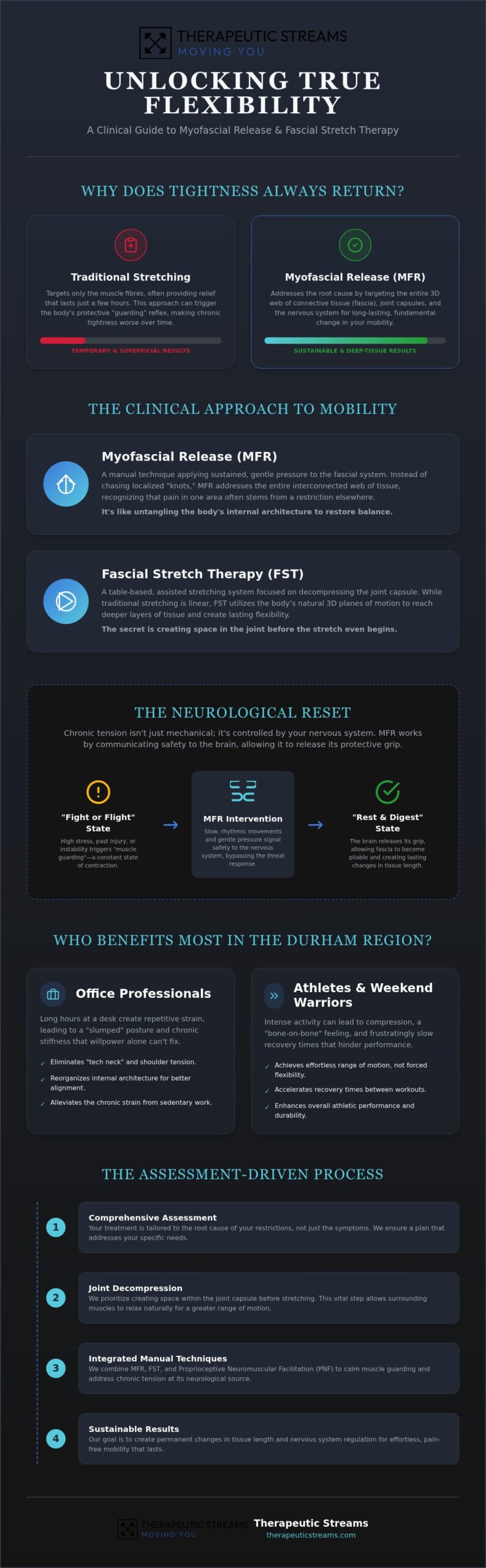
Myofascial Release Therapy is a specialized manual technique that focuses on the connective tissue, or fascia, rather than just the muscle fibres themselves. To understand What is Myofascial Release, one must look at the body as an integrated web where every part is connected. Unlike traditional massage that targets specific “knots” or localized trigger points, MFR applies sustained, gentle pressure to the fascial system to eliminate deep-seated restrictions. This approach recognizes that pain in one area often stems from a restriction elsewhere in the fascial chain, requiring a global perspective on musculoskeletal health.
Fascial Stretch Therapy (FST) complements this by offering a table-based, assisted stretching system that focuses on the joint capsule. While traditional stretching often stays in one plane of motion, such as reaching for your toes in a linear fashion, FST utilizes the body’s natural 3D planes to reach deeper layers of tissue. At Therapeutic Streams, we integrate these approaches to ensure your movement is fluid and unrestricted. Choosing myofascial release therapy whitby means you’re opting for a clinical method that respects the complexity of human movement and addresses the root cause of stiffness.
The Fascia System: Your Body’s Internal Architecture
The fascia is a continuous system that transmits tension across your entire body. When this tissue becomes restricted, often due to repetitive movements or long hours at a desk, it pulls on other structures, creating a ripple effect of discomfort. For a Durham office worker, this might manifest as persistent shoulder tension or a “slumped” posture that feels impossible to correct through willpower alone. Fascia is the integrated network that supports every muscle and organ. By addressing the fascial system, we can reorganize your internal architecture to promote better alignment and alleviate chronic strain.
Why Joint Decompression is the Secret to Flexibility
Many people struggle with flexibility because they focus solely on the muscles. However, a significant portion of movement restriction actually lives within the joint capsule itself. Myofascial release therapy in Whitby prioritizes joint decompression, which involves creating space within the joint before the stretching begins. This “spacing” is vital for local athletes who often describe a “bone-on-bone” feeling or compression during heavy squats or long runs. By opening the joint, we allow the surrounding muscles to relax naturally, leading to a range of motion that feels effortless rather than forced. This clinical focus on the joint capsule is what sets our approach apart from passive, home-based stretching routines.
The Science of the Stretch: How MFR Resets Your Nervous System
Many people view chronic tension as a purely mechanical issue, like a rusty hinge that needs oiling. In reality, your nervous system is the primary architect of your muscle tone. When the brain senses instability or past injury, it initiates “muscle guarding,” a protective mechanism that keeps tissues in a state of constant contraction. If you’ve tried aggressive stretching and found the tightness returns within minutes, you’re likely triggering a threat response in your brain. Understanding the science of myofascial release allows us to bypass this guarding reflex. By using slow, rhythmic pressure, myofascial release therapy whitby communicates safety to the nervous system, allowing the brain to release its grip on the fascia.
Moving from “Flight” to “Flow”
High-stress professionals in Whitby often find themselves stuck in a sympathetic state, commonly known as “fight or flight.” This elevated state of arousal keeps cortisol levels high and prevents tissues from fully relaxing, even during sleep. During a session at Therapeutic Streams, we focus on transitioning your body into a parasympathetic, or “rest and digest,” state. This shift is essential for creating permanent changes in tissue length. When the nervous system is calm, the fascia becomes more pliable, leading to improved sleep quality and a noticeable reduction in systemic stress. It’s not just about a physical stretch; it’s about a neurological reset.
PNF Techniques: Reprogramming the Stretch Reflex
A core component of our clinical approach involves Proprioceptive Neuromuscular Facilitation (PNF), often integrated within our Fascial Stretch Therapy sessions. This technique utilizes a “contract-relax” method where you gently engage a muscle against the therapist’s resistance before relaxing into a deeper stretch. This collaborative process helps the brain realize that a new range of motion is safe to inhabit. Instead of fighting against your body’s natural reflexes, we work with them to reprogram the stretch reflex. This sophisticated method ensures that your gains in mobility are functional and lasting. If you’re ready to experience this evidence-based approach, you can explore our integrated therapy options to see how we can support your recovery.
The pain-free philosophy is central to our work. Research suggests that pushing into sharp pain triggers the brain to tighten muscles further as a protective measure. By staying within a comfortable, therapeutic range, we avoid this rebound effect. This results in a smoother, more efficient path to wellness where you aren’t constantly fighting your own biology.
Myofascial Release Therapy vs. Traditional Massage and Stretching
Many patients in the Durham Region wonder if they can achieve the same results with a standard massage or a diligent home stretching routine. While Registered Massage Therapy (RMT) is a vital tool for addressing localized muscle knots and trigger points, myofascial release therapy whitby operates on a different scale. RMT primarily focuses on the muscle fibres themselves, whereas MFR targets the expansive fascial planes that wrap and connect those muscles. It is the difference between untying a single knot in a thread and smoothing out the entire fabric of a garment.
The primary advantage of clinical Myofascial Release and Fascial Stretch Therapy is their three-dimensional nature. Most traditional stretches are linear; you move in one direction, such as reaching for your toes, and hold. However, your body’s connective tissue is a complex, spiraling web. Our therapists guide your limbs through multiple planes of movement, addressing restrictions that a simple forward fold could never reach. Because these sessions are assisted, we can access specific angles and vectors of tension that you simply cannot achieve alone.
Why Your Home Stretching Routine Often Fails
If you have ever felt tighter after a long stretching session, you have likely experienced the “stretch reflex.” When you pull a muscle too hard or too fast, your brain perceives a risk of tearing and sends a signal for that muscle to contract as a protective measure. Most home routines ignore the joint capsule, which accounts for nearly 47 percent of total joint stiffness. During a professional session, your therapist applies gentle traction, a slight pulling apart of the joint, before the stretch begins. This decompression signals to the brain that the area is safe, allowing for a deeper and more permanent change in tissue length.
MFR and Chiropractic: A Powerful Duo for Whitby Patients
We often find that myofascial release serves as the perfect precursor to other clinical interventions. For instance, “opening up” the fascial system can make a chiropractic adjustment significantly more effective. When the soft tissues are pliable and relaxed, the skeletal system can be realigned with less resistance. While RMT often feels like a localized “release” of tension, MFR feels like a global “opening” of the body. This integrated approach, where multiple disciplines collaborate on a single goal, remains the gold standard for long-term musculoskeletal health and peak performance.
Who Benefits Most from Myofascial Release in Whitby and Durham?
Many individuals view therapeutic intervention as something reserved exclusively for major injuries or post-surgical recovery. While myofascial release therapy whitby is indeed a cornerstone of rehabilitation for motor vehicle accidents and complex soft tissue injuries, its benefits extend far beyond crisis management. In our clinical experience, the most profound results often occur in those seeking to bridge the gap between “functioning” and “thriving.” Whether you’re a competitive athlete or a dedicated professional, addressing fascial restrictions is a proactive investment in your long-term physical agency. By identifying and treating these restrictions early, you can avoid the common injuries that occur when the body is forced to compensate for restricted movement.
Optimizing Performance for Whitby and Oshawa Athletes
For the “Weekend Warrior” in the Durham Region, performance is often limited by hidden restrictions in the connective tissue. Runners training for local marathons or hockey players competing in Whitby leagues often face recurring muscle strains that stem from fascial “stuckness.” By utilizing myofascial release, we can significantly improve stride length and joint efficiency. Local golfers also find that releasing the fascial chains through the torso and hips translates directly into increased swing power and reduced lower back fatigue. Regular maintenance helps you stay ahead of the curve, ensuring that your body is prepared for the physical demands of your sport without the constant fear of a pulled muscle or a strained joint.
Relief for the Chronic Office Worker
The “Desk Warrior” faces a unique set of physiological challenges. Prolonged sitting effectively “glues” the fascia of the hips and lower back, leading to a restricted range of motion and the all-too-common “tech neck.” This postural collapse isn’t just a habit; it’s a physical adaptation of your connective tissue to your environment. A targeted session at Therapeutic Streams creates a “reversing the chair” effect, lengthening the tissues that have shortened from hours of computer work. For those seeking total postural correction, we often integrate these sessions with physiotherapy to ensure the underlying mechanics are fully optimized. This collaborative approach addresses the immediate discomfort while building a foundation for sustainable, pain-free movement.
If you’re ready to move beyond temporary relief and experience a higher standard of physical performance, book an assessment with our Whitby team to discover how an integrated approach can support your specific goals.
Your First Session at Therapeutic Streams Sport Rehab: What to Expect
Your journey at Therapeutic Streams Sport Rehab begins long before the first stretch occurs. We approach myofascial release therapy whitby as a clinical intervention that requires a deep understanding of your specific musculoskeletal history. Unlike a general massage where you might simply lie face down, your first session is a dynamic, collaborative event focused on uncovering the root cause of your discomfort. We prioritize transparency and education, ensuring you understand the specific justifications behind every technique we apply to your connective tissue during the appointment.
Personalized Clinical Assessment
Before any manual work begins, our therapists conduct a thorough movement analysis. We analyze your gait and specific movement patterns to identify exactly where your fascial chains are failing to glide. We realize that every body carries a unique history of past injuries, repetitive strains, and habitual tension. This assessment-driven phase ensures that your treatment is tailored to your actual needs rather than a generic protocol. At our Whitby clinic, you’ll always receive one-on-one attention from a professional who is deeply invested in your physical progress.
To prepare for your session, comfort and mobility are essential. We recommend wearing gym clothes or athletic wear, such as leggings and a t-shirt, as you’ll be moving through various ranges of motion on the treatment table. During the treatment, you’ll likely notice the use of specialized straps. These are used for stabilization, allowing the therapist to apply precise traction to the joint capsule without your body needing to “guard” or compensate. The sensation is often described as a deep, pleasant pull that creates an immediate sense of lightness and space within the joints.
Integrated Care: The Therapeutic Streams Sport Rehab Advantage
One of the core strengths of our facility is the collaborative environment. Our team doesn’t work in silos; instead, we organize your care plan through a multi-disciplinary lens. Depending on your assessment, your therapist might suggest combining MFR with Pelvic Floor Physiotherapy or Chiropractic care to address different layers of your musculoskeletal health. For instance, your Chiropractor and MFR therapist may consult one another to ensure that soft tissue work is perfectly timed with your skeletal adjustments.
After the session, we provide specific guidance on how to maintain your new range of motion at home in Whitby. This might include simple mobility drills or postural cues that reinforce the changes made during your appointment. If you’re ready to move beyond temporary fixes and embrace a results-oriented path to wellness, book your one-on-one myofascial release therapy assessment in Whitby today.
Take the Next Step Toward Unrestricted Movement
Restoring your body’s natural range of motion requires a strategy that looks beyond the surface of the muscle. Professional myofascial release therapy whitby acts as a vital neurological reset, transitioning your system from protective guarding into a state of fluid, effortless performance. By addressing the deep layers of the joint capsule and the three-dimensional fascial web, you can finally resolve the chronic tightness that standard stretching routines often leave behind.
The integrated team at Therapeutic Streams Sport Rehab provides evidence-based, assessment-driven care in a truly collaborative environment. Our Chiropractors, Physiotherapists, and RMTs work as a unified team to ensure your recovery plan is tailored to your specific physical history. Whether you’re an athlete in Oshawa, Ajax, or Bowmanville, our Whitby centre is ready to support your journey toward wellness. You don’t have to let persistent stiffness limit your potential or define your daily life. Book Your One-on-One Assessment at Therapeutic Streams Sport Rehab today and discover the impact of clinical expertise on your mobility.
Frequently Asked Questions
Is myofascial release therapy painful?
Myofascial release therapy shouldn’t be painful. We prioritize a pain-free approach because pushing into sharp discomfort can trigger your brain to tighten muscles further as a protective measure. Most patients describe the sensation as a deep, therapeutic pull or a “good” stretch that creates immediate space in the joints. This gentle method ensures your nervous system remains relaxed, which is essential for achieving long-lasting changes in your tissue length.
How many sessions will I need to see results?
The number of sessions required depends on your initial assessment and the history of your condition. Many patients in the Durham Region experience a noticeable improvement in mobility after just one appointment. However, for deep-seated fascial restrictions or postural corrections, a series of three to five sessions is often recommended to reorganize the tissue effectively. We typically integrate these sessions with Chiropractic care to ensure your results are sustainable.
Is Fascial Stretch Therapy covered by insurance in Ontario?
In Ontario, myofascial release therapy whitby is typically covered by most extended health insurance plans. Because these treatments are performed by Registered Massage Therapists, Physiotherapists, or Chiropractors, they fall under your standard paramedical coverage. We recommend checking with your specific insurance provider to confirm your individual limits. Our administrative team provides the necessary clinical receipts to ensure your reimbursement process is straightforward and efficient for your records.
What should I wear to my myofascial release appointment?
You should wear comfortable, flexible clothing that allows for a full range of motion during your session. Athletic wear such as leggings, shorts, and a t-shirt or tank top is ideal. Unlike a traditional massage where you’re draped under sheets, Fascial Stretch Therapy is a table-based, assisted system that involves moving your limbs through various planes. Having non-restrictive clothing ensures your therapist can perform a thorough movement analysis without any physical barriers.
Can MFR help with chronic lower back pain or sciatica?
Yes, myofascial release is highly effective for managing chronic lower back pain and sciatica symptoms. These conditions often stem from compressed joint capsules and tight fascial chains in the hips and lumbar spine. By decompressing the joints and releasing tension in the surrounding connective tissue, we can alleviate pressure on the sciatic nerve. Many patients find this approach provides relief where traditional stretching or localized muscle work hasn’t delivered results.
How is FST different from a regular sports massage?
Fascial Stretch Therapy (FST) differs from a regular sports massage by targeting the joint capsule and the body’s entire fascial web. While a sports massage focuses on releasing specific muscle knots, FST uses traction and multi-planar movements to address restrictions across the whole body. This 3D approach is more comprehensive because it treats the connective tissue that surrounds every muscle. It’s the difference between spot-treating a leak and fixing the entire plumbing system.
Is myofascial release suitable for seniors with limited mobility?
Myofascial release is exceptionally well-suited for seniors dealing with limited mobility or joint stiffness. Because the technique is gentle and assisted, it allows for a gradual restoration of movement without the strain of high-impact exercise. Our therapists in Whitby prioritize safety and comfort, adapting every stretch to your current physical capabilities. Improving fascial health helps seniors maintain their independence by making daily activities like walking or bending feel significantly more effortless.
Can I receive myofascial release therapy if I am currently injured?
You can certainly receive myofascial release therapy while recovering from an injury. In fact, it’s a core component of sports rehabilitation at our clinic. MFR helps manage scar tissue formation and prevents the body from developing harmful compensation patterns that can lead to secondary injuries. By maintaining the health of the surrounding fascia, we can speed up your recovery time and ensure your joints remain decompressed as your tissues heal from the initial trauma.