Pelvic Floor Physiotherapy: A Comprehensive Guide to Specialized Care in Whitby
What if the chronic lower back pain you’ve been managing for years isn’t actually a back problem at all? Many residents in Whitby struggle with persistent hip discomfort or the frustrating reality of bladder leaks, often assuming these issues are simply an inevitable part of aging or motherhood. It’s common to feel embarrassed by symptoms like incontinence, especially when you’ve been told these changes are normal. Specialized pelvic floor physiotherapy offers a professional, evidence-based solution that looks beyond the surface to identify the true source of your physical dysfunction.
We believe that an informed patient is a more successful one. This guide will help you realize how targeted clinical care can restore your core function and alleviate pain through a sophisticated, assessment-driven methodology. We’ll outline the transition from discomfort to wellness, explaining how understanding the root cause of pelvic pressure allows you to return to high-impact exercise with total confidence. You don’t have to settle for feeling limited when you can achieve optimal health through a collaborative, expert-led approach.
Key Takeaways
- Understand how pelvic floor physiotherapy serves as a specialized branch of orthopedic rehabilitation to restore your physical agency and core stability.
- Learn about the “Core Canister” and how your pelvic floor functions in tandem with your diaphragm and deep back muscles to support your body’s internal pressure system.
- Identify the clinical indicators for treatment, ranging from postpartum recovery to chronic hip and lower back pain that hasn’t responded to traditional therapy.
- Discover what to expect during a professional clinical assessment, including a comprehensive health history and a thorough orthopedic evaluation of your spine and hips.
- Explore how an integrated care model combining specialized rehab with Registered Massage Therapy (RMT) addresses global tension and supports your long-term wellness.
What is Pelvic Floor Physiotherapy and Why is it Essential?
Pelvic floor physiotherapy is a specialized branch of orthopaedic rehabilitation that addresses the complex network of muscles, ligaments, and nerves at the base of your pelvis. While often associated with pregnancy, this field of clinical care is essential for individuals of all ages and genders. It’s helpful to view the pelvic floor as the “basement” of your core. Just as a house requires a stable foundation to remain structurally sound, your body relies on these muscles to support the spine and internal organs. Pelvic floor physical therapy moves beyond surface-level symptoms to restore your physical agency. It helps you regain control over functions that many assume are lost to time or injury. We view this process as a partnership where you transition from a place of discomfort to a state of informed wellness.
The Role of the Pelvic Floor Muscles
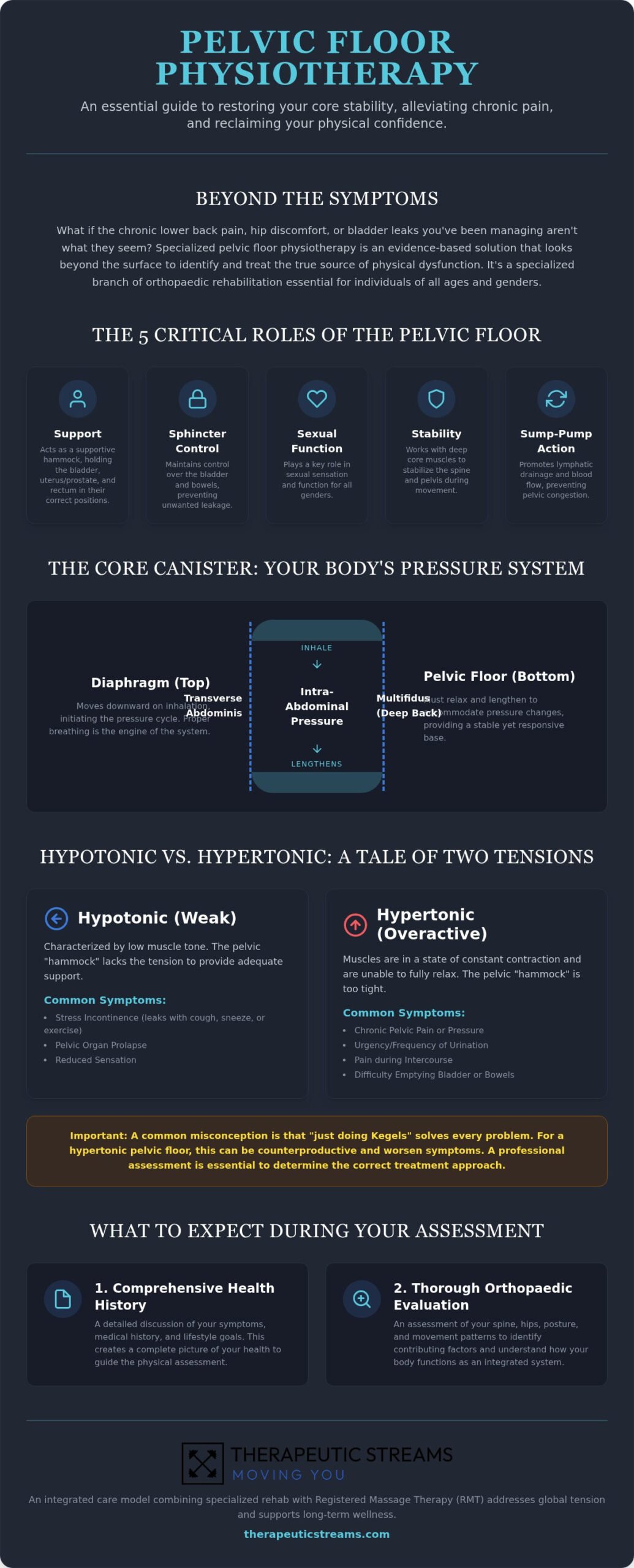
These muscles resemble a supportive hammock, stretching from your pubic bone to your tailbone. They perform five critical roles: support, sphincter, sexual, stability, and sump-pump. They hold the bladder, uterus or prostate, and rectum in their proper anatomical positions. When they function optimally, they provide the necessary tension to manage internal pressure during activities like lifting, sneezing, or running. They don’t work in isolation; they are a key component of your body’s integrated stability system. Without this support, the “sump-pump” function fails, leading to poor lymphatic drainage and increased pelvic congestion.
Why Pelvic Health is Often Overlooked
Despite its importance, pelvic health remains a cultural taboo. This silence often leads to the belief that issues like bladder leaks or pelvic pressure are “normal” hurdles to be endured. A common misconception is that “just doing Kegels” will solve every problem. In reality, many individuals have pelvic floor muscles that are overactive or unable to relax. Performing repetitive contractions on an already tight muscle can be counterproductive. This can worsen pain or dysfunction. There is also a significant link between pelvic health and chronic lower back or hip pain. If the pelvic floor isn’t providing adequate stability, the muscles of the lower back must overwork to compensate. This leads to persistent discomfort that traditional therapy may not fully resolve. We realize that addressing these concerns through specialized pelvic floor physiotherapy requires a professional, evidence-based approach rather than home-remedy exercises.
The Science of Support: How Your Pelvic Floor Functions
Understanding the pelvic floor requires looking beyond the muscle itself to see it as part of an integrated pressure system. In the clinical practice of pelvic floor physiotherapy, we analyze how this region interacts with your entire torso to manage the physical demands of daily life. This isn’t just about isolated strength; it’s about the sophisticated coordination of internal pressure that occurs every time you breathe, move, or lift. When this system functions correctly, it provides a seamless foundation for all physical activity and organ support.
The Core Canister Concept
Think of your midsection as a pressurized canister. The diaphragm forms the top, the pelvic floor serves as the bottom, and the transverse abdominis and multifidus muscles create the surrounding walls. When you inhale, your diaphragm moves downward, and your pelvic floor must lengthen and relax to accommodate the shift in pressure. If this system is out of sync, the resulting intra-abdominal pressure can place excessive strain on your pelvic organs or spinal discs. The Core Canister is a functional unit that coordinates internal pressure to ensure spinal stability and organ support. Proper breathing patterns are the engine of this system. We often find that dysfunctional breathing leads to chronic tension, which is why clinical assessment focuses on how these parts move together to support your skeletal structure.
Hypotonic vs. Hypertonic Pelvic Floors
Effective treatment depends on identifying the specific state of your muscle tone through professional evaluation. A hypotonic pelvic floor is characterized by low muscle tone or weakness. This lack of support often leads to stress incontinence or pelvic organ prolapse, as the muscles can’t effectively counteract gravity or sudden pressure from a cough or sneeze. Conversely, a hypertonic pelvic floor is overactive and unable to fully relax. This state of constant contraction frequently causes pelvic pain, urgency, or difficulty emptying the bladder. Specialized Pelvic Floor Therapy is necessary to distinguish between these two states, as the exercises for one could potentially worsen the other. We prioritize a precise diagnosis to ensure your rehab plan is safe and effective.
Achieving balance in this complex system requires clinical precision and a personalized rehabilitation plan. We don’t rely on guesswork or generic exercises that might not address your specific needs. Instead, we use evidence-based assessments to determine exactly how your core canister is performing and where the system is failing to manage pressure. This level of detail allows us to create a pathway toward lasting wellness and improved quality of life. If you’re ready to explore how these systems are functioning in your own body, you can begin by booking an initial consultation with our expert team in Whitby.
Common Conditions Treated with Pelvic Floor Rehab
Pelvic floor physiotherapy treats a broad spectrum of dysfunctions that impact daily life and athletic performance. While many seek care for obvious concerns like urinary incontinence or pelvic organ prolapse (POP), specialized rehab also addresses less-discussed issues like painful intercourse (dyspareunia) and chronic constipation. For athletes in Whitby, this care is often the missing link in returning to high-impact sports like CrossFit or long-distance running without the distraction of “leaking while lifting.” By addressing the root cause of these issues, we help you regain the confidence to move without fear of accidents or pain.
Incontinence and Bladder Health
Bladder issues generally fall into two categories. Stress incontinence involves leaking during physical exertion, such as sneezing, coughing, or jumping. Urge incontinence is characterized by a sudden, intense need to urinate that often leads to accidents before reaching a washroom. Physiotherapy retrains the bladder-brain connection to manage these signals effectively. This process involves more than just strengthening; it’s about teaching the nervous system how to respond to internal pressure. If you’re unsure if your symptoms warrant professional help, reviewing a checklist for pelvic floor rehab can provide clarity on your specific needs.
Pregnancy and Postpartum Recovery
The pelvic diaphragm undergoes significant structural changes during pregnancy to support the growing weight of the baby. Clinical intervention focuses on preparing the birth canal and teaching strategies to manage labour effectively. We emphasize the importance of a six-week check-up to assess healing, scar tissue, and core stability. It’s vital to realize that while leaking after having a baby is common, it’s not a condition you must simply live with. We help you transition from the physical strain of postpartum life back to a state of strength. Proper rehabilitation ensures that your core can handle the demands of parenthood and exercise alike.
Pelvic Pain and Orthopedic Connections
“Unexplained” hip, groin, or tailbone pain frequently originates within the pelvic floor. When these muscles are hypertonic, they pull on the skeletal structure, leading to persistent pelvic girdle pain (PGP) that isn’t resolved by standard stretching. Addressing these orthopedic connections requires a collaborative approach. Integrating pelvic rehab with chiropractic care in Whitby ensures that both the soft tissue and the joint mechanics are optimized for long-term relief. This integrated model is particularly effective for chronic lower back issues that haven’t responded to traditional therapy. We focus on the whole body to ensure your recovery is comprehensive and lasting.
What to Expect During Your Initial Assessment
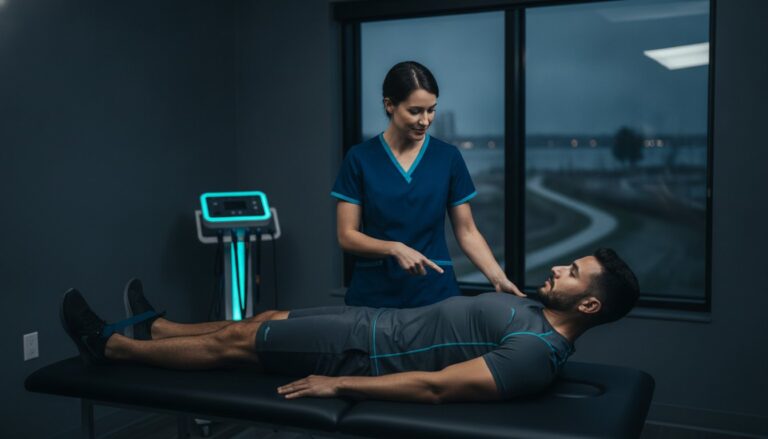
The initial assessment for pelvic floor physiotherapy is a methodical, one-on-one process designed to uncover the root cause of your symptoms. Unlike a standard medical check-up, this session occurs in a private, quiet clinical environment where your comfort is our primary focus. We begin with a comprehensive health history and a detailed discussion of your symptoms. This allows us to understand how your physical hurdles are impacting your daily life, whether that involves exercise limitations or discomfort during routine activities. We take the time to listen, ensuring that your goals are the foundation of our clinical approach.
Following this discussion, we move into a thorough external orthopaedic assessment. This involves evaluating your spine, hips, and breathing patterns. Since the pelvic floor is part of an integrated system, we must understand how your skeletal structure is managing pressure before focusing on the pelvic muscles themselves. If appropriate, we then explain the internal exam, which can be vaginal or rectal depending on your specific needs. This part of the assessment allows us to check muscle strength, endurance, and tension with clinical precision. We obtain informed consent before any internal work begins, ensuring you feel fully in control of the process. This step provides the necessary data to determine your specific muscle tone, which is essential for creating an effective recovery pathway.
Prioritizing Your Comfort and Consent
Your agency is a cornerstone of our clinical philosophy. The internal component of the assessment is always optional and is only performed when you feel ready to proceed. Our Whitby clinic provides a dedicated, professional space where you can feel at ease. You are always welcome to bring a support person to your appointment, and you have the absolute right to stop the exam at any time for any reason. We prioritize transparency, explaining every step of the methodology to ensure you are an informed participant in your own care. This collaborative environment builds the trust necessary for successful rehabilitation.
The Treatment Plan: Beyond the Clinic
Once the assessment is complete, we develop a personalized, evidence-based treatment plan tailored to your specific goals. This isn’t a one-size-fits-all approach; it’s a collaborative strategy designed to restore your wellness. Your plan may include several modalities:
- Manual Therapy: Hands-on techniques to address muscle tension and joint mobility.
- Biofeedback: Using clinical tools to help you realize how your muscles are responding to movement.
- Therapeutic Exercise: Targeted movements to build functional strength and coordination.
Progress is measured over subsequent sessions by tracking improvements in your symptoms and functional abilities. A significant portion of your success happens outside the clinic through “homework” that includes lifestyle adjustments and specific movement patterns. We act as your partner, providing the education and tools you need to thrive long-term. If you’re ready to start this journey, you can book your initial pelvic floor physiotherapy assessment today.
The Integrated Approach to Pelvic Health in Whitby
We operate on the philosophy that no muscle in the human body works in isolation. This integrated model ensures that pelvic floor physiotherapy isn’t just a localized treatment but a critical component of your overall musculoskeletal health. By analyzing global tension patterns throughout your body, we can address the root cause of dysfunction more effectively. This holistic view allows us to transition you from acute discomfort to long-term wellness through a coordinated clinical strategy.
Our approach frequently combines specialized pelvic rehab with Registered Massage Therapy (RMT) to manage the myofascial restrictions that contribute to pelvic tension. There’s also a significant synergy between pelvic stability and knee pain recovery. When the pelvic floor and deep core function optimally, they provide the necessary stability for the lower extremities. This reduces the mechanical load on the knee joints during daily activities and exercise. Maintaining this health long-term often involves integrating yoga and pilates, which reinforce the functional movement patterns established during your clinical sessions.
Collaborative Care for Durham Residents
Having multiple disciplines under one roof in Whitby allows for seamless, real-time collaboration between your healthcare providers. In many cases, a chiropractor may address pelvic alignment and spinal mechanics while the physiotherapist treats the underlying muscle coordination and strength. This team-based approach is particularly beneficial for complex conditions like chronic pelvic pain syndrome. We act as your collaborative partners, ensuring that every professional involved in your care is working toward a single goal. This unified strategy is a hallmark of the sophisticated care we provide to the Durham community.
Pelvic Health for the Active Individual
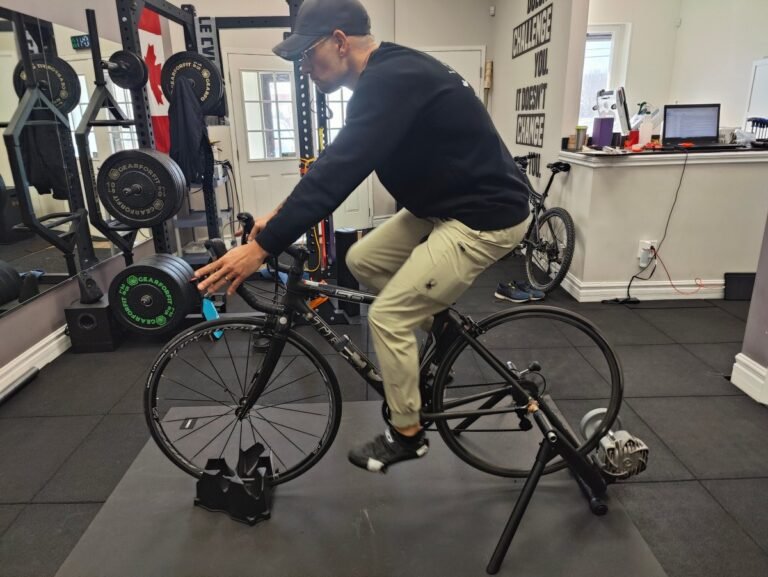
For the active population in the Durham Region, pelvic floor stability is a performance multiplier. A functional pelvic floor improves power transfer for cyclists and BikeFIT clients, ensuring that every pedal stroke is efficient and supported. Runners also rely heavily on this region to manage the high-impact forces of each stride. When the pelvic floor is weak or overactive, it can lead to compensations that result in hip or back injuries. We invite you to book a comprehensive assessment to optimize your athletic performance. Understanding how your pelvic health influences your sport allows you to train harder and recover faster with the confidence of an expert-led plan.
Take Control of Your Pelvic Health Journey
Pelvic health is the foundation of your core stability and overall wellness. By understanding the “Core Canister” and how your body manages internal pressure, you can move beyond temporary fixes to achieve lasting results. Whether you’re managing postpartum recovery, chronic hip pain, or specific athletic performance goals, pelvic floor physiotherapy provides the evidence-based pathway you need. Our integrated team of Physiotherapists, Chiropractors, and RMTs works collaboratively to ensure your recovery is comprehensive and tailored to your unique physiology. We prioritize your agency through private, one-on-one sessions in the Durham Region, ensuring you feel supported at every stage of your rehabilitation.
You don’t have to navigate these challenges alone or feel limited by symptoms that are treatable with professional intervention. We’re dedicated to helping you realize your full physical potential through modern, assessment-driven methodology. Book your one-on-one pelvic floor assessment in Whitby today and start your transition from discomfort to wellness. Your journey toward a stronger, more confident version of yourself begins with a single proactive step.
Frequently Asked Questions
Do I need a doctor’s referral for pelvic floor physiotherapy in Ontario?
In Ontario, you don’t need a doctor’s referral to see a physiotherapist at a private clinic. Physiotherapists are primary care providers, meaning you can book an assessment directly. However, it’s important to check with your insurance provider first. Some extended health plans still require a physician’s note to process your reimbursement claims. We recommend verifying these details to ensure your coverage is seamless and your focus remains on your recovery.
Is pelvic floor physiotherapy covered by my extended health insurance?
Most private and workplace health insurance plans in Ontario cover pelvic floor physiotherapy under their standard physiotherapy benefits. While OHIP coverage is generally not available for private clinic services, extended health plans usually provide significant reimbursement. Every plan is unique, so we suggest reviewing your annual maximums and per-visit limits before your first visit. Our administrative team can help you understand how to navigate your specific coverage to support your wellness journey.
Can I attend my appointment if I am on my period?
Yes, you can absolutely attend your appointment while on your period. Menstruation does not interfere with the clinical assessment or the effectiveness of the treatment. Our therapists are medical professionals who are accustomed to working with the body’s natural cycles. If you feel particularly uncomfortable or have significant cramping, we can prioritize external techniques or education during that specific session. We ensure the environment remains professional and supportive regardless of your cycle.
How many sessions will I need before I see results?
The number of sessions required varies depending on the complexity of your condition and your specific goals. Many patients begin to realize improvements in their symptoms within four to six sessions of consistent care. Chronic issues or complex postpartum recovery may require a longer-term plan to achieve optimal stability. We measure progress during every visit to ensure your treatment remains results-oriented. Your therapist will provide a clear timeline based on your initial clinical assessment.
Is the internal exam painful or uncomfortable?
The internal assessment should not be painful. While you may feel some pressure or a sensation of muscle engagement, our clinical priority is your comfort and informed consent. We work within your tolerance levels and can stop or adjust the exam at any time. Our goal is to identify muscle tension or weakness without causing distress. Open communication ensures that the process remains a supportive and empowering part of your transition to wellness.
Is pelvic floor physiotherapy only for women who have had children?
No, pelvic floor rehab is essential for individuals of all ages and genders. While postpartum care is a common reason for seeking treatment, we also address concerns for those who haven’t had children, including high-performance athletes and aging adults. Men also benefit from this specialized care for issues like chronic pelvic pain or post-prostatectomy recovery. Pelvic health is a fundamental component of human physiology that affects every individual’s long-term quality of life.
Can pelvic floor physio help with chronic lower back pain?
Yes, pelvic floor dysfunction is a frequent contributor to chronic lower back pain. Because the pelvic floor is the base of your core canister, weakness or over-activity in these muscles often forces the back muscles to overcompensate. By restoring proper coordination and strength to the pelvic region, we can alleviate the mechanical strain on your spine. This integrated approach often provides the relief that traditional back therapies have missed by addressing the root cause.
What should I wear to my first pelvic floor assessment?
We recommend wearing comfortable, loose-fitting clothing that allows for easy movement, such as athletic wear or yoga attire. For the initial assessment, your therapist will perform an external orthopaedic evaluation of your hips and spine, so flexible clothing is helpful. If an internal exam is performed, you will be provided with a private space and a clinical drape to ensure your privacy is maintained. We prioritize a quiet, professional environment for your comfort throughout the session.