How to Prevent Sports Injuries: A Clinical Guide to Staying Active in Durham Region
Did you know that 16% of Durham Region residents aged 12 and over reported an injury in the past year that was severe enough to limit their daily activities? For many local athletes, the most pressing concern isn’t just treating a current “twinge,” but learning exactly how to prevent sports injuries before they lead to weeks of forced rest. It’s frustrating to feel your progress stall because of a recurring muscle strain or confusion over which stretching technique actually works.
We understand that your athletic goals are important, and the fear of losing momentum is a significant hurdle. This article provides an evidence-based framework for injury prevention that combines professional clinical insights with practical, daily strategies to keep you in the game. By focusing on better biomechanics and a sustainable prevention routine, you can move from a state of caution to one of peak performance. We will preview the essential steps to identify your unique physical hurdles and explain when it’s time to partner with a professional to optimize your movement.
Key Takeaways
- Master the clinical concept of “load vs. capacity” to better understand your body’s limits and avoid the pitfalls of repetitive strain.
- Implement the “10% rule” for training volume to ensure your musculoskeletal system adapts safely to increased physical demands.
- Discover how to prevent sports injuries by using an integrated care model that proactively addresses fascial tension and biomechanical imbalances.
- Learn to conduct a daily “pre-hab” audit of your footwear and nutrition to provide the cellular support your soft tissues require for repair.
- Realize the importance of professional, assessment-driven sessions in uncovering the root causes of discomfort rather than just treating symptoms.
Understanding Why Sports Injuries Occur: The Clinical Perspective
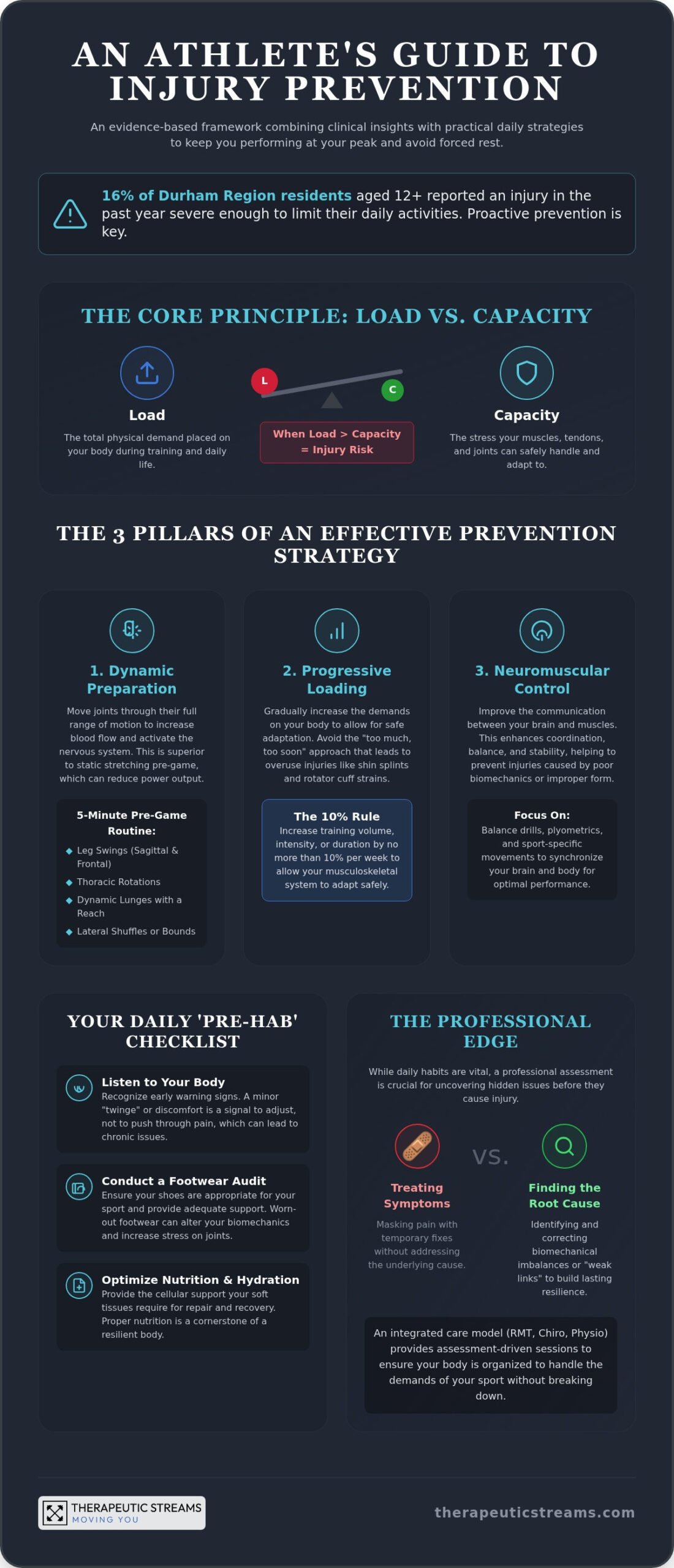
Understanding sports injuries requires looking beyond the immediate sensation of pain. We view these conditions as a broad spectrum, ranging from sudden, high-impact events to the gradual, silent wear of repetitive strain. To gain a comprehensive Sports injury overview, we must consider the clinical balance of load versus capacity. Your body’s capacity represents the total amount of stress your muscles, tendons, and joints can safely handle. The load is the physical demand you place on them during training or daily life. When the load consistently outweighs your current capacity, the risk of tissue failure increases significantly.
In our Whitby clinic, we frequently see specific patterns among local athletes that illustrate this imbalance. ACL tears often occur during high-intensity field sports when sudden pivots exceed the ligament’s structural capacity. Rotator cuff strains are common in overhead athletes, while shin splints frequently plague runners who increase their mileage too quickly on hard surfaces. A repetitive strain injury is characterized by the gradual accumulation of micro-trauma in Durham athletes who subject their bodies to repeated stress without sufficient recovery time.
Acute vs. Overuse Injuries: Know the Difference
Acute injuries are sudden, traumatic events such as falls, collisions, or sharp twists. These require an immediate professional assessment to rule out fractures or severe ligament damage. Overuse injuries, however, result from poor biomechanics or the “too much, too soon” training approach. Many athletes try to push through minor discomfort, but ignoring the twinge often leads to long-term compensatory patterns. When one muscle group is inhibited by pain, your body shifts the load to other structures, which eventually causes a secondary injury elsewhere. Learning how to prevent sports injuries starts with recognizing these early warning signs before they become chronic hurdles.
The Role of Biomechanics in Injury Risk
Improper gait or poor posture places uneven, repetitive stress on your joints and soft tissues. This is especially relevant for Durham residents who spend their workdays in sedentary office roles before jumping into high-intensity weekend sports. Prolonged sitting can lead to tight hip flexors and weakened glutes, which changes how you move when you finally hit the field or the gym. A professional assessment is the only way to realize your specific “weak links” and understand how to prevent sports injuries by correcting these underlying imbalances. We focus on identifying these biomechanical flaws early, ensuring your body is organized to handle the specific demands of your sport without breaking down.
The 3 Pillars of an Effective Injury Prevention Strategy
Effective injury prevention is far more than a generic checklist of stretches. It’s a proactive, physiological strategy designed to fortify your body against the specific demands of your sport. A comprehensive Clinical guide to injury prevention focuses on three core pillars: dynamic preparation, progressive loading, and neuromuscular control. While many athletes still rely on static stretching before a game, modern research suggests this might actually decrease performance. Holding a cold muscle in a stretched position for 30 seconds or more can temporarily inhibit the stretch reflex, reducing your power output and explosive capacity right when you need it most. Shifting your focus to these three pillars represents a fundamental change in how to prevent sports injuries effectively.
Dynamic Warm-ups vs. Static Stretching
Dynamic preparation involves moving your joints through their full range of motion to increase blood flow and “wake up” the nervous system. This process elevates your core temperature and improves the elasticity of your soft tissues. For athletes in Whitby playing soccer, hockey, or rugby, a 5-minute pre-game routine should prioritize movements that mimic the sport’s demands:
- Leg Swings (Sagittal and Frontal): 1 minute to mobilize the hips.
- Thoracic Rotations: 1 minute to ensure spinal mobility for twisting movements.
- Dynamic Lunges with a Reach: 1 minute to activate the glutes and core.
- Lateral Shuffles or Bounds: 1 minute to prepare for change-of-direction forces.
- Sport-Specific Mimicry: 1 minute of light skating or ball handling to synchronize the brain and body.
Building Functional Strength and Stability
Focusing on “mirror muscles” like the biceps or chest does little to protect your joints during high-impact activity. True injury prevention prioritizes the posterior chain—the glutes, hamstrings, and lower back—which acts as your body’s primary shock absorption system. Eccentric strength, or the ability of a muscle to control its lengthening under load, is particularly vital. Most muscle tears occur during deceleration, such as when a runner tries to stop suddenly or a hockey player turns on a dime. By strengthening the “brakes” of your musculoskeletal system, you significantly reduce the risk of acute failure.
Professional Physiotherapy plays a critical role here by identifying specific muscle imbalances that you might not even realize exist. If one side of your hip is weaker than the other, your body will compensate by overloading the opposite knee or ankle. Athletes who experience persistent joint discomfort during this process may benefit from knee pain physiotherapy in Whitby to address mechanical issues before they become chronic limitations. Realizing these weak links through a comprehensive movement screen allows you to build a foundation of stability that keeps you on the field longer. This targeted approach is the most reliable method for anyone wondering how to prevent sports injuries while pushing their physical limits.
Integrating Clinical Maintenance: RMT, Chiro, and Physio as Prevention
Integrated care acts as a sophisticated, proactive shield rather than a reactive cure. While many athletes wait for a physical crisis to seek professional help, active residents in Oshawa and Ajax are increasingly turning to “pre-hab” to extend their playing years. Integrating clinical maintenance into your monthly routine is a foundational strategy for how to prevent sports injuries over the long term. By addressing minor biomechanical glitches before they manifest as pain, you ensure your musculoskeletal system remains resilient and organized. This collaborative approach allows different disciplines to work together, ensuring that your joints, muscles, and nervous system are all functioning in harmony.
Registered Massage Therapy (RMT) for Tissue Resilience
Regular Registered Massage Therapy is essential for managing fascial tension and preventing the build-up of adhesions that limit your range of motion. A clinical therapist identifies “trigger points” or areas of hyper-irritability before they become debilitating strains. It’s important to differentiate between a general spa massage and a targeted sports massage treatment. The latter is assessment-driven and focuses on the specific physiological needs of an active body, using techniques that promote lymphatic drainage and improved circulation. These clinical interventions ensure faster recovery between training sessions, allowing you to maintain a high level of performance without overloading your soft tissues.
Chiropractic Care and Joint Alignment
Joint mobility and nervous system function are the primary domains of chiropractic care. Spinal and extremity adjustments ensure the body moves as a single, efficient unit, reducing the uneven wear and tear that leads to injury. For example, there is a direct link between pelvic alignment and common runner’s issues like IT band syndrome; if the pelvis is rotated, it places a mechanical strain on the lateral side of the knee. Professional Chiropractic Care in Whitby provides a baseline for all active residents, ensuring that your structural foundation is sound before you add the “load” of sports or heavy lifting.
Consistency in these clinical check-ups is one of the most effective Actionable steps for every athlete to consider. When your joints are properly aligned and your soft tissues are supple, your body’s capacity to handle stress increases. This proactive maintenance reduces the likelihood of compensatory patterns that often lead to chronic pain. By prioritizing these clinical services, you aren’t just treating symptoms; you are actively building a body that is less prone to breakdown, which is the ultimate goal of any injury prevention strategy.
Your Daily ‘Pre-hab’ Checklist: Actionable Steps for Every Athlete
Injury prevention isn’t a weekly appointment; it’s a daily practice. Integrating a “pre-hab” checklist into your routine is the most effective way to manage the micro-trauma that accumulates during training. When considering how to prevent sports injuries, start by auditing your footwear. “Dead” shoes that have lost their structural integrity are a leading cause of plantar fasciitis and shin splints. Even if the tread looks intact, the internal cushioning often collapses after 500 to 800 kilometres, leaving your joints to absorb the impact that the foam should have handled.
Internal recovery is just as critical as external gear. Soft tissue repair requires specific cellular building blocks provided by consistent hydration and precise nutrition. Sleep remains your most potent recovery tool. Aiming for 7 to 9 hours of quality rest allows you to realize the maximum release of growth hormone, which is essential for tissue regeneration and cognitive focus. Finally, apply the “24-Hour Rule” to your training. If morning-after soreness is sharp, localized, or persists beyond 24 hours, it’s a clear signal that the load exceeded your current capacity and requires a tactical adjustment.
Specialized Gear and Assessments
Repetitive strain often stems from an improper equipment setup that forces the body into awkward biomechanical positions. For Durham Region cyclists, a professional BikeFIT is a vital investment to prevent chronic knee and lower back pain. While tools like compression gear or kinesiology tape provide valuable proprioceptive support, be cautious with “one-size-fits-all” braces. These off-the-shelf supports can sometimes weaken the muscles they are meant to protect by encouraging your body to rely on the brace rather than its own internal stability. Understanding the “why” behind your gear is a key component of how to prevent sports injuries effectively.
Environmental and Seasonal Considerations in Ontario
In Durham Region, our changing seasons demand different physiological adaptations. Transitioning from the controlled environment of an indoor treadmill to the uneven, unpredictable Durham trails requires a gradual “break-in” period for your stabilizing muscles. During winter months, “cold starts” at facilities like Iroquois Park are a major risk factor for muscle tears; your tissues require literal warmth to become pliable and resilient. Conversely, summer sports in Ajax and Bowmanville necessitate heat acclimatization strategies to maintain blood volume and prevent the premature fatigue that leads to sloppy, injury-prone form. Runners navigating these seasonal transitions may also benefit from exploring physiotherapy for running injuries in Whitby to address gait-specific vulnerabilities before they become chronic setbacks. To ensure your body is truly prepared for these seasonal shifts, consider booking an assessment-driven session with our clinical team to identify any hidden vulnerabilities.
How Therapeutic Streams Empowers Your Injury-Free Journey
Therapeutic Streams operates as your dedicated performance partner, providing the clinical expertise needed to sustain an active lifestyle in the Durham Region. Our philosophy is rooted in a deep, assessment-driven understanding of human movement. We don’t believe in simply treating symptoms as they appear. Instead, our team investigates the underlying cause of your discomfort, whether it’s a biomechanical flaw or an imbalance in your training load. This investigative approach is the most effective way to understand how to prevent sports injuries and keep you active for years to come.
One of the primary benefits of our clinic is our commitment to one-on-one sessions. We reject the “factory” rehab model where patients are passed between assistants or left to exercise alone. Every minute of your appointment is dedicated to personalized clinical attention from a registered professional. This focus allows us to refine your technique, adjust your treatment plan in real-time, and ensure you feel empowered rather than overwhelmed by your recovery. Our goal is to move you from a state of caution to a state of peak performance.
Our Integrated Approach to Sports Wellness
We provide a collaborative environment where multiple disciplines work together for a single goal. By combining Physiotherapy with Neurofunctional Acupuncture, we can achieve rapid muscle activation and nervous system regulation. This combination is particularly effective for athletes who feel “stuck” in their progress or are struggling with recurring strains that haven’t responded to traditional methods.
Our Yoga and Pilates classes are designed to bridge the gap between clinical rehab and functional fitness, helping you build the core stability and posterior chain strength required for high-impact sports. For those dealing with chronic “niggles” or stubborn soft tissue issues, Shockwave Therapy offers a non-invasive way to stimulate healing in areas with poor blood supply. This integrated toolkit ensures that we have the right modality for your specific athletic needs, ensuring your body remains organized and resilient.
Start Your Prevention Plan Today
We have organized our online booking process to be as simple as possible for Whitby and Oshawa residents. During your first Prevention Assessment, we will conduct a comprehensive movement screen to identify your unique injury risks. We look at your joint mobility, muscle strength, and sport-specific biomechanics to create a tailored roadmap for your success. We don’t just give you a generic list of exercises; we provide a clinical strategy based on your specific goals.
Don’t wait for a major injury to realize your body’s full potential. By taking a proactive step now, you can transform your relationship with exercise from one of caution to one of confidence. We invite you to partner with our integrated team and discover how to prevent sports injuries through clinical excellence and personalized care. Your journey to sustainable wellness starts with a single, informed assessment.
Secure Your Athletic Future in Durham Region
Building a resilient body requires more than just grit; it demands a clinical strategy that balances physical load with your internal capacity. By prioritizing dynamic preparation and conducting daily “pre-hab” audits, you’ve already taken the first steps toward long-term durability. Understanding how to prevent sports injuries is an ongoing process of refinement, where small adjustments in your biomechanics and recovery lead to significant gains in performance. You don’t have to navigate this path alone.
Our integrated team of Registered Massage Therapists, Physiotherapists, and Chiropractors is dedicated to acting as your performance partner. We prioritize one-on-one, assessment-driven sessions that focus on finding the root cause of movement hurdles rather than just addressing symptoms. Trusted by Durham Region athletes for our evidence-based care, we’re here to ensure your training remains sustainable and productive. It’s time to stop worrying about potential setbacks and start moving with confidence. Book Your Assessment at Therapeutic Streams in Whitby today and realize your body’s full potential. We look forward to helping you stay in the game for years to come.
Frequently Asked Questions
How can I tell the difference between ‘good’ muscle soreness and a real injury?
Good muscle soreness, often called Delayed Onset Muscle Soreness (DOMS), is typically a dull, symmetrical ache that peaks 24 to 48 hours after a new activity. It usually fades with light movement and doesn’t limit your basic range of motion. A real injury is often sharp, localized to one side, or accompanied by immediate swelling. If your discomfort persists beyond the 24-hour rule or feels deep within a joint, it’s time for a professional assessment.
Is it better to use ice or heat for a sports-related ‘twinge’?
Use ice for any acute, sharp pain or visible swelling to help control the inflammatory response. Heat is more appropriate for chronic stiffness or dull aches in muscles that feel tight or restricted. For an ambiguous “twinge” that occurs during activity, ice is generally the safer choice for the first 48 hours. This ensures you don’t inadvertently increase inflammation in a newly stressed area before the tissue has a chance to stabilize.
How often should an active person see an RMT or Chiropractor for prevention?
Most active individuals in Whitby find that a maintenance visit every 4 to 6 weeks is ideal for identifying biomechanical drifts. This frequency allows our clinical team to address fascial tension and joint restrictions before they manifest as a limiting injury. Your specific schedule depends on your training volume and history. We establish a personalized cadence during your initial assessment to ensure your prevention plan matches your performance goals.
Can yoga or Pilates really help prevent serious sports injuries?
Yes, yoga and Pilates are excellent tools for building the core stability and eccentric strength required to protect your joints during high-impact sports. These practices improve your neuromuscular control, which is the brain’s ability to coordinate muscle activation during complex movements. Integrating these disciplines is a proven strategy for how to prevent sports injuries by ensuring your body has the stability to support its flexibility.
What is the most common mistake people make when trying to prevent injuries?
The most common mistake is relying solely on static stretching while ignoring the importance of progressive loading. Many athletes believe that being flexible is enough to stay safe, but without the functional strength to control that range of motion, the risk of strain remains high. A truly effective strategy for how to prevent sports injuries must include building tissue resilience and respecting the balance between training load and your body’s current capacity.
Do I need a doctor’s referral to start ‘pre-hab’ at your Whitby clinic?
No, you don’t need a doctor’s referral to begin any of our services, including Physiotherapy or Chiropractic care. In Ontario, these are primary healthcare professions that you can access directly. It’s worth checking your specific extended health insurance policy, as some private plans still require a physician’s note for reimbursement. Our administrative team can help you understand how to navigate your coverage during your first visit.
How long does it take to see results from a preventative strength program?
You’ll typically notice improvements in your balance and movement quality within 4 to 6 weeks of consistent training. While your nervous system adapts quickly to new movements, the structural changes in your tendons and ligaments take longer to realize. Consistency is the key to building long-term resilience. A preventative approach is a marathon, not a sprint, focused on cumulative gains in tissue durability rather than an overnight fix.
Is ‘no pain, no gain’ a safe philosophy for avoiding injury?
No, “no pain, no gain” is an outdated and often dangerous philosophy that leads to repetitive strain and burnout. While training should feel challenging, physical pain is your body’s alarm system indicating that a tissue’s capacity has been reached. Ignoring these signals is the fastest way to a forced rest period. Sustainable progress comes from training at an intensity that challenges you without crossing the threshold into actual pain or structural damage.