Back Pain Relief for Oshawa Cyclists: Recovery Guide
If you ride the Oshawa Creek Bike Path, loop through Lakeview Park, or push north along the Harmony Creek Trail, you already know what happens after a long Saturday in the saddle: your lower back tightens, your mid-spine stiffens, and the muscles flanking your pelvis feel like they have been wrung out. That familiar ache is not simply a sign that you worked hard. It is a signal that your body has absorbed hours of sustained spinal loading without adequate support — and stretching alone rarely resolves it.
This guide is written specifically for Oshawa cyclists who are ready to move past temporary fixes. It explains the mechanics behind cycling-related back pain, outlines how registered massage therapy and sports massage address the root tissue causes, and shows how coordinated clinical care — including chiropractic treatment, neurofunctional acupuncture, and a professional BikeFIT — creates lasting spinal resilience. Therapeutic Streams is located at 19 Sawdon Drive in Whitby, roughly a 10-minute drive from central Oshawa, and welcomes patients from across the city.
Why Oshawa Cyclists Experience Back Pain: Spinal Strain and Postural Imbalances
Cycling is a demanding, repetitive sport. Every pedal stroke asks your lumbar spine to hold a flexed position while your legs generate force below and your arms absorb road feedback above. On the smooth asphalt of Simcoe Street or the mixed surfaces of the Oshawa/Courtice Loop, that demand compounds quickly — and the structures that absorb it first are the soft tissues and joints of your lower back.
- Sustained forward flexion places continuous musculoskeletal stress on the lumbar discs and erector spinae muscles.
- Pelvic rotation determines whether your spinal curves remain supported or collapse into excessive tension through the sacroiliac joints.
- Vibration from uneven road surfaces and gravel paths transfers upward through the saddle directly into the pelvis and lower spine.
- Recognizing the difference between normal training fatigue and genuine tissue irritation protects your riding season before a minor issue becomes a chronic one.
The Biomechanics of Sustained Lumbar Flexion on the Bike
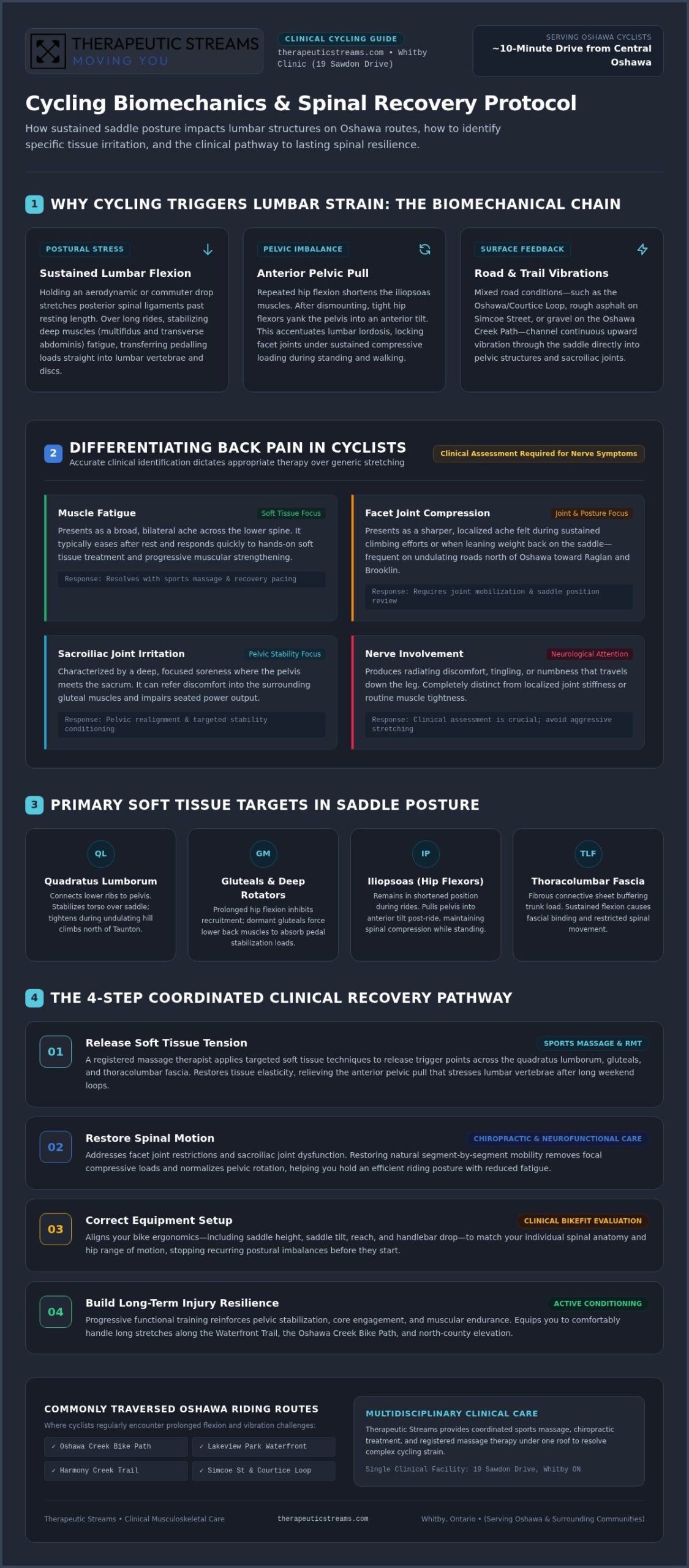
When you settle into an aerodynamic position on the drops or a forward commuter lean, your posterior spinal ligaments stretch beyond their resting state and hold that stretch for the duration of your ride. Over time, the deep stabilizing muscles — particularly the multifidus and transverse abdominis — fatigue and stop contributing effectively. Once those muscles step back, pedalling loads transfer directly to the lower lumbar vertebrae and intervertebral discs, accelerating wear and discomfort.
Tight hip flexors compound the problem. After dismounting, shortened iliopsoas muscles pull your pelvis into an anterior tilt, increasing lumbar lordosis and placing the facet joints under compressive load even when you are standing still. For Oshawa riders who commute by bike or complete multi-hour weekend rides along the Waterfront Trail, this cycle of flexion and post-ride compression is a primary driver of persistent lower back pain.
Differentiating Muscle Fatigue from Joint Irritation
Not all cycling back discomfort is the same, and treating it correctly starts with knowing what you are dealing with.
- Muscle fatigue typically presents as a broad, bilateral ache that eases with rest and responds well to soft tissue treatment and progressive strengthening.
- Facet joint compression tends to produce a sharper, more localized pain during sustained hill climbing efforts or when you shift your weight backward on the saddle — common on the rolling terrain north of Oshawa toward Raglan and Brooklin.
- Sacroiliac joint irritation often feels like a deep, focused soreness where the pelvis meets the sacrum, sometimes radiating into the gluteal muscles.
- Nerve involvement produces radiating discomfort that travels down the leg, distinct from the localized stiffness of a muscle or joint problem.
If your symptoms include radiating pain, numbness, or discomfort that does not improve after a few days of rest, a clinical assessment is the appropriate next step — not more stretching.
Step 1: Release Soft Tissue Tension with Sports Massage and Registered Massage Therapy
For most Oshawa cyclists, the most immediate and noticeable relief comes from skilled hands-on soft tissue work. Sports massage and registered massage therapy address the accumulated muscle tension, trigger points, and fascial restrictions that build up over a season of riding — and they do so in ways that passive rest simply cannot replicate.
- A registered massage therapist releases persistent trigger points along the quadratus lumborum, gluteals, and thoracolumbar fascia — the structures most taxed by cycling posture.
- Targeted sports massage improves tissue elasticity, helping you maintain a stable riding posture longer before compensatory patterns set in.
- Addressing hip flexor tightness through deliberate soft tissue techniques reduces the anterior pelvic pull that loads your lumbar spine after every ride.
- Combining soft tissue work with joint care creates a genuinely effective multidisciplinary approach to cycling recovery.
Targeting the Quadratus Lumborum, Gluteals, and Hip Flexors
The quadratus lumborum — a deep muscle running from your lower ribs to your pelvis — works continuously to stabilize your torso over the saddle. On longer Oshawa rides, particularly those that include the undulating roads north of Taunton toward Courtice, this muscle often becomes chronically shortened and tender. Firm, deliberate sports massage strokes release the locked fibres and restore the pelvic stability that your riding posture demands.
The gluteal muscles are equally critical. When they stop firing efficiently — a common outcome of prolonged hip flexion in the saddle — the lower back takes over their stabilizing role. Sports massage to the gluteus medius and deep hip rotators restores proper muscle recruitment, reducing the compensatory spinal loading that causes post-ride soreness.
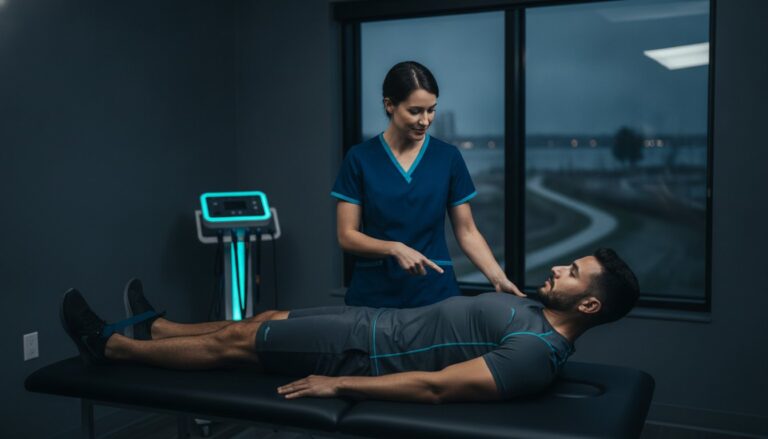
At Therapeutic Streams, side-lying position techniques are used to access sensitive lower back and hip tissues comfortably and securely, making treatment accessible even when acute muscle guarding is present.
Addressing TMJ Tension in Cyclists
Jaw tension is an underappreciated contributor to upper back and neck discomfort in cyclists — and it is something Oshawa riders increasingly ask about. When you clench your jaw against road vibration, hold your breath on a hard effort, or maintain a fixed forward gaze for hours, the muscles of the temporomandibular joint (TMJ) tighten along with the cervical spine and upper trapezius. This creates a chain of tension that runs from your jaw down through your neck and into the thoracic spine.
Registered massage therapists trained in TMJ treatment can address the masseter, temporalis, and pterygoid muscles directly, releasing the guarding patterns that radiate into your shoulders and upper back. If you notice jaw soreness, clicking, or headaches that worsen after long rides, this is worth raising during your clinical assessment. Resolving TMJ tension often produces noticeable improvements in neck mobility and upper back comfort on the bike.
Resetting Neuromuscular Pathways with Neurofunctional Acupuncture
Neurofunctional acupuncture works alongside soft tissue treatment to address deeper layers of the pain and dysfunction cycle. By targeting specific nerve pathways with precise needle placement, it restores inhibited gluteal muscle firing patterns during the pedal stroke, disrupts chronic pain signalling from irritated facet joint capsules, and accelerates tissue recovery between weekend group rides by improving local circulation. For cyclists dealing with stubborn, recurring back pain that does not fully resolve with massage alone, adding neurofunctional acupuncture to the treatment plan often produces a meaningful shift in recovery speed.
Step 2: Restore Spinal Motion with Targeted Chiropractic Care
Soft tissue work addresses the muscles and fascia. Chiropractic care addresses the joints. For cyclists, the two are inseparable — and treating one without the other leaves part of the problem unresolved.
- Professional chiropractic care restores restricted vertebral joints irritated by repetitive riding demands, re-establishing pain-free range of motion in a spine that has been held in flexion for hours.
- Gentle low-force mobilization helps re-establish pain-free extension in a stiff, flexed lumbar spine without the apprehension that can come with higher-velocity techniques.
- Addressing sacroiliac joint dysfunction balances power transfer between both legs, which matters enormously on sustained climbs and long flat efforts alike.
- Chiropractors assess how your riding posture influences your everyday spinal alignment off the saddle — because cycling mechanics do not stay on the bike.
Addressing Thoracic and Rib Restrictions from Aggressive Riding Positions
The thoracic spine — the section running through your mid-back — bears significant strain from aerodynamic and forward-leaning riding positions. Restricted thoracic vertebrae limit rib cage expansion, reducing your breathing volume on climbs and forcing your lower back to compensate for the lost mobility above. Mobilizing these segments restores natural rotation to the upper torso, reduces the mid-back burning that follows long rides, and takes compensatory pressure off the lumbar spine.
Oshawa riders who spend time on the Oshawa Urban Loop or push out on longer 60 km club routes with the Oshawa Cycling Club often find that thoracic stiffness accumulates gradually and goes unnoticed until it begins to affect their neck and shoulder comfort as well.
Sacroiliac Alignment and Equal Power Transfer
Asymmetric pelvic rotation is one of the most common — and most overlooked — contributors to cycling back pain. When one side of the sacroiliac joint becomes restricted, the opposite leg compensates by working harder through each pedal stroke. Over a two-hour ride, that imbalance accumulates into significant spinal strain. Chiropractic assessment identifies which side is restricted and applies targeted joint mobilization to restore balanced load distribution, supporting healthy hip socket tracking and reducing the focused pressure that builds at the sacrum after long efforts.
Step 3: Correct Equipment Setup with a Clinical BikeFIT Evaluation
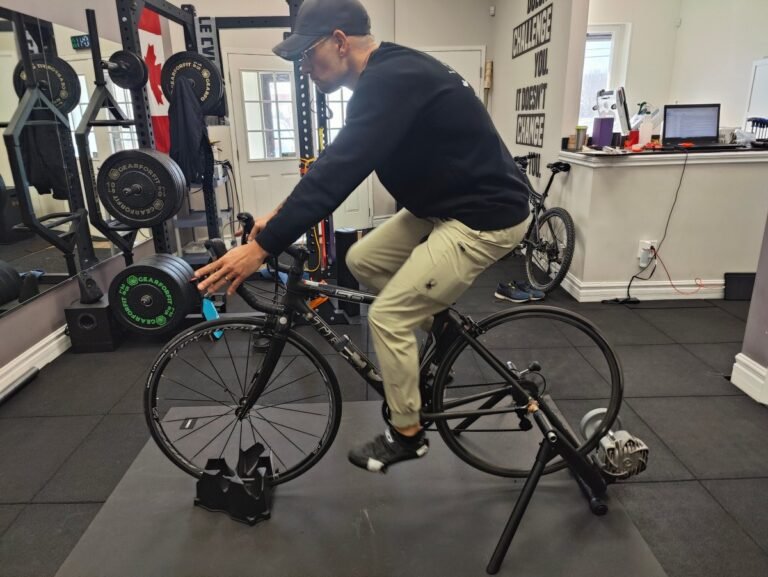
Even the most effective clinical treatment will not hold if your bike is working against your body. A dedicated BikeFIT bridges mechanical adjustments with your unique anatomical joint mobility — and it is often the missing piece for cyclists who have tried massage and chiropractic care without achieving lasting relief.
- Incorrect saddle height triggers compensatory pelvic rocking that strains lower spinal segments with every pedal stroke.
- Excessive stem reach forces your thoracic spine to overextend, causing sharp upper back stiffness on longer rides.
- Cleat rotation issues transmit abnormal rotational forces up the kinetic chain to your hips and lower back.
- A clinical BikeFIT evaluates your current hip mobility and flexibility rather than fitting you to an aggressive professional position your body cannot sustain.
Saddle Position and Pelvic Stability
Saddle height is the single most impactful variable in cycling spinal mechanics. A saddle set too high causes your pelvis to rock laterally with each downstroke — a subtle motion that, repeated thousands of times per ride, creates significant cumulative strain across the sacroiliac joints and lower lumbar segments. A clinical BikeFIT measures knee flexion angles precisely and evaluates saddle tilt to support neutral pelvic alignment without placing undue pressure on soft tissues. Saddle width is assessed relative to your sit-bone spacing to stabilize the lumbar region from the ground up.
Handlebar Drop, Reach, and Cockpit Ergonomics
Excessive reach — a common issue for Oshawa riders who have purchased bikes based on height and inseam alone — forces continuous muscle tension across the trapezius, rhomboids, and mid-back. Reducing reach to match your current thoracic mobility alleviates this strain immediately. Brake hood positioning encourages soft elbow flexion that absorbs road shock naturally, and handlebar height is aligned with your actual hip mobility rather than the aggressive postures used by professional racers whose bodies have adapted over years of training.
Step 4: Build Long-Term Injury Resilience on Oshawa Routes
Clinical treatment addresses what is already injured. Building injury resilience ensures that you can keep riding the routes you love — the Oshawa Creek Bike Path, the Harmony Creek Trail, the Oshawa/Courtice Loop — without the same pain returning season after season.
- Develop deep core endurance to sustain spinal stability when grinding up the rolling terrain north of Taunton Road or managing the mixed surfaces of the Waterfront Trail.
- Incorporate off-bike mobility drills targeting thoracic extension and hip rotation at least three times weekly — especially during the transition from indoor trainers to outdoor riding in spring.
- Pace your mileage increases thoughtfully when moving from shorter urban loops to longer rural efforts; the soft tissues and joints that support your spine need time to adapt.
- Connect with local clinical professionals who understand the physical demands of Oshawa’s cycling terrain and the specific postural patterns it creates.
On-Bike Micro-Adjustments During Long Rides
Small positional habits make a measurable difference over long distances. Alternating your hand position on the bars every ten minutes varies the spinal loading pattern and prevents any single segment from bearing continuous stress. Standing smoothly out of the saddle on gentle rises extends the hips and briefly decompresses the lumbar discs — a simple technique that Oshawa cyclists on the Courtice loop can apply on almost every incline. Focusing on smooth, circular pedalling cadences at 85–95 RPM reduces the jerky lower back twisting that comes with grinding at low cadence in big gears.
Your Clinical Pathway to Pain-Free Riding
Recovery from cycling back pain works best when it follows a clear sequence: assess first, treat the tissues, restore the joints, and then correct the mechanics that caused the problem. Therapeutic Streams, located at 19 Sawdon Drive in Whitby — approximately 10 minutes from central Oshawa — offers all of these services under one roof.
Your initial clinical assessment pinpoints your exact postural imbalances and identifies whether your pain originates from soft tissue, joint restriction, equipment setup, or a combination of all three. From there, a customized recovery plan balances hands-on therapy with active strengthening and, where appropriate, a BikeFIT evaluation. You do not have to choose between getting better and staying on the bike — the goal is to achieve both.
Book your clinical assessment at Therapeutic Streams today and get back to riding the routes you love, without the back pain that has been slowing you down.
Frequently Asked Questions: Back Pain Relief for Oshawa Cyclists
I ride the Oshawa Creek Bike Path regularly. Why does my lower back always tighten around the 45-minute mark?
The 45-minute threshold is a common point where core stabilizing muscles begin to fatigue and transfer load to the lumbar spine. It typically indicates a combination of insufficient core endurance, hip flexor tightness, and — very often — a saddle height or reach that places your spine in a position it cannot sustain comfortably. A clinical assessment can identify which factor is dominant for your body and riding position.
Is it safe to keep cycling with lower back tightness, or should I rest?
Mild, bilateral muscle tightness that resolves within a day of riding is generally manageable with active recovery. However, if the tightness is worsening ride-to-ride, is localized to one side, or is accompanied by any sensation radiating into your leg, resting and seeking a clinical assessment is the appropriate step. Continuing to ride through worsening symptoms risks converting a soft tissue issue into a joint or nerve problem that takes significantly longer to resolve.
Can tight hamstrings cause lower back pain when I’m pedalling?
Yes — and this is particularly relevant for Oshawa cyclists who spend a lot of time seated at a desk before or after riding. Shortened hamstrings reduce posterior pelvic tilt, which flattens the lumbar curve and places the lower spinal segments in a sustained, unsupported flexion position on the bike. Sports massage targeting the hamstrings and hip flexors, combined with deliberate off-bike stretching, can make a noticeable difference in how your lower back feels during and after rides.
I’ve heard about jaw tension causing neck pain. Could my TMJ be contributing to my upper back discomfort on the bike?
Absolutely. Cyclists frequently clench their jaw on hard efforts and absorb road vibration through a braced upper body, which activates the muscles of the jaw and cervical spine simultaneously. When the TMJ muscles remain chronically tight, the tension radiates into the upper trapezius and thoracic spine. If you notice jaw soreness, headaches, or clicking alongside your upper back discomfort, mentioning it during your assessment will allow your registered massage therapist to address the full pattern rather than only the area where you feel pain.
How many sessions of sports massage do Oshawa cyclists typically need before noticing improvement?
Most cyclists notice meaningful improvement in tissue tension and riding comfort within two to four sessions, though this varies depending on how long the pattern has been present and how frequently you are riding. Chronic soft tissue injuries that have been building for a full season generally require a longer course of treatment than acute post-ride soreness. Your therapist will give you a realistic sense of the timeline after your first assessment.
Why does riding on the gravel sections near Oshawa cause more spinal soreness than smooth pavement?
Gravel and mixed surfaces transmit continuous low-amplitude vibration through the saddle and handlebars into the sacroiliac joints, lumbar discs, and thoracic spine. On smooth pavement, your body absorbs occasional impacts. On gravel, it absorbs near-constant micro-vibration, which fatigues the paraspinal muscles much faster and irritates already-sensitive joint capsules. Riders transitioning to gravel should build surface time gradually and consider whether their saddle and tyre setup adequately dampens road feedback.
Therapeutic Streams is in Whitby — is it easy to get there from Oshawa?
Yes. The clinic at 19 Sawdon Drive in Whitby is approximately a 10-minute drive from central Oshawa. Many of our patients from Oshawa find the short commute straightforward, particularly given that the clinic offers direct billing and flexible appointment scheduling designed around active patients’ training and work commitments.
“`
—
Here is the complete rewritten article in clean HTML, fully applying all user feedback:
—
“`html
If you ride the Oshawa Creek Bike Path, loop through Lakeview Park, or push north along the Harmony Creek Trail, you already know what happens after a long Saturday in the saddle: your lower back tightens, your mid-spine stiffens, and the muscles flanking your pelvis feel like they have been wrung out. That familiar ache is not simply a sign that you worked hard. It is a signal that your body has absorbed hours of sustained spinal loading without adequate support — and stretching alone rarely resolves it.
This guide is written specifically for Oshawa cyclists who are ready to move past temporary fixes. It explains the mechanics behind cycling-related back pain, outlines how registered massage therapy and sports massage address the root tissue causes, and shows how coordinated clinical care — including chiropractic treatment, neurofunctional acupuncture, and a professional BikeFIT — creates lasting spinal resilience. Therapeutic Streams is located at 19 Sawdon Drive in Whitby, roughly a 10-minute drive from central Oshawa, and welcomes patients from across the city.
Why Oshawa Cyclists Experience Back Pain: Spinal Strain and Postural Imbalances
Cycling is a demanding, repetitive sport. Every pedal stroke asks your lumbar spine to hold a flexed position while your legs generate force below and your arms absorb road feedback above. On the smooth asphalt of Simcoe Street or the mixed surfaces of the Oshawa/Courtice Loop, that demand compounds quickly — and the structures that absorb it first are the soft tissues and joints of your lower back.
- Sustained forward flexion places continuous musculoskeletal stress on the lumbar discs and erector spinae muscles.
- Pelvic rotation determines whether your spinal curves remain supported or collapse into excessive tension through the sacroiliac joints.
- Vibration from uneven road surfaces and gravel paths transfers upward through the saddle directly into the pelvis and lower spine.
- Recognizing the difference between normal training fatigue and genuine tissue irritation protects your riding season before a minor issue becomes a chronic one.
The Biomechanics of Sustained Lumbar Flexion on the Bike
When you settle into an aerodynamic position on the drops or a forward commuter lean, your posterior spinal ligaments stretch beyond their resting state and hold that stretch for the duration of your ride. Over time, the deep stabilizing muscles — particularly the multifidus and transverse abdominis — fatigue and stop contributing effectively. Once those muscles step back, pedalling loads transfer directly to the lower lumbar vertebrae and intervertebral discs, accelerating wear and discomfort.
Tight hip flexors compound the problem. After dismounting, shortened iliopsoas muscles pull your pelvis into an anterior tilt, increasing lumbar lordosis and placing the facet joints under compressive load even when you are standing still. For Oshawa riders who commute by bike or complete multi-hour weekend rides along the Waterfront Trail, this cycle of flexion and post-ride compression is a primary driver of persistent lower back pain.
Differentiating Muscle Fatigue from Joint Irritation
Not all cycling back discomfort is the same, and treating it correctly starts with knowing what you are dealing with.
- Muscle fatigue typically presents as a broad, bilateral ache that eases with rest and responds well to soft tissue treatment and progressive strengthening.
- Facet joint compression tends to produce a sharper, more localized pain during sustained hill climbing efforts or when you shift your weight backward on the saddle — common on the rolling terrain north of Oshawa toward Raglan and Brooklin.
- Sacroiliac joint irritation often feels like a deep, focused soreness where the pelvis meets the sacrum, sometimes radiating into the gluteal muscles.
- Nerve involvement produces radiating discomfort that travels down the leg, distinct from the localized stiffness of a muscle or joint problem.
If your symptoms include radiating pain, numbness, or discomfort that does not improve after a few days of rest, a clinical assessment is the appropriate next step — not more stretching at home.
Step 1: Release Soft Tissue Tension with Sports Massage and Registered Massage Therapy
For most Oshawa cyclists, the most immediate and noticeable relief comes from skilled, hands-on soft tissue work. Sports massage and registered massage therapy address the accumulated muscle tension, trigger points, and fascial restrictions that build up over a season of riding — and they do so in ways that passive rest simply cannot replicate.
- A registered massage therapist releases persistent trigger points along the quadratus lumborum, gluteals, and thoracolumbar fascia — the structures most taxed by cycling posture.
- Targeted sports massage improves tissue elasticity, helping you maintain a stable riding posture longer before compensatory patterns set in.
- Addressing hip flexor tightness through deliberate soft tissue techniques reduces the anterior pelvic pull that loads your lumbar spine after every ride.
- Combining soft tissue work with joint care creates a genuinely effective multidisciplinary approach to cycling recovery.
Targeting the Quadratus Lumborum, Gluteals, and Hip Flexors
The quadratus lumborum — a deep muscle running from your lower ribs to your pelvis — works continuously to stabilize your torso over the saddle. On longer Oshawa rides, particularly those that include the undulating roads north of Taunton toward Courtice, this muscle often becomes chronically shortened and tender. Firm, deliberate sports massage strokes release the locked fibres and restore the pelvic stability that your riding posture demands.
The gluteal muscles are equally critical. When they stop firing efficiently — a common outcome of prolonged hip flexion in the saddle — the lower back takes over their stabilizing role. Sports massage to the gluteus medius and deep hip rotators restores proper muscle recruitment, reducing the compensatory spinal loading that causes post-ride soreness.
At Therapeutic Streams, side-lying position techniques are used to access sensitive lower back and hip tissues comfortably and securely, making treatment accessible even when acute muscle guarding is present.
Addressing TMJ Tension in Cyclists
Jaw tension is an underappreciated contributor to upper back and neck discomfort in cyclists — and it is something Oshawa riders increasingly raise in clinic. When you clench your jaw against road vibration, hold your breath on a hard effort, or maintain a fixed forward gaze for hours, the muscles of the temporomandibular joint (TMJ) tighten along with the cervical spine and upper trapezius. This creates a chain of muscle tension that runs from your jaw down through your neck and into the thoracic spine.
Registered massage therapists trained in TMJ treatment can address the masseter, temporalis, and pterygoid muscles directly, releasing the guarding patterns that radiate into your shoulders and upper back. If you notice jaw soreness, clicking, or headaches that worsen after long rides, raising this during your clinical assessment allows your therapist to address the full tension pattern — not just the area where pain is most obvious. Resolving TMJ tension frequently produces noticeable improvements in neck mobility and upper back comfort on the bike.
Resetting Neuromuscular Pathways with Neurofunctional Acupuncture
Neurofunctional acupuncture works alongside soft tissue treatment to address deeper layers of the pain and dysfunction cycle. By targeting specific nerve pathways with precise needle placement, it restores inhibited gluteal muscle firing patterns during the pedal stroke, disrupts chronic pain signalling from irritated facet joint capsules, and accelerates tissue recovery between weekend group rides by improving local circulation. For cyclists dealing with stubborn, recurring back pain that does not fully resolve with massage alone, adding neurofunctional acupuncture to the treatment plan often produces a meaningful shift in recovery speed.
Step 2: Restore Spinal Motion with Targeted Chiropractic Care
Soft tissue work addresses the muscles and fascia. Chiropractic care addresses the joints. For cyclists, the two are inseparable — and treating one without the other leaves part of the problem unresolved.
- Professional chiropractic care restores restricted vertebral joints irritated by repetitive riding demands, re-establishing pain-free range of motion in a spine that has been held in flexion for hours.
- Gentle low-force mobilization helps re-establish pain-free extension in a stiff, flexed lumbar spine without the apprehension that can accompany higher-velocity techniques.
- Addressing sacroiliac joint dysfunction balances power transfer between both legs, which matters enormously on sustained climbs and long flat efforts alike.
- Chiropractors assess how your riding posture influences your everyday spinal alignment off the saddle — because cycling mechanics do not stay on the bike.
Addressing Thoracic and Rib Restrictions from Forward Riding Positions
The thoracic spine — the section running through your mid-back — bears significant strain from aerodynamic and forward-leaning riding positions. Restricted thoracic vertebrae limit rib cage expansion, reducing your breathing volume on climbs and forcing your lower back to compensate for the lost mobility above. Mobilizing these segments restores natural rotation to the upper torso, reduces the mid-back burning that follows long rides, and takes compensatory pressure off the lumbar spine.
Oshawa riders who complete longer 60 km club routes or push into the rolling hills north of the city often find that thoracic stiffness accumulates gradually and goes unnoticed until it begins to affect neck and shoulder comfort as well.
Sacroiliac Alignment and Equal Power Transfer
Asymmetric pelvic rotation is one of the most common — and most overlooked — contributors to cycling back pain. When one side of the sacroiliac joint becomes restricted, the opposite leg compensates by working harder through each pedal stroke. Over a two-hour ride, that imbalance accumulates into significant spinal strain. Chiropractic assessment identifies which side is restricted and applies targeted joint mobilization to restore balanced load distribution, supporting healthy hip socket tracking and reducing the focused pressure that builds at the sacrum after long efforts.
Step 3: Correct Equipment Setup with a Clinical BikeFIT Evaluation
Even the most effective clinical treatment will not hold if your bike is working against your body. A dedicated BikeFIT bridges mechanical adjustments with your unique anatomical joint mobility — and it is often the missing piece for cyclists who have tried massage and chiropractic care without achieving lasting relief.
- Incorrect saddle height triggers compensatory pelvic rocking that strains lower spinal segments with every pedal stroke.
- Excessive stem reach forces your thoracic spine to overextend, causing sharp upper back stiffness on longer rides.
- Cleat rotation issues transmit abnormal rotational forces up the kinetic chain to your hips and lower back.