Pelvic Floor Rehab in Whitby: A Comprehensive Guide to Integrated Recovery
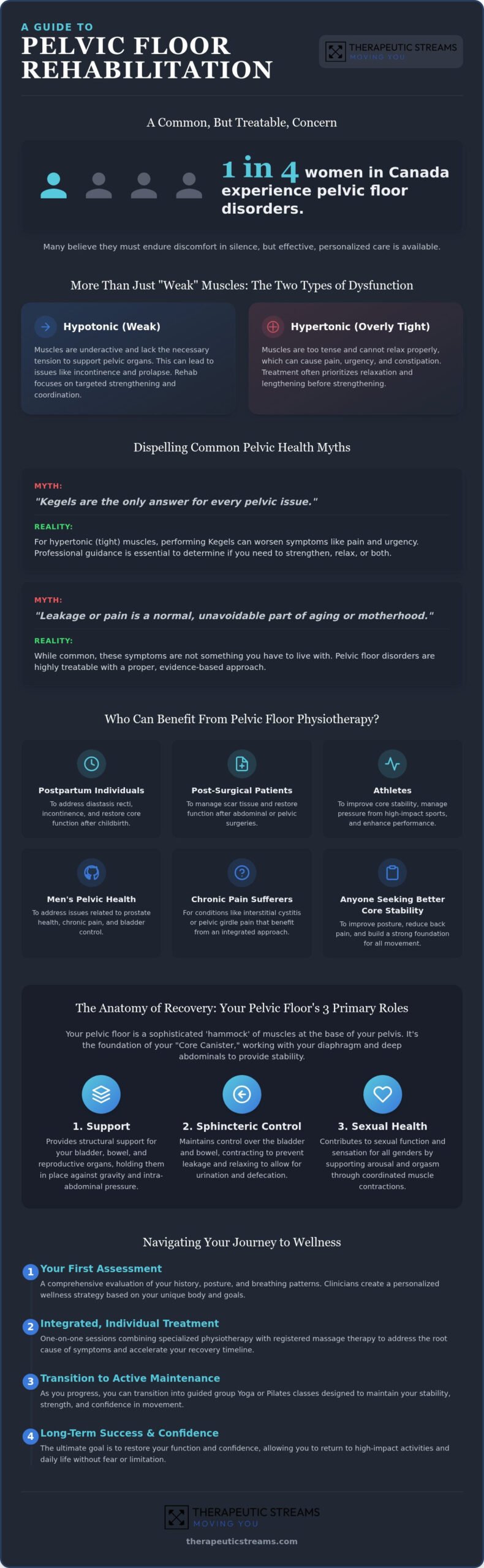
Did you know that approximately 1 in 4 women in Canada experience pelvic floor disorders, yet many feel they must simply endure the discomfort in silence? It’s incredibly frustrating when persistent bladder urgency or pelvic pain during your favourite daily activities makes you feel like you’ve lost control of your own body. You likely want to return to high-impact movements without fear; however, contradictory advice found online often leaves you feeling more confused than when you started. Finding a reliable path to recovery shouldn’t feel like another hurdle to clear.
We believe that you shouldn’t have to settle for a limited lifestyle. A personalized, evidence-based approach to pelvic floor rehab can restore your function and confidence by addressing the root cause of your symptoms. Our team is dedicated to acting as your advocate and partner throughout this journey, ensuring your recovery is both clinical and compassionate. We prioritize your results through a structured, professional methodology that treats you as an individual, not just a set of symptoms.
This guide outlines how an integrated recovery plan helps you achieve improved core stability and postural control. You’ll discover a clear, manageable path to wellness that moves you from clinical assessment to long-term strength, allowing you to thrive in the Whitby community and beyond.
Key Takeaways
- Realize that effective pelvic floor rehab addresses both weak and overly tight muscles, moving beyond simple repetitive exercises to provide a comprehensive solution.
- Understand the essential “hammock” structure of your pelvic floor and how its three primary functions support your internal organs and physical control.
- Discover the benefits of an integrated care model that combines specialized physiotherapy with registered massage therapy to accelerate your recovery timeline.
- Prepare for your first assessment by learning how clinicians evaluate your breathing patterns and posture to create a tailored wellness strategy.
- Learn how to transition from individual treatment into group Yoga or Pilates classes to maintain your stability and ensure long-term success.
Understanding Pelvic Floor Rehab: More Than Just Exercises
Pelvic floor rehab is a specialized branch of physiotherapy that focuses on the complex system of muscles, ligaments, and connective tissues at the base of your pelvis. While many people associate this care exclusively with pregnancy, it’s actually a foundational element of musculoskeletal health for everyone. Understanding Pelvic Floor Rehab involves looking at how these muscles function as the base of your “inner core.” This core includes your diaphragm, deep abdominals, and back muscles. When the foundation is unstable, the rest of the structure suffers.
In our clinical practice, we see two primary types of dysfunction. Some patients present with hypotonic muscles, which are weak and lack the necessary tension to support pelvic organs. Others struggle with hypertonic muscles that are overly tight and unable to relax. Effective pelvic floor rehab isn’t about mindlessly strengthening; it’s about restoring the appropriate tone and coordination for your specific body. By addressing these imbalances, we help you regain control and reduce the physical stress on your surrounding joints.
Dispelling Common Myths About Pelvic Health
One of the most persistent misconceptions is that “Kegels are the only answer” for every pelvic issue. In reality, performing repetitive contractions on a hypertonic or “tight” pelvic floor can actually worsen symptoms like pain or urgency. You wouldn’t try to strengthen a bicep that’s already stuck in a cramp; the same logic applies here. Many patients first need to learn how to consciously relax and lengthen these muscles before they can safely build strength. It’s a nuanced process that requires professional guidance to ensure you aren’t accidentally reinforcing harmful patterns.
Another harmful myth is that leakage or pain is a “normal” part of aging or motherhood. While these conditions are frequent, being common doesn’t mean it’s something you have to live with. These symptoms are highly treatable. Seeking professional help is a proactive step toward regaining your quality of life rather than an inevitable consequence of life’s milestones.
Who Can Benefit from Pelvic Floor Physiotherapy?
The scope of this treatment is remarkably broad. While postpartum individuals often seek care to address diastasis recti or incontinence, athletes also frequently require pelvic health support. High-impact activities can put immense pressure on the pelvic floor. Without proper core stability, performance plateaus and injury risks increase. Men also benefit from this specialized care, particularly when dealing with chronic pelvic pain or post-surgical recovery. We provide local Whitby residents with a collaborative environment where pelvic health is integrated into your overall wellness plan. Our focus is on providing evidence-based care that helps you thrive in your daily life.
- Post-Surgical Patients: Recovery from abdominal or pelvic surgeries often requires targeted rehab to manage scar tissue and restore function.
- Men’s Pelvic Health: Men experience pelvic pain and bladder issues too, often related to prostate health or chronic tension.
- Chronic Pain Sufferers: Conditions like interstitial cystitis or pelvic girdle pain respond well to an integrated, assessment-based approach.
At Therapeutic Streams Sport Rehab, we ensure your journey is private and professional. By offering one-on-one clinical appointments, we create a space where you can focus entirely on your recovery goals.
The Anatomy of Recovery: How Your Pelvic Floor Functions
The pelvic floor is much more than a single muscle; it’s a sophisticated hammock of tissues spanning the base of your pelvis. This structure provides the necessary support for your bladder, bowel, and reproductive organs. To function optimally, it must execute three primary roles: supporting your internal organs, maintaining sphincteric control to prevent leakage, and contributing to sexual health. In the context of pelvic floor rehab, we evaluate how these muscles adapt to the physical stresses of your unique lifestyle, whether you’re an athlete or managing daily household tasks.
True stability relies on the “Core Canister” model. Think of your diaphragm as the lid, your deep abdominals as the walls, and the pelvic floor as the base. These elements must work together to manage intra-abdominal pressure, which is the internal force exerted within the abdominal cavity during activities like breathing, lifting, or coughing. When this system is out of sync, the pelvic floor may fail to manage the downward pressure, leading to discomfort or dysfunction. Learning What to Expect During Your First Pelvic Health Assessment is the first step in identifying where your specific system requires support.
The Core-Pelvic Connection
It’s common for pelvic floor dysfunction to manifest as persistent lower back or hip pain that doesn’t respond to traditional stretching. Because the pelvic floor is the foundation of your core, any weakness or lack of coordination forces the muscles in your back and hips to work overtime to stabilize your spine. A “weak core” is often just an uncoordinated one. By pairing our rehab programs with Professional Chiropractic Care in Whitby, we address both the internal pelvic foundation and the external spinal alignment for a complete recovery.
Common Symptoms of Pelvic Floor Dysfunction
Your body often signals a lack of coordination through specific physical symptoms. Identifying these early can prevent more significant challenges later in life. Look out for these common signs:
- Leaking urine when you laugh, cough, or exercise.
- A sensation of heaviness or a feeling of pressure in the pelvic area.
- Pain during or after sexual intercourse.
- Difficulty fully emptying your bladder or bowel.
These symptoms are your body’s way of asking for better pressure management. If you recognize these patterns, the experts at Therapeutic Streams Sport Rehab can provide the assessment-based care needed to restore your physical integrity. Realizing that these issues are treatable is the first step toward returning to the activities you love without hesitation.
An Integrated Approach to Pelvic Floor Rehab in Whitby
At our Whitby clinic, we don’t view pelvic health as an isolated concern. Many traditional medical models treat the pelvic floor in a silo, but we recognize it as a central component of your whole-body mechanics. This is why we advocate for a collaborative, multi-disciplinary lens. By utilizing an integrated approach, we ensure that your pelvic floor rehab is supported by every relevant clinical discipline. This synergy leads to faster, more sustainable results because we address the compensatory patterns that often develop alongside pelvic dysfunction. We believe that a team-based environment is the most effective way to help you thrive.
Our protocols are strictly evidence-based and assessment-driven. Every recovery plan begins with a thorough evaluation of your unique musculoskeletal profile, looking at how your body moves as a whole. We provide one-on-one sessions to guarantee your privacy and offer the personalized attention required for such sensitive care. In this dedicated environment, you can discuss your concerns openly with a professional who is fully invested in your progress. This focused time allows us to educate you on your condition, transforming you into an informed partner in your own healing journey. By refining your pelvic floor rehab strategy based on real-time feedback, we ensure your plan evolves as you get stronger.
Combining Physiotherapy with Chiropractic Care
Pelvic alignment and spinal health directly influence how your pelvic floor muscles function. If your pelvis is tilted or your spine lacks mobility, the muscles attached to these structures cannot work efficiently. A chiropractor addresses joint restrictions in the lumbar spine and sacroiliac joints that might otherwise hinder your physiotherapy progress. When the skeletal framework is properly aligned, the pelvic floor can engage and release with much greater ease. This collaborative effort at Therapeutic Streams Sport Rehab ensures that your structural alignment supports your muscular rehabilitation, creating a stable foundation for long-term function.
The Role of Registered Massage Therapy in Pelvic Recovery
Soft tissue tension in the hips, glutes, and inner thighs often creates a “guarding” effect. This protective tension is the body’s response to pain or instability; however, it can prevent pelvic floor muscles from relaxing or contracting properly. Registered Massage Therapy plays a vital role in releasing these external restrictions. By addressing the surrounding musculature, an RMT helps reduce overall guarding behaviours. This allows for a more comfortable transition into the active phases of your recovery. Our commitment to high professional standards ensures that every layer of your recovery is handled with clinical precision and empathetic care.
- Reduced Muscle Guarding: Soft tissue work helps the body feel safe enough to let go of chronic tension.
- Improved Circulation: Targeted massage enhances blood flow to the pelvic region, aiding in tissue healing.
- Enhanced Mobility: Releasing tension in the hip flexors and glutes allows for better pelvic positioning during exercise.
What to Expect During Your First Pelvic Health Assessment
Entering a clinical space for pelvic health can feel intimidating, but we prioritize a comfortable and confidential environment where you feel heard from the moment you arrive. Our “whole-body” assessment approach means we don’t just look at isolated symptoms. We evaluate your posture, gait, and breathing patterns to understand how your entire kinetic chain interacts with your pelvic muscles. This comprehensive view ensures your pelvic floor rehab plan is built on a solid understanding of your body’s unique mechanics. Your voice and agency are the most vital components of this process; we work as partners to organize a tailored recovery roadmap that feels manageable and clear.
The Initial Consultation and Physical Exam
We begin with a detailed health history discussion. This is your time to share your symptoms, daily challenges, and specific goals, such as returning to high-impact running or lifting your children without pain. The physical evaluation involves assessing your external musculoskeletal structures and, when appropriate and with your full consent, an internal exam of the pelvic muscles. This allows us to determine if your muscles are overactive or underactive. Your comfort is our priority. You are always in control of the session and can pause or stop the assessment at any time for any reason.
Creating a Personalized Treatment Plan
Once the assessment is complete, we translate our findings into a specific recovery strategy. This plan isn’t a generic list of exercises; it’s a personalized mix of manual therapy, patient education, and home exercise programmes designed to meet your specific needs. We also look at how your lower limbs influence your pelvic stability. By applying Knee Pain Physiotherapy principles, we ensure your hips and knees are providing the necessary support for your pelvic foundation. This integrated strategy helps you transition from the clinic back into your active lifestyle with confidence.
Our goal is to move you from a state of discomfort to one of wellness through proactive, results-oriented care. If you’re ready to regain control of your health, you can book your initial assessment today to begin your journey with our expert team.
Navigating Your Journey to Wellness at Therapeutic Streams
Therapeutic Streams serves as a dedicated pillar of the health community in Whitby. We recognize that true recovery extends beyond the initial clinical sessions. Our team acts as a collaborative partner, providing a bridge between acute treatment and long-term physical resilience. By grounding our practice in evidence-based care, we ensure your pelvic floor rehab reflects the most current clinical standards. This proactive approach allows us to adjust your roadmap as you gain strength, ensuring you never feel stagnant in your progress.
Convenience is essential for our neighbours in the Durham Region. We offer a seamless experience through online booking and integrated billing, removing the administrative stress that often accompanies medical care. This efficiency mirrors the organized, professional environment of our clinic. Whether you are coming from Oshawa or Ajax, your transition from assessment to active recovery is designed to be as smooth as possible. We believe that an informed client is a successful one, so we prioritize transparency and education at every stage of your journey.
Long-Term Maintenance: Yoga and Pilates Integration
Recovery doesn’t end when your symptoms subside. To ensure lasting stability, we offer group fitness classes specifically designed to complement your clinical progress. Pilates is an exceptional tool for maintaining pelvic floor and deep core stability; it focuses on controlled movements that reinforce the structural patterns learned during your one-on-one sessions. For those managing hypertonic muscle tension, Yoga provides essential nervous system regulation. This helps facilitate the deep relaxation required for a healthy pelvic floor, preventing the “guarding” behaviours we addressed in earlier sections. This transition from clinical treatment to group fitness allows you to maintain your results in a supportive, professional environment.
Your Local Resource for Pelvic Floor Rehab in Durham
We are proud to support residents across Whitby, Oshawa, Bowmanville, and Ajax. Reclaiming your quality of life starts with a single, proactive step. You don’t have to navigate the confusion of contradictory online advice alone. By choosing a local team deeply invested in your well-being, you gain an advocate who understands your journey from discomfort to wellness. If you’re ready to return to high-impact activities with confidence, we provide a clear path forward through our integrated services.
- Whitby and Oshawa: Conveniently located for easy access to specialized physiotherapy and chiropractic care.
- Bowmanville and Ajax: Serving the broader Durham Region with comprehensive musculoskeletal support.
- Integrated Care: Access RMT, acupuncture, and group classes all under one roof.
Our one-on-one clinical appointments ensure you receive the focused attention you deserve. You can book your initial assessment online or contact our clinic to learn more about how we can help you reclaim your physical confidence today.
Reclaiming Your Physical Confidence and Function
Restoring your pelvic health is a transformative journey that moves you from daily discomfort toward long-term wellness. You’ve learned that your pelvic floor is the foundational base of your core canister, requiring a nuanced approach that goes far beyond simple repetitive exercises. By choosing an integrated model of care, you benefit from a dedicated team of professionals who look at your body through a collaborative lens. Our clinic provides the evidence-based pelvic floor rehab you need to address the root causes of your symptoms while supporting your overall musculoskeletal health.
We prioritize personalized one-on-one sessions that ensure your voice is heard throughout every stage of your recovery. Our integrated clinical team combines physiotherapy, chiropractic care, and registered massage therapy to create a seamless path to results. This sophisticated approach allows you to transition from clinical assessment to active maintenance with complete confidence. You don’t have to accept leakage or pain as a normal part of your life. Take a proactive step toward reclaiming your physical integrity and returning to the activities you love without hesitation.
Book Your One-on-One Pelvic Floor Assessment in Whitby and start your journey with a team that is deeply invested in your success.
Frequently Asked Questions
Is pelvic floor rehab only for women after pregnancy?
No, pelvic floor rehab is not exclusively for postpartum recovery. While approximately 1 in 4 women in Canada experience pelvic floor disorders, these muscles are present in everyone and can be affected by surgery, athletic strain, or aging. Men often seek treatment for pelvic pain or post-surgical recovery, while athletes use it to manage intra-abdominal pressure. Our Whitby clinic provides specialized care for all genders and life stages.
What should I wear to my pelvic floor physiotherapy appointment?
You should wear comfortable, loose-fitting clothing that allows for easy movement, such as athletic wear or yoga pants. Since our assessment looks at your gait, posture, and breathing patterns, we need to observe how your body moves as a whole. If an internal evaluation is part of your session, we prioritize your privacy and comfort at every step. Many patients find that wearing layers helps them feel more relaxed.
How many sessions of pelvic floor rehab will I typically need?
The number of sessions depends on your specific symptoms and goals. While some patients see improvement in a few visits, a typical course of care in the Durham Region often involves approximately 10 sessions over three to six months to achieve lasting results. We focus on one-on-one sessions to ensure your pelvic floor rehab plan is evidence-based and tailored to your progress. Your clinician will provide a manageable recovery roadmap during your assessment.
Is pelvic floor physiotherapy covered by private insurance in Ontario?
Yes, most private or workplace health insurance plans in Ontario cover pelvic floor physiotherapy under their standard physiotherapy benefits. Because our services are provided by registered physiotherapists, you can typically submit your receipts for reimbursement. It’s advisable to check your specific plan for annual limits or per-visit maximums. Our integrated billing system makes this process straightforward for residents in Whitby, Oshawa, and the surrounding Durham area.
Can pelvic floor rehab help with chronic lower back pain?
Yes, pelvic floor rehab is often a critical component in resolving chronic lower back pain. Research indicates that 78% of women with lower back pain also experience urinary incontinence, suggesting a strong link between these areas. Because the pelvic floor acts as the foundation of your core canister, restoring its coordination can stabilize the spine and reduce stress on the lumbar region. We often integrate this with chiropractic care for a comprehensive recovery.
Do I need a doctor’s referral for pelvic floor physio in Whitby?
You don’t need a doctor’s referral to see a pelvic floor physiotherapist in Ontario. Physiotherapists are primary care providers, so you can book your assessment directly at our Whitby clinic. However, some private insurance companies still require a physician’s referral to process your reimbursement claims. We recommend reviewing your policy details before your first appointment to ensure you have the necessary documentation for your specific insurance provider.
Is the internal assessment mandatory for pelvic floor rehab?
No, an internal assessment is never mandatory. While it provides valuable clinical data about muscle tone and coordination, your agency and comfort are our primary concerns. We can effectively begin your treatment using external techniques, breathing exercises, and postural corrections. If you decide to proceed with an internal exam later in your recovery, it will be done with your full consent in a private, professional environment.
How soon after giving birth can I start pelvic floor physiotherapy?
Most patients begin their postpartum recovery around the six-week mark, following their routine check-up with a midwife or doctor. However, you can seek early guidance for gentle breathing techniques or scar tissue management sooner if you aren’t experiencing complications. Our goal is to support your transition back to high-impact activities safely. We offer a supportive environment for new parents from across Ajax, Whitby, and Bowmanville to recover their physical confidence.