Youth Sports Injury Prevention in Whitby: A Parent’s Guide to Long-Term Athletic Health
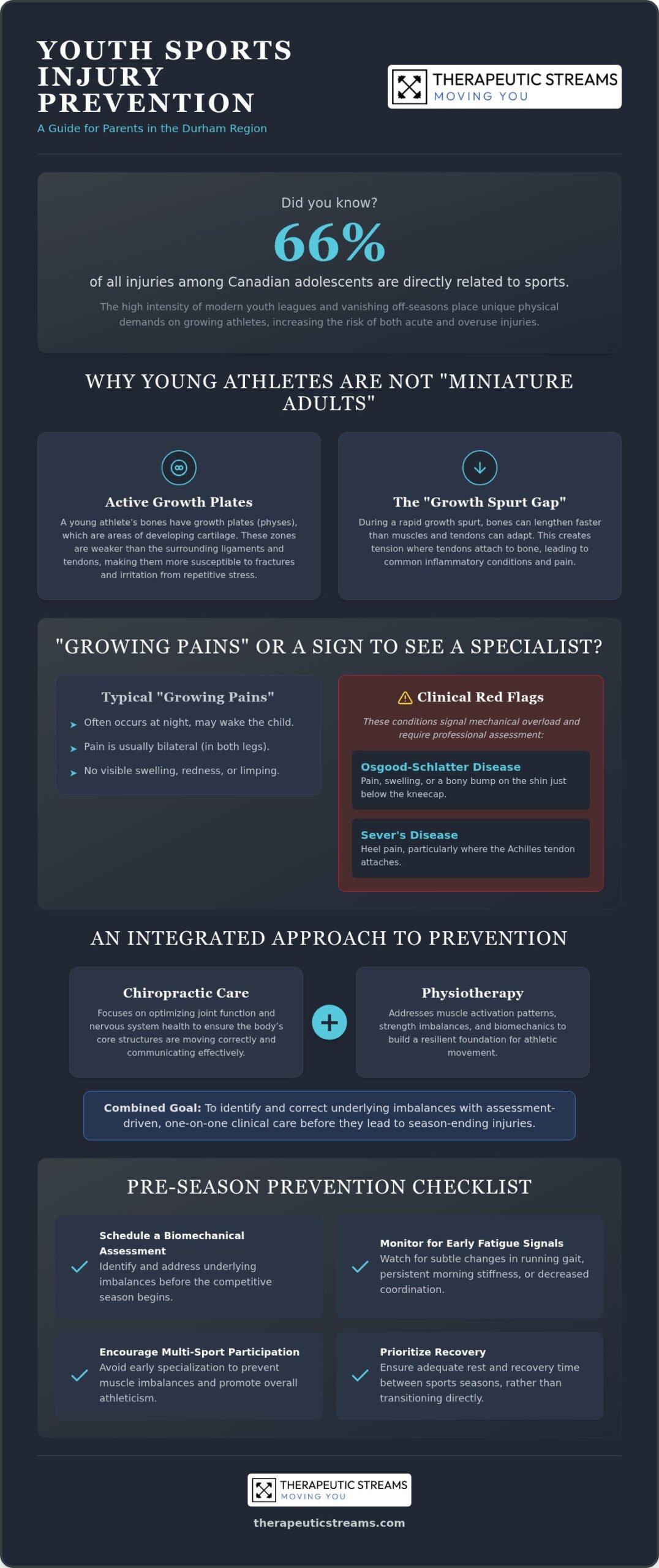
Did you know that sixty-six percent of all injuries among Canadian adolescents are directly related to sports? In the high-intensity environment of Durham Region leagues, it is common for parents to worry about the thin line between a productive practice and a season-ending setback. You likely recognize the anxiety of watching your child limp off the field or hearing them complain about “growing pains” that do not seem to resolve with rest. It is often difficult to distinguish between normal developmental discomfort and a mechanical issue that requires professional clinical intervention.
Prioritizing youth sports injury prevention whitby families can trust involves moving beyond generic advice toward an integrated, evidence-based approach at Therapeutic Streams Sport Rehab. We promise to provide you with a clear, actionable plan to keep your child active while organizing their training to minimize the risk of long-term damage. In this guide, we will analyze common injury patterns, explain when it is time to consult a specialist, and highlight local clinical resources designed to support your athlete’s journey from the initial assessment to peak performance.
Key Takeaways
- Identify why a young athlete’s growth plates and developing physiology make them more susceptible to specific musculoskeletal injuries than adults.
- Learn how an integrated care model for youth sports injury prevention whitby families can rely on uses both chiropractic and physiotherapy to optimize joint function and nervous system health.
- Recognize the critical clinical signs that distinguish benign “growing pains” from conditions like Osgood-Schlatter or Sever’s disease that require professional intervention.
- Establish a proactive pre-season routine that includes biomechanical assessments to address underlying imbalances before they lead to season-ending injuries.
- Understand the importance of assessment-driven, one-on-one clinical care in helping Durham Region athletes maintain long-term health and peak performance.
The Landscape of Youth Sports in Whitby and the Durham Region
Whitby has established itself as a premier destination for competitive youth athletics. Between the elite programs at the Iroquois Park Sports Centre and the expansive fields utilized by the Whitby Iroquois Soccer Club, local athletes are training harder and more frequently than ever before. This culture of excellence brings significant benefits, but it also creates a unique set of physical demands. The traditional off-season has largely vanished in the Durham Region. Many young athletes now transition directly from winter hockey to spring soccer or summer lacrosse without a meaningful period for physiological recovery.
This relentless schedule increases the risk of overuse injuries. Hockey players frequently present with hip and groin strains due to the repetitive mechanics of the skating stride, while soccer and lacrosse players often face ligament vulnerabilities and ankle sprains. A fundamental part of understanding sports injuries in youth involves recognizing that children are not just small adults; their musculoskeletal systems are in a constant state of flux. When an injury occurs, the toll is more than just physical. Being “benched” for a season can lead to significant anxiety and a sense of isolation from their social circle. Implementing youth sports injury prevention whitby protocols is essential to protect both the physical health and the emotional well-being of these young competitors.
Competitive Pressure in Local Leagues
The intensity of local clubs, such as the Whitby Wildcats or regional soccer academies, requires a high level of biomechanical efficiency. When children specialize in a single sport too early, they often develop muscle imbalances from repetitive motions. It is vital for parents and coaches to recognize early fatigue signals before they lead to trauma. These signs might include a subtle change in running gait, persistent morning stiffness, or a decrease in coordination during the final minutes of a game. Encouraging multi-sport participation can often provide the cross-training necessary to build a more resilient athletic foundation.
Why Prevention is Better Than Rehabilitation
A proactive approach at Therapeutic Streams Sport Rehab focuses on identifying these imbalances before they sideline an athlete. Early biomechanical intervention helps ensure that minor functional deficits do not evolve into chronic issues that persist into adulthood. By addressing joint mobility and muscle activation patterns early, we can optimize how a child moves during their most critical years of growth. In 2026, sports injury prevention is defined as a proactive clinical strategy that utilizes evidence-based assessments and integrated care to identify physical vulnerabilities before they manifest as acute or chronic trauma.
Understanding the Growing Athlete: Physiology and Vulnerability
Young athletes are often treated as “miniature adults” in competitive environments, yet their physiology presents unique vulnerabilities that require specialized attention. The most significant difference lies in the presence of growth plates, or physes. These specialized areas of cartilage at the end of long bones are the sites of active bone growth. Because they are the last portion of the skeleton to ossify, they are naturally weaker than the dense ligaments and tendons surrounding them. While an adult might suffer a ligament tear during a sudden pivot, a child is more likely to experience a growth plate fracture or chronic irritation.
Effective youth sports injury prevention whitby starts with recognizing that growth happens in stages. During a rapid growth spurt, bones often lengthen faster than the muscles and tendons can adapt. This “growth spurt gap” creates significant tension at the points where tendons attach to the bone. This tension frequently leads to apophysitis, a common inflammatory condition in active youth. Two of the most frequent forms seen in our clinic are Osgood-Schlatter disease, which affects the area just below the kneecap, and Sever’s disease, which causes pain in the heel. These aren’t just “growing pains” to be ignored; they are clinical signals that the body is struggling to manage the mechanical load being placed upon it.
The Role of Growth Plates in Injury Risk
Parents should watch for localized swelling, tenderness to the touch, or a visible bump near the joints. Unlike adult injuries that often involve acute trauma, growth-related stress usually manifests as a gradual increase in discomfort during or after activity. Clinically assessing these symptoms is vital because untreated growth plate stress can lead to permanent structural changes. A professional evaluation at Therapeutic Streams Sport Rehab can help determine if your child’s discomfort is a manageable developmental phase or a mechanical issue requiring specific intervention.
Biomechanics and Modern Youth Sports
As a child’s centre of gravity shifts and their limbs lengthen, their gait and movement patterns inevitably change. Adolescent biomechanics is the clinical study of how maturing musculoskeletal structures respond to mechanical forces, specifically focusing on the transitional period where skeletal growth outpaces soft tissue flexibility. Improper footwear or worn-out cleats can exacerbate these issues by failing to provide the necessary support for developing arches and ankles. Regularly assessing how an athlete moves during these transition phases allows us to correct imbalances before they manifest as chronic pain or acute injury.
Integrated Clinical Care: How Chiropractic and Physiotherapy Work Together
Effective recovery and prevention for young athletes rarely rely on a single treatment method. A collaborative model ensures that every aspect of the musculoskeletal system is addressed, from joint alignment to muscular endurance. At our clinic, we focus on an integrated care pathway where specialists communicate to create a unified strategy. This team-based approach is particularly effective for youth sports injury prevention whitby because it addresses the multifaceted nature of growth and athletic demand. By combining different clinical perspectives, we can provide a more comprehensive assessment than a siloed service ever could.
Chiropractic Care for Young Athletes
Spinal and joint health are foundational to athletic performance. Professional chiropractors in Whitby utilize evidence-based adjustments that are specifically calibrated for the smaller, developing frames of children and teenagers. These precise interventions focus on optimizing joint function and ensuring the nervous system can communicate effectively with the rest of the body. One of the primary benefits is the improvement of proprioception, which is the body’s ability to sense its position in space. Enhanced proprioception leads to better balance and coordination, reducing the likelihood of trips or awkward landings during gameplay. Many parents initially worry that chiropractic care is too forceful for youth, but modern pediatric techniques are gentle, non-invasive, and rooted in current clinical research.
Physiotherapy and Functional Strength
While chiropractic care optimizes the framework, physiotherapy in Whitby focuses on the “engine” that moves it. Physiotherapists prescribe sport-specific exercises that build functional strength and correct movement compensations. If a young athlete is favouring one side due to a previous minor strain, a physiotherapist can identify this pattern before it causes a more significant injury elsewhere. One-on-one sessions are crucial here. They allow for the close supervision of technique, ensuring that every squat or lunge is performed with clinical precision to protect developing joints.
Soft tissue management is the final pillar of this integrated model. Registered Massage Therapy (RMT) is used to manage the muscle tension that naturally builds up during a competitive season. By reducing hypertonicity in overused muscles, RMT helps facilitate faster recovery and maintains the flexibility required for peak performance. This holistic combination of joint care, functional exercise, and soft tissue recovery provides a robust defence against the physical challenges of competitive youth sports in the Durham Region.
The Pre-Season Prevention Checklist for Durham Parents
Preparing for a competitive season in the Durham Region involves more than just registration and new jerseys. A structured approach ensures your child enters the field with a resilient musculoskeletal system. Taking a proactive stance on youth sports injury prevention whitby starts well before the first whistle blows. Consistency is key. While many parents focus on the excitement of game day, the quiet work of preparation often dictates the longevity of a young athlete’s career. Use this checklist to organize your child’s pre-season routine:
- Equipment Audit: Evaluate cleats, skates, and protective gear for proper fit. Worn-out footwear loses its ability to absorb shock, placing unnecessary stress on developing growth plates.
- Dynamic Warm-ups: Transition away from static stretching before games. Implement movement-based routines like high knees and lunges to prepare the nervous system for high-intensity play.
- Hydration and Fueling: Tailor nutrition to the specific demands of their sport. High-intensity leagues require consistent electrolyte balance, not just water during half-time.
- Scheduled Recovery: Build rest days into the weekly calendar. Growth and repair happen during downtime, not during the third practice of the week.
The Importance of Baseline Assessments
A baseline assessment provides a clinical “snapshot” of your child’s normal movement patterns, joint range of motion, and muscle strength. Knowing these metrics is vital; if an injury occurs, we can compare their post-injury state to their healthy baseline to ensure a safer return to play. These assessments often reveal hidden weaknesses in the core or hips that might otherwise go unnoticed until they manifest as pain. Under Rowan’s Law, concussion safety is a legal priority in Ontario as of June 2026. Baseline data is an invaluable tool for regulated health professionals when making evidence-based decisions regarding head injuries and recovery timelines. We encourage you to schedule a comprehensive biomechanical assessment to establish these critical data points before the season peaks.
Load Management and Recovery Strategies
Avoid the “too much, too soon” trap by following the 10% rule. Never increase training volume or intensity by more than 10% per week. Rapid spikes in activity are the primary driver of overuse injuries in Whitby’s year-round sports culture. Watch for subtle signs of overtraining, such as persistent fatigue, irritability, or a sudden drop in academic performance. These are often early indicators of physical and mental burnout. Recovery is an active process. Prioritize nine to ten hours of sleep and encourage light mobility work on off-days to maintain tissue health without adding mechanical stress. By managing the total load, you allow your child to thrive throughout the entire season rather than just surviving the first month.
Personalized Support at Therapeutic Streams in Whitby
At Therapeutic Streams, we recognize that every young athlete carries a unique physiological profile and a specific set of competitive goals. Our commitment to evidence-based, assessment-driven care ensures that we don’t rely on generic protocols. Instead, we analyze the specific mechanical stresses your child faces in their chosen sport. This personalized approach is the cornerstone of effective youth sports injury prevention whitby. By utilizing an integrated model that combines chiropractic, physiotherapy, and massage therapy, we simplify the recovery journey for families. We provide a single centre of excellence for all musculoskeletal needs, ensuring that communication between clinicians is seamless and the athlete’s progress is prioritized. We believe in a collaborative environment where parents and coaches are integral parts of the team. Our clinicians provide clear insights that can be shared with coaching staff to optimize training loads and support the athlete’s long-term health.
One-on-One Clinical Focus
We prioritize one-on-one clinical appointments to ensure your child receives the undivided attention they deserve. During the initial assessment, we move beyond the immediate area of discomfort to examine global movement patterns. Whether your child is a goalie needing specific hip mobility or a pitcher requiring shoulder stability, we customize the treatment plan to match their position and level of play. This dedicated time also allows us to act as educators. We empower young athletes by explaining how their bodies function, which fosters a sense of agency and encourages them to take an active role in their own recovery. Understanding the “why” behind an exercise often leads to better compliance and more consistent results on the field.
Getting Started with Sports Rehab in Whitby
Taking the first step toward a safer, more resilient athletic season is straightforward. Our online booking system allows you to schedule assessments at your convenience, ensuring that clinical care fits into your family’s busy schedule. Located in the heart of Whitby, we proudly serve families from Oshawa and the surrounding Durham Region who are looking for professional, results-oriented support. We invite you to partner with us to build a foundation for your child’s long-term athletic health. By addressing physical vulnerabilities today, we help ensure your athlete stays on the field, on the ice, or on the court for years to come. Don’t wait for a minor ache to become a season-ending injury; proactive care is the best strategy for athletic success.
Empower Your Athlete’s Future
Protecting your child’s athletic journey requires a shift from reactive treatments to proactive strategies. We’ve explored how understanding growth plate vulnerabilities and utilizing baseline assessments can prevent common overuse injuries before they sideline your athlete. By focusing on youth sports injury prevention whitby families can ensure their children remain active and resilient throughout the competitive season. Our clinical team is dedicated to providing the evidence-based integrated care necessary to navigate the high-intensity landscape of Durham Region sports.
At Therapeutic Streams, we offer one-on-one clinical sessions that prioritize your child’s unique biomechanical needs. Whether you’re managing “growing pains” or preparing for a new season, our expertise in local youth sports provides a clear path to wellness. We invite you to Book a Youth Sports Assessment at Therapeutic Streams today to establish a foundation for long-term health. Investing in your child’s physical resilience is the most effective way to support their passion and performance. Let’s work together to keep them thriving on the field and beyond.
Frequently Asked Questions
Is chiropractic care safe for children and teenagers?
Chiropractic care is safe for youth when delivered by regulated professionals using evidence-based, pediatric-specific techniques. Unlike adult adjustments, care for teenagers involves gentler pressure tailored to developing skeletal structures. We focus on optimizing joint function and nervous system health to support rapid growth phases. This proactive approach helps maintain proper alignment during high-impact sports, ensuring the musculoskeletal system can handle the mechanical loads typical of competitive Durham Region leagues.
What are the most common sports injuries for youth in Whitby?
In Canada, head injuries or concussions are the most frequently reported sports-related trauma at 4.0%, followed by fractures at 3.2%. Local athletes in Whitby often present with overuse conditions like Osgood-Schlatter and Sever’s disease, which are common in high-intensity soccer and hockey programs. Identifying these patterns early is a key part of youth sports injury prevention whitby families prioritize to avoid season-ending setbacks and ensure long-term athletic development for their children.
How can I tell the difference between growing pains and a sports injury?
Growing pains typically occur in both legs, often at night, and don’t involve swelling or localized tenderness. In contrast, a sports injury usually presents on one side of the body and worsens during or after physical activity. If your child limps, shows visible swelling, or has pain that persists into the next morning, it’s a clinical signal that requires a professional assessment. Distinguishing between developmental discomfort and mechanical dysfunction is essential for effective sports rehabilitation.
When should my child see a physiotherapist for a sports injury?
You should consult a physiotherapist if your child experiences pain that limits their performance or if you notice changes in their gait and movement patterns. Prompt intervention is necessary for acute trauma, such as ligament sprains, or when repetitive strain begins to cause chronic discomfort. Our integrated model ensures that physiotherapy works alongside chiropractic care to strengthen muscles and correct movement compensations, helping your athlete return to play safely while minimizing the risk of re-injury.
Can sports injury prevention programs improve my child’s athletic performance?
Yes, prevention programs directly enhance athletic performance by optimizing biomechanical efficiency. When a young athlete’s joints are properly aligned and their muscles are balanced, they can generate more power and move with greater coordination. Improved proprioception and balance allow for faster pivots and more stable landings on the field. By addressing subtle physical vulnerabilities before they become injuries, we allow the athlete to train more consistently and reach their peak potential in competitive Durham leagues.
What should we bring to a youth sports injury assessment in Whitby?
For your initial assessment in Whitby, please bring the footwear your child wears most often during their sport, such as cleats or skates. Seeing the wear patterns on their shoes provides valuable clinical data about their gait and foot mechanics. Your child should wear comfortable, athletic clothing that allows for a full range of motion during the physical evaluation. Bringing a record of any previous injuries or medical history helps us build a comprehensive and personalized treatment plan.
How often should a young athlete have a biomechanical check-up?
We recommend a biomechanical check-up at least once per year, ideally before the start of a competitive season. However, more frequent assessments are beneficial during rapid growth spurts when the body’s centre of gravity and limb lengths are changing quickly. Regular monitoring allows us to identify and correct imbalances before they manifest as pain. Consistent check-ups are a cornerstone of youth sports injury prevention whitby parents use to support their child’s health throughout their developmental years.
Does Therapeutic Streams work with local Whitby sports teams?
Our clinic actively collaborates with local families, coaches, and sports organizations across Whitby, Oshawa, and the wider Durham Region. We act as a partner in the athlete’s health, providing evidence-based insights that help coaching staff manage training loads effectively. While we focus on one-on-one clinical sessions, our integrated care model is designed to support the specific goals of local hockey, soccer, and lacrosse clubs. We are committed to building a healthier, more resilient local athletic community.