Shockwave Therapy in Whitby: Your Guide to Advanced Sports Rehab & Recovery
The “wait and see” approach to a sports injury isn’t a recovery strategy; it’s a gamble with your athletic future. Whether it’s a stubborn case of Achilles tendonitis or a shoulder strain that makes every shot on the ice feel like a chore, time alone rarely fixes the root cause of musculoskeletal dysfunction. If you’re searching for shockwave therapy whitby, you likely need a solution that moves beyond passive rest and toward active, biological healing.
It’s exhausting to feel sidelined from the cycling trails or the hockey rink while you sift through conflicting advice and temporary fixes. We understand that frustration. In this guide, you’ll learn how evidence-based shockwave therapy can accelerate your recovery from chronic pain through personalized, one-on-one care. We will break down the science behind this advanced technology, provide a clear understanding of your recovery timeline, and show you how our integrated clinical team helps you return to peak performance with confidence. By focusing on the underlying pathology of your injury, we ensure your path back to the sports you love is both efficient and sustainable.
Key Takeaways
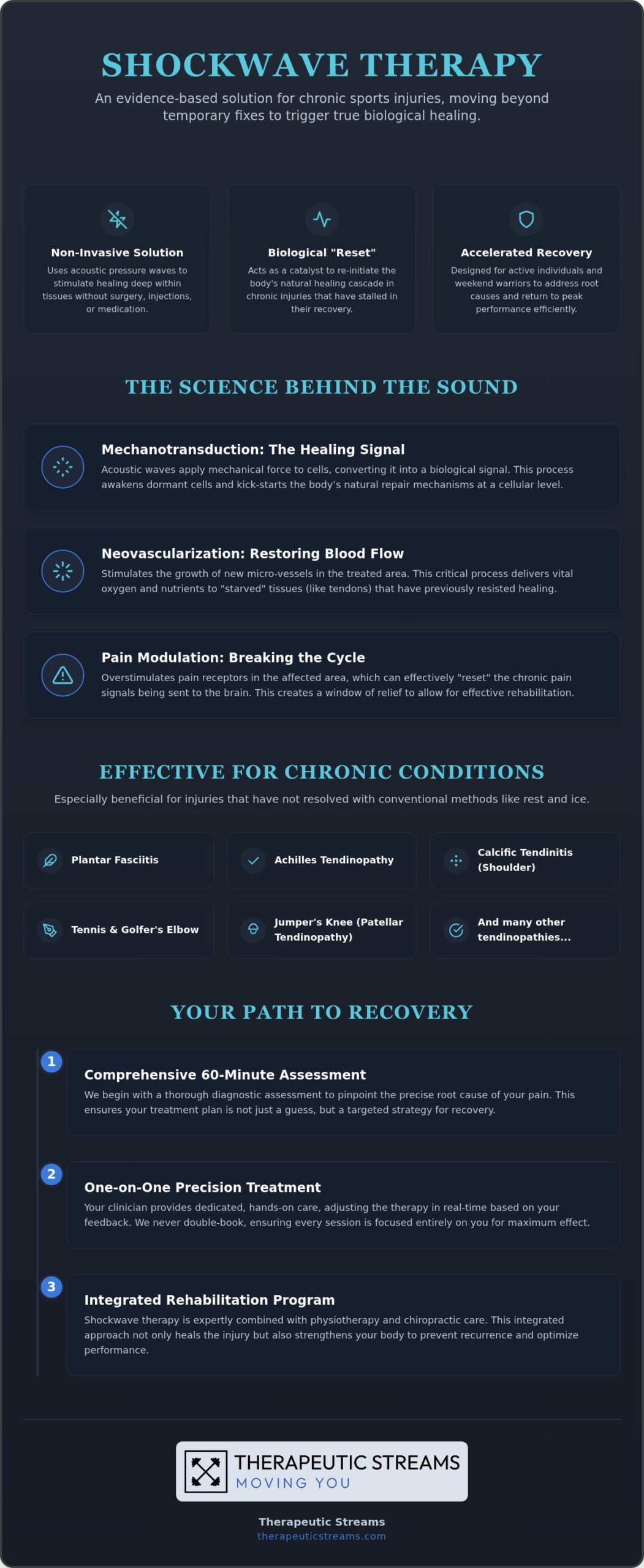
- Discover how shockwave therapy whitby uses non-invasive acoustic pressure waves to trigger biological healing in chronic injuries without the need for surgery.
- Understand the science of mechanotransduction and how it stimulates new blood vessel growth to repair damaged or “starved” musculoskeletal tissues.
- Identify the specific conditions that respond most effectively to treatment, including plantar fasciitis, Achilles tendinopathy, and calcific tendinitis of the shoulder.
- Learn why a comprehensive 60-minute assessment is essential for identifying the root cause of your pain and establishing a clear recovery timeline.
- Explore the advantages of an integrated care model where shockwave is paired with physiotherapy and chiropractic care to optimize your athletic performance.
Understanding Shockwave Therapy: A Non-Invasive Solution for Whitby’s Active Community
Whitby is a town on the move. From cyclists hitting the Waterfront Trail to hockey players at Iroquois Park, physical activity is the heartbeat of our community. However, chronic pain often creates a barrier to that active lifestyle. Extracorporeal shockwave therapy (ESWT) is a non-surgical procedure that uses high-energy acoustic pressure waves to stimulate healing in deep tissues. Unlike invasive options, it doesn’t require downtime or medication. It’s a precise clinical tool designed to address the persistent injuries that rest alone hasn’t resolved, making it an essential resource for local commuters and weekend warriors alike.
Shockwave therapy acts as a biological “reset button” for chronic soft tissue injuries by re-initiating the body’s natural healing response. At our clinic, we don’t just apply the technology blindly. We prioritize assessment-driven care to ensure that shockwave therapy whitby is the specific tool your condition requires. This diagnostic focus prevents wasted time and ensures your recovery plan is built on a foundation of clinical evidence and personalized needs.
The Shift Toward Evidence-Based Sports Rehab
The days of simply relying on “rest and ice” are fading. Modern sports rehabilitation has evolved toward active, technology-supported recovery that addresses the mechanics of how we move. For Whitby’s local athletes, this shift means moving beyond temporary pain relief. We focus on long-term performance and tissue resilience. By using acoustic wave technology, we can target specific areas of dysfunction with a level of clinical precision that traditional manual therapy cannot always reach on its own. It’s about getting you back to your sport stronger than before, not just good enough to get through the day.
Why One-on-One Care Matters for Shockwave Success
Many high-volume clinics operate on a model of double-booking, where patients are left alone with machines while the clinician sees someone else. Success with shockwave therapy whitby requires a different approach. At Therapeutic Streams Sport Rehab, we believe personalized, one-on-one sessions are the only way to achieve peak results. This dedicated time allows your clinician to apply the shockwave device with absolute precision, adjusting the intensity and location based on your real-time feedback. Because the therapy relies on pinpointing the exact source of your discomfort, having a focused expert by your side ensures every pulse of energy is working toward your recovery.
The Science Behind the Sound: How Acoustic Waves Accelerate Tissue Repair
The effectiveness of shockwave therapy whitby lies in a complex biological process known as mechanotransduction. This occurs when the mechanical energy from high-velocity acoustic waves penetrates the skin and interacts with damaged cells. It essentially translates physical force into a biological signal, instructing your cells to resume the repair process. For many patients, this is the turning point where a chronic injury finally begins to resolve because the therapy addresses the condition at a cellular level rather than just masking the symptoms.
One of the most critical outcomes of this process is neovascularization. Chronic injuries, particularly those involving tendons, often suffer from a lack of adequate blood supply. These “starved” tissues cannot access the nutrients required for cellular turnover. Shockwave therapy stimulates the growth of new microvessels in the treated area. This influx of oxygenated blood and nutrient-rich resources facilitates lasting recovery and strengthens the tissue against future strain. It’s a proactive way to ensure your body has the tools it needs to thrive.
Beyond tissue growth, shockwave therapy has a profound effect on the nervous system. By overstimulating the pain receptors in the affected area, the treatment can effectively “reset” the chronic pain signals being sent to the brain. This provides a vital window of relief, allowing you to engage in rehabilitation exercises that were previously too painful to perform. If you’ve felt stuck in a cycle of discomfort, scheduling a thorough assessment can help determine if this technology is the right catalyst for your recovery.
Stimulating the Body’s Natural Healing Response
Chronic pain often indicates that the body’s natural healing cycle has stalled or become inefficient. Shockwaves trigger a controlled, pro-inflammatory response that effectively restarts this cycle. This surge in biological activity prompts an immediate increase in collagen production. Collagen is the essential building block needed to restore structural tissue integrity in ligaments and tendons. While the long-term goal is structural repair, many patients experience a significant analgesic effect shortly after their first session as the acoustic waves disrupt the transmission of pain impulses.
Addressing Scar Tissue and Adhesions
Over time, repetitive strain or old injuries can lead to the formation of unorganized scar tissue and calcifications. These dense adhesions limit your range of motion and create a feeling of stiffness. Shockwave therapy helps your body realize a more functional tissue structure by targeting and breaking down these rigid deposits. To optimize these results, we often integrate Registered Massage Therapy Whitby to manage the surrounding soft tissue tension. This collaborative approach ensures that while the shockwave targets the root cause, the surrounding muscles are supported and relaxed, leading to a faster return to your peak athletic performance.
Effective Applications: Conditions Treated with Shockwave Therapy in Durham Region
Shockwave therapy whitby isn’t a general treatment; it’s a targeted intervention for specific musculoskeletal hurdles. We often see patients who have tried months of stretching or basic strengthening only to find their progress has stalled. In these cases, Extracorporeal Shockwave Therapy (ESWT) acts as the missing piece of the recovery puzzle. It is exceptionally effective for conditions like chronic plantar fasciitis, where the fascia has become thickened and non-responsive to traditional manual therapy. Similarly, Achilles tendinopathy and patellar tendon issues benefit from the rapid mechanical stimulation that shockwave provides. These conditions are particularly prevalent among runners and lifters in Whitby who require their tendons to handle high-velocity loads.
Calcific tendinitis of the shoulder is another area where this technology shines. In this condition, calcium deposits form within the rotator cuff tendons, causing sharp, debilitating pain during overhead movements. Shockwave therapy helps fragment these deposits, allowing the body to reabsorb them naturally. By addressing these specific pathologies at their source, we help Durham residents move from frustrating “maintenance” phases into true, biological healing. It’s about restoring the structural integrity of the tissue so you can return to your routine without hesitation.
Shockwave for the Durham Cyclist and Runner
Whitby’s cycling community is vibrant, but the repetitive nature of pedalling can lead to stubborn overuse injuries. Whether you’re a road cyclist or a trail enthusiast, repetitive strain in the hips and ankles can sideline your season. While shockwave addresses the damaged tissue, we always look at the biomechanical root cause. This is where our Professional BikeFIT in Whitby: Clinical Precision for Every Cyclist becomes an essential partner to your therapy. By combining biological repair with mechanical optimization, we ensure your injury doesn’t just heal, but stays away for the long term.
Pelvic Floor and Core Considerations for Athletes
Recovery is rarely about a single joint. We take a holistic view of the body, recognizing that a stubborn Achilles issue might actually stem from poor core stability or pelvic imbalances. There is a powerful synergy between shockwave and specialized rehab like Pelvic Floor Physiotherapy. If the pelvic floor and core aren’t providing a stable base, the lower limbs overcompensate, leading to the very tendonitis we treat with shockwave. By addressing the entire chain, we provide a comprehensive solution that respects the complex biomechanics of the human body and promotes lasting athletic resilience.
The Clinical Journey: What to Expect During Your Shockwave Assessment and Treatment
Your path to recovery at Therapeutic Streams Sport Rehab begins with clarity, not just technology. We believe that an informed patient is a successful one, which is why your journey starts with a dedicated 60-minute comprehensive assessment. This isn’t a brief check-in; it’s a deep dive into your physical history and current limitations. During this time, your clinician performs detailed physical testing, including range of motion assessments and functional movement screens. This data allows us to determine the exact “dosage” of acoustic energy and the frequency of sessions required to trigger your body’s healing response. We prioritize a collaborative goal-setting phase where your specific lifestyle needs, whether that’s returning to the workplace or the soccer pitch, lead the way.
By the end of your first visit, you won’t just have a treatment scheduled; you’ll have a roadmap. This assessment-first approach ensures that shockwave therapy whitby is applied only when it’s the most effective tool for your unique pathology. We want you to understand the “why” behind every pulse of energy we use.
Step 1: The Comprehensive Assessment
A stubborn heel or elbow issue is rarely an isolated problem. We look at your whole body to understand how compensations in your gait or posture might be contributing to your pain. Our history-taking process focuses on the “story” of your injury, identifying when the pain started and what has failed to work in the past. This thorough investigation ensures that shockwave is safe for you and that we aren’t overlooking any contraindications that would make another modality, such as chiropractic care or physiotherapy, a better starting point.
Step 2: The Shockwave Treatment Session
Once we’ve established your plan, the treatment sessions are efficient and focused. Your clinician applies a coupling gel to the area to ensure the acoustic waves travel effectively into the tissue. Using a handheld applicator, we deliver the pulses directly to the site of the injury. While you may feel some discomfort, the session is organized to be tolerable and is adjusted based on your real-time feedback. These sessions typically last 15 to 20 minutes, which often leaves time for other manual therapies or exercise corrections within the same visit.
Step 3: Integration and Home Exercise
Shockwave is a powerful catalyst, but it works best when paired with movement. We use our one-on-one time to teach you specific loading exercises that “instruct” the newly stimulated tissue how to handle stress again. This transition from passive treatment to active movement is where long-term resilience is built. We focus on exercise correction and education, ensuring you feel confident in your ability to progress toward independent movement and peak performance. If you are ready to move beyond temporary relief, book your initial 60-minute assessment today to begin your recovery.
Why Integrated Care at Therapeutic Streams Sport Rehab Maximizes Your Shockwave Results
Many clinics treat technology as a standalone service, but we view shockwave therapy whitby as a powerful component of a much larger recovery ecosystem. Relying solely on a machine to fix a chronic injury often ignores the compensatory patterns that your body has developed over months or years of pain. At Therapeutic Streams Sport Rehab, our team-based philosophy ensures that your recovery isn’t limited to a single perspective. Our clinicians frequently consult on complex cases, ensuring that the biological stimulation provided by shockwave is supported by sound biomechanics and structural integrity. This collaborative environment offers you a higher standard of clinical advocacy where your progress is monitored by a multidisciplinary team dedicated to your specific success.
Integrating different modalities allows us to address the “why” behind your injury while the shockwave handles the “what.” For example, a session of Professional Chiropractic Care can optimize the results of shockwave by ensuring that the joints surrounding the injured tissue are moving correctly. When joint mechanics are restored, the tendons and ligaments treated with acoustic waves are no longer subjected to the abnormal stresses that caused the injury in the first place. We invite you to experience a model of care that prioritizes your long-term wellness over short-term fixes.
The Synergy of Chiro, Physio, and RMT
Success in sports rehabilitation requires a multi-front approach. While chiropractic care addresses joint restrictions and nervous system function, shockwave therapy targets the specific structural damage within the tendons. To complete this circle of care, Registered Massage Therapy (RMT) helps manage the secondary muscle tension and guarding that often arise when you’re protecting a chronic injury. This integrated approach saves you time by providing all the necessary interventions under one roof in Whitby. It also ensures a consistent recovery message; you won’t receive conflicting advice from different providers. Instead, you get a unified plan where every treatment modality is synchronized to accelerate your return to sport.
Reclaiming Your Performance in Whitby
We see ourselves as your partner in a long-term wellness journey, not just a stop for a temporary treatment. Our goal is to empower you with the knowledge and physical resilience needed to thrive in Whitby’s active community. We’ve streamlined the administrative side of your recovery with easy online booking and direct billing options for most major insurance providers in the Durham Region, allowing you to focus entirely on your health. If you’re ready to move past chronic pain and reclaim your peak performance, the first step is a thorough, assessment-driven plan. Book Your One-on-One Shockwave Assessment at Therapeutic Streams Sport Rehab and let us help you move with confidence again.
Take the First Step Toward Lasting Athletic Recovery
Chronic pain doesn’t have to be your permanent baseline. By leveraging the biological power of acoustic waves, you can re-initiate the healing process in tissues that have long felt stagnant. Our approach to shockwave therapy whitby isn’t about applying a machine in isolation; it’s about a comprehensive, assessment-driven strategy that identifies the root cause of your dysfunction. Through our integrated care model, your recovery is supported by the combined expertise of physiotherapy, chiropractic care, and registered massage therapy, ensuring every aspect of your musculoskeletal health is addressed.
We prioritize one-on-one sessions with dedicated clinicians who act as your passionate advocates. This personalized environment allows for real-time adjustments and a clear, evidence-based roadmap toward your specific goals. Whether you’re a competitive athlete or a weekend warrior, you deserve a recovery plan as unique as your performance needs. Book Your One-on-One Assessment at Therapeutic Streams Sport Rehab today and discover how specialized clinical care can help you move without restriction. Your journey back to peak performance starts with a single, informed decision.
Frequently Asked Questions
Do I need a doctor’s referral for shockwave therapy in Whitby?
No, you don’t need a doctor’s referral to access shockwave therapy whitby at our clinic. Chiropractors and physiotherapists are primary healthcare providers in Ontario, meaning you can book an assessment directly. However, it’s a good idea to check with your private insurance provider. Some specific extended health plans might require a physician’s note to process your reimbursement claims. We always recommend reviewing your individual policy details before starting a new treatment plan.
Does shockwave therapy hurt, and what does it feel like?
You will likely feel some discomfort during the session, often described as a deep, pulsing sensation or a tapping against the skin. While the treatment is intense, it is generally well-tolerated. Your clinician remains with you throughout the process to adjust the intensity based on your real-time feedback. Most sessions only last 15 to 20 minutes, and any initial soreness typically fades shortly after the applicator is removed, often leaving a mild analgesic effect.
How many sessions of shockwave therapy will I need to see results?
Most musculoskeletal conditions require between 3 and 6 sessions to achieve significant, lasting results. While some patients feel an immediate reduction in pain after the first visit, the biological healing process, including new blood vessel growth and collagen production, takes time to finalize. We typically space these appointments about one week apart. During your initial 60-minute assessment, we will provide a specific recovery timeline tailored to the severity and duration of your injury.
Is shockwave therapy covered by my private health insurance in Ontario?
Shockwave therapy is not covered by the Ontario Health Insurance Plan (OHIP), but it is often eligible for coverage under private extended health benefit plans. Because our clinicians are Registered Physiotherapists or Chiropractors, the service is usually billed under those professional categories. Since every plan is unique, we suggest contacting your insurer to confirm your specific coverage limits for physiotherapy or chiropractic services in Ontario. We offer direct billing to simplify the process for our patients.
Can I continue to play sports or exercise while receiving shockwave treatment?
Yes, you can usually continue to exercise, but we may recommend modifying your intensity or volume during the first 48 hours following a session. The goal of shockwave therapy whitby is to facilitate active recovery, so we often prescribe specific loading exercises to strengthen the healing tissue. Your clinician will provide a personalized activity guide that balances the need for movement with the necessity of allowing the treated area to respond to the biological stimulation.
Are there any side effects or “down time” after a shockwave session?
There is no significant downtime required after a shockwave session, allowing you to return to your daily routine immediately. Some patients experience mild side effects such as temporary redness, swelling, or a dull ache in the treated area for 24 to 48 hours. These are normal signs that the body’s inflammatory healing response has been successfully triggered. We advise against using anti-inflammatory medications or ice immediately after treatment, as these can blunt the desired biological effect.
What is the difference between shockwave therapy and laser therapy?
The primary difference lies in the type of energy used to stimulate the tissue. Shockwave therapy uses mechanical acoustic pressure waves that physically interact with deep tissues to break down calcifications and restart the healing cycle. Laser therapy uses light energy to improve cellular metabolism. While both are effective non-invasive tools, shockwave is generally more powerful for treating chronic, stubborn tendon injuries and dense scar tissue that hasn’t responded to light-based or manual therapies.
Is shockwave therapy safe for everyone, or are there contraindications?
While shockwave is safe for most people, there are certain contraindications where it should be avoided. These include pregnancy, the presence of a pacemaker, active cancer in the treatment area, or blood clotting disorders. We also do not apply shockwave over growth plates in children or areas with acute infections. Our comprehensive 60-minute assessment is designed to screen for these factors, ensuring that every treatment we provide is both safe and clinically appropriate for your specific health history.