
Chiropractor vs. Physiotherapist: How to Choose the Right Path to Recovery
What if the most effective path to your recovery isn’t about choosing one profession over another, but rather finding the right clinical assessment for your specific movement goals? When you’re dealing with persistent back pain or limited joint mobility, the debate of chiropractor vs physiotherapist often feels like a confusing hurdle. You’ve likely felt the frustration of seeking relief only to be met with technical jargon or treatments that don’t quite hit the mark. It’s exhausting to invest your time and energy into a recovery process without a clear understanding of which expert truly fits your needs.
We believe that an informed patient is a successful one; you deserve a treatment plan rooted in clinical precision and personal advocacy. This article clarifies the core differences between chiropractic care and physiotherapy, focusing on how each discipline addresses musculoskeletal health through research-driven practices. You’ll discover how spinal adjustments, manual therapy, and functional exercise can be integrated to help you thrive. By the end, you’ll have the clarity needed to choose an evidence-based approach that prioritizes your long-term wellness and helps you return to the activities you love with confidence.
Key Takeaways
- Understand the fundamental differences between a chiropractor vs physiotherapist to see how spinal health and functional movement therapy target different aspects of your recovery.
- Identify whether specific conditions, such as acute neck stiffness or post-surgical rehabilitation, are better suited for immediate manual adjustments or progressive strengthening.
- Discover the clinical benefits of an integrated care model where multiple disciplines collaborate to treat the whole person rather than just isolated symptoms.
- Recognize why one-on-one sessions and assessment-driven care are essential for avoiding ineffective treatments and achieving faster results.
- Learn how to verify Ontario’s regulatory standards and insurance requirements to ensure your recovery is managed by registered experts.
Understanding the Basics: What is a Chiropractor vs. Physiotherapist?
Finding the right path to recovery shouldn’t feel like a guessing game. When you’re managing persistent discomfort, the choice between a chiropractor vs physiotherapist often depends on the nature of your injury and your specific wellness goals. Both professions are essential components of a modern, evidence-based healthcare system. They share a primary objective: to reduce pain, restore mobility, and improve your overall quality of life without the need for invasive surgery or heavy reliance on medication. While their methods might differ, their dedication to your physical agency remains the same.
In Ontario, these roles are governed by strict regulatory standards to ensure patient safety and clinical excellence. One common point of confusion is the “Doctor” title. It’s helpful to realize that chiropractors in Ontario are regulated primary care doctors. This means they have the specialized training required to provide a primary diagnosis. They act as a front-line resource for musculoskeletal health. If you are looking for a deeper historical context on What is a Chiropractor, it is a discipline that has evolved significantly, moving toward an integrated, research-driven model that prioritizes the relationship between the spine and the nervous system.
Physiotherapists, meanwhile, are movement experts who focus on the body’s functional capabilities. They often work with patients to recover from complex injuries, surgeries, or chronic conditions that limit daily activity. Understanding the distinction between a chiropractor vs physiotherapist allows you to take charge of your recovery. The best outcomes usually happen when these professionals collaborate. They treat the person, not just the symptom, ensuring that your recovery plan is as unique as your anatomy.
The Core Philosophy of Physiotherapy
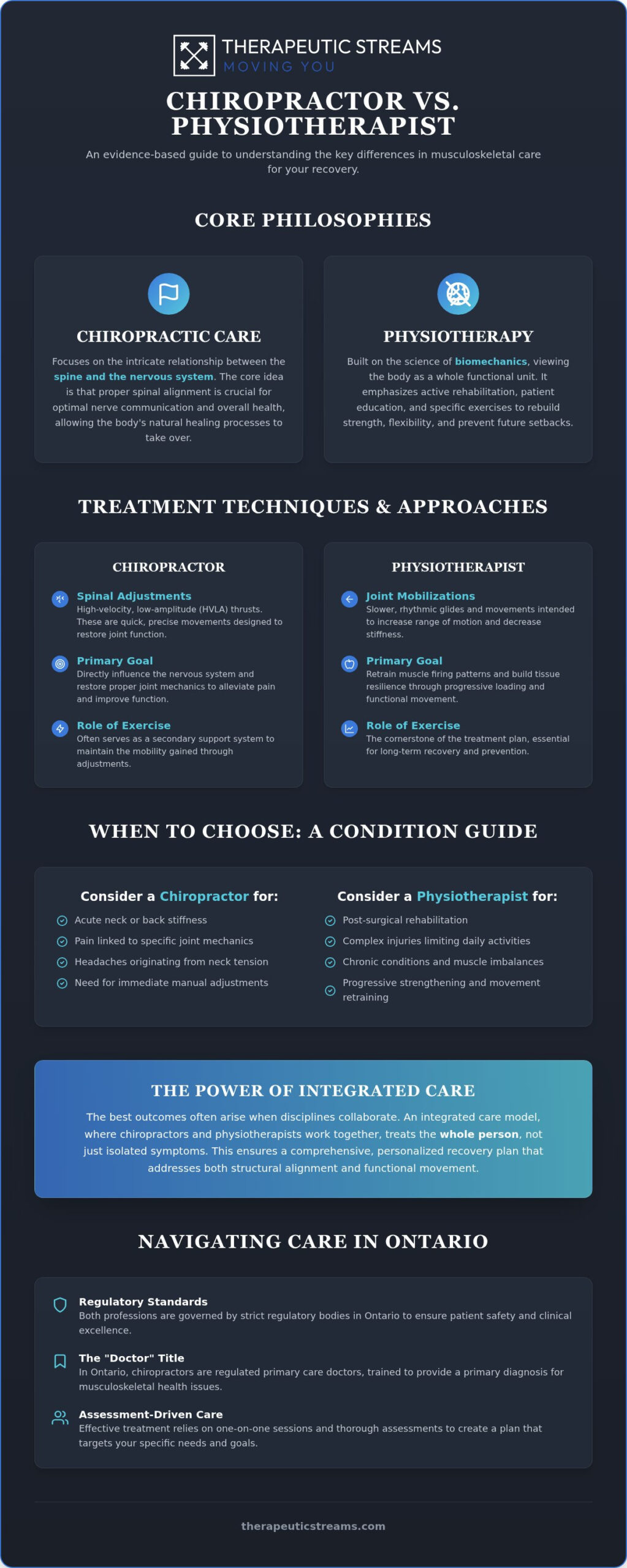
Physiotherapy is built on the science of biomechanics. It examines how the entire body moves as a functional unit rather than looking at an injury in isolation. A physiotherapist’s approach is often characterized by active rehabilitation. This means you aren’t just a passive recipient of care; you’re an active participant. They emphasize patient education and provide specific exercises you can perform at home to reinforce clinical progress. By targeting soft tissues, joint mechanics, and neurological pathways, physiotherapy helps you rebuild the strength and flexibility needed to prevent future setbacks.
The Core Philosophy of Chiropractic Care
Chiropractic care focuses on the intricate relationship between the spine and the nervous system. The philosophy is rooted in the idea that proper spinal alignment is crucial for optimal nerve communication and overall health. When joints in the spine aren’t moving correctly, it can lead to localized pain or even referred symptoms in other parts of the body. Chiropractors use manual adjustments, also known as manipulations, to restore proper mechanics and joint mobility. This assessment-driven approach helps clear the path for your body’s natural healing processes to take over, focusing on long-term structural health rather than a temporary fix.
Key Differences in Treatment Techniques and Approaches
Distinguishing between a chiropractor vs physiotherapist requires a look at the specific tools each clinician brings to the treatment room. While both professions are masters of manual therapy, their techniques serve different mechanical purposes. Chiropractors are widely recognized for high-velocity, low-amplitude adjustments. These are quick, precise movements designed to restore joint function and influence the nervous system. In contrast, physiotherapists often utilize joint mobilizations, which are slower, rhythmic glides intended to increase range of motion and decrease stiffness. Understanding these nuances helps when deciding When to Choose a Chiropractor vs. a Physiotherapist based on your body’s immediate needs.
Exercise prescription also varies in its application. For a physiotherapist, corrective movement is the cornerstone of the treatment plan. They focus on retraining muscle firing patterns and building tissue resilience through progressive loading. For a chiropractor, exercise often serves as a secondary support system to maintain the mobility gained through spinal adjustments. Despite these differences, the gap between the two is narrowing. Many modern clinics now offer overlapping evidence-based modalities, such as Neurofunctional Acupuncture and Shockwave Therapy, to accelerate healing. For instance, chiropractors in Whitby incorporate these advanced tools alongside traditional assessments to ensure a comprehensive recovery path.
A Typical Physiotherapy Session
In a professional physiotherapy setting, your session begins with a meticulous one-on-one assessment of your movement patterns. Clinicians look for muscle imbalances or compensatory habits that might be driving your pain. You won’t find double-booked appointments; instead, you receive focused attention. The treatment typically combines hands-on soft tissue work with a structured exercise programme tailored to your specific injury. This methodical approach ensures you’re building long-term resilience, making it easier to organize your recovery with a personalized plan.
A Typical Chiropractic Session
A chiropractic visit centers on a detailed spinal and neurological assessment. The goal is to identify segments of the spine or extremities where movement is restricted. Once these areas are located, the clinician performs specific adjustments to improve joint function and nerve communication. Many patients find success with a sports chiropractor approach, which integrates these adjustments with performance-based strategies to optimize athletic recovery and daily function. This proactive style of care ensures that every joint in the kinetic chain is contributing to your overall success.
When to Choose a Chiropractor vs. a Physiotherapist
Selecting the right path to recovery often depends on the specific nature of your symptoms and how long they’ve been bothering you. While the lines between a chiropractor vs physiotherapist can blur, certain clinical scenarios clearly favour one approach over the other. It isn’t about which profession is “better,” but which methodology matches your current physiological needs. For example, if you wake up with a “locked” neck or sharp, acute back pain that prevents you from standing straight, a chiropractor’s focus on joint mechanics and spinal alignment can offer the immediate mechanical shift needed to restore basic movement.
Post-surgical recovery or complex ligament tears require a different strategy altogether. If you’ve recently undergone a joint replacement or suffered an ACL injury, the progressive rehabilitation provided by a physiotherapist is vital. They focus on the long game: healing tissues, reducing swelling, and gradually increasing the load on your muscles to ensure you don’t just recover, but build lasting resilience. Similarly, sports performance and repetitive strain injuries often benefit from a collaborative “return to play” strategy. In these cases, you might see a chiropractor to clear joint restrictions while working with a physiotherapist to correct the muscle imbalances that caused the strain in the first place.
Chronic headaches and sciatica also present unique challenges that often fall within the neurological focus of chiropractic care. When pain radiates down the leg or tension builds at the base of the skull, it’s often a sign of nerve communication being compromised by joint dysfunction. By optimizing the relationship between the spine and the nervous system, chiropractors help clear these pathways, allowing your body to manage pain more effectively. Understanding these scenarios helps you avoid wasted time on ineffective treatments and directs you toward a clear plan that actually works.
The Case for Physiotherapy
- Specialized Rehab: It’s the gold standard for pelvic floor health, vestibular issues like dizziness, and complex post-operative recovery.
- Active Management: Ideal for patients who prefer a heavy emphasis on home-based exercise and self-management strategies.
- Functional Re-education: Focuses on long-term functional changes by retraining how your muscles support your joints during daily activities.
The Case for Chiropractic Care
- Mechanical Relief: Highly effective for joint “stuckness,” spinal alignment issues, and restricted range of motion.
- Nervous System Optimization: Targets nerve-related pain by ensuring the spine is moving correctly to reduce interference.
- Immediate Intervention: Best for those seeking immediate mechanical changes through precise manual manipulation to break the pain cycle.
Many patients view the choice between a chiropractor vs physiotherapist as a binary decision, an “either-or” path to healing. This siloed perspective often leads to slower progress or frustrating plateaus. Modern recovery thrives on an Integrated Sports Rehab model where different disciplines communicate to solve complex cases. Instead of working in isolation, our clinicians share insights to ensure every angle of your injury is addressed. This collaborative environment turns a standard treatment plan into a comprehensive strategy for long-term success.
Registered Massage Therapy (RMT) plays a critical role in this synergy. While a chiropractor focuses on joint mechanics, RMT addresses the surrounding soft tissue tension that can pull those joints back into restricted positions. Similarly, Neurofunctional Acupuncture serves as the perfect bridge between joint alignment and muscle activation. It helps “reset” the nervous system, allowing muscles to fire more effectively once joint mobility is restored. You might wonder if it’s safe to see both experts concurrently. The answer is a resounding yes, provided the team is coordinated. When your providers are on the same page, you avoid the confusion of conflicting advice and benefit from a unified front against pain.
How Collaboration Speeds Up Recovery
Recovery is rarely linear, but a team-based approach helps smooth out the journey when navigating the benefits of a chiropractor vs physiotherapist. A chiropractor addresses the fundamental joint mechanics, ensuring the “hinges” of your body are moving correctly. Once that mobility is achieved, a physiotherapist steps in to strengthen the supporting musculature. This prevents the body from reverting to old, painful patterns. This dual attack is particularly effective for complex cases like recovering from a motor vehicle accident (MVA). These situations often involve a mix of whiplash, spinal stiffness, and muscle trauma that one discipline alone might struggle to fully resolve. By attacking the problem from multiple clinical angles, we reduce the likelihood of healing plateaus.
Personalized One-on-One Care
At the heart of our philosophy is the belief that you aren’t just a number or a clinical case file. The one-on-one model we utilize ensures that your clinician’s full attention is on your progress for the entire duration of the session. There is no double-booking and no divided focus. This starts with a thorough initial assessment that considers your entire health history, lifestyle, and specific recovery goals. We realize better outcomes by matching the modality to the patient rather than forcing a one-size-fits-all treatment. If you are ready to experience a more coordinated approach to healing, you can explore our integrated rehabilitation services to find the right path for your needs.
Navigating Your Recovery in Whitby and the Durham Region
Choosing between a chiropractor vs physiotherapist in the Durham Region requires a focus on professional standards and clinical accountability. It is essential to ensure your clinician is registered with the appropriate regulatory body, such as the College of Physiotherapists of Ontario or the College of Chiropractors of Ontario. These organizations guarantee that your provider adheres to strict evidence-based guidelines and maintains the highest level of patient safety. Verifying these credentials gives you the peace of mind that your recovery is in the hands of a qualified expert.
Financial logistics shouldn’t be a barrier to your wellness. Most Extended Health Care (EHC) plans in Canada recognize the distinct value of both professions and typically cover these services separately. This allows you to utilize the specific strengths of each discipline without exhausting your benefits on just one path. When you are looking for a clinic in Whitby, prioritize environments that offer one-on-one sessions and assessment-driven care. A professional setting that avoids double-booking ensures you receive the dedicated attention required to solve persistent pain or mobility issues.
Preparing for Your First Appointment
Your journey begins with a thorough initial assessment, which we consider the most critical part of the recovery process. This session serves as the blueprint for your entire treatment plan, identifying the root causes of your discomfort rather than just masking the symptoms. To prepare, we recommend wearing comfortable athletic clothing that allows for a full range of motion during the physical evaluation. If you have recent imaging reports or a documented health history, bring these documents along to help your clinician build a comprehensive profile. For your convenience, our online booking system allows residents in Whitby and Oshawa to schedule appointments easily, ensuring your path to relief starts on your terms.
The Therapeutic Streams Difference
We are dedicated to providing results-oriented care that empowers our clients throughout the Durham Region. Our commitment to an integrated model means you have access to a diverse team of professionals, including specialists in Pelvic Floor Physiotherapy and Vestibular Rehab. We realize that every individual’s needs are unique; therefore, we match the treatment modality to your specific goals. By fostering a collaborative environment, we ensure that the debate of a chiropractor vs physiotherapist ends with a unified plan that helps you thrive. If you’re ready to move past the confusion and start a treatment plan that actually works, we invite you to take the next step. Book your integrated assessment today and discover how our team-based approach can accelerate your return to the activities you love.
Start Your Journey to Lasting Wellness
Choosing between a chiropractor vs physiotherapist shouldn’t be a source of stress; it’s an opportunity to build a comprehensive recovery team. You now realize that while chiropractors excel at restoring joint mechanics and nervous system function, physiotherapists are essential for building the strength and resilience needed for long-term mobility. The most effective path to recovery often involves a blend of these evidence-based disciplines working in harmony rather than in isolation. By prioritizing a thorough clinical assessment, you ensure that your treatment plan is tailored to your specific physiological needs.
At Therapeutic Streams, we prioritize your progress through a strict no double-booking policy, ensuring you receive focused, one-on-one attention during every session. Our integrated care model serves the communities of Whitby, Oshawa, and Ajax, providing a collaborative environment where clinicians treat the whole person rather than just the symptoms. You deserve a clear, assessment-driven plan that respects your unique health history and helps you return to the life you love with total confidence.
Ready to take the first step toward pain-free movement? Book Your One-on-One Assessment at Therapeutic Streams and experience the benefits of a truly integrated recovery plan. We are dedicated to your success and look forward to advocating for your long-term well-being.
Frequently Asked Questions
Do I need a doctor’s referral to see a chiropractor or physiotherapist in Ontario?
No, you don’t need a physician’s referral to access either profession in Ontario as both are regulated primary care providers. You have the agency to book an initial assessment directly with a clinician of your choice. However, it’s wise to check your specific extended health insurance policy, as some private plans still require a doctor’s note for the reimbursement of your treatment costs.
Can I see both a chiropractor and a physiotherapist for the same injury?
Yes, you can absolutely see both for the same injury, and this integrated approach often leads to more comprehensive results. In the common debate of chiropractor vs physiotherapist, the most effective path is frequently a combination where one expert addresses joint mechanics while the other focuses on functional muscle strengthening. This coordinated care ensures all aspects of your musculoskeletal health are being managed simultaneously.
Is chiropractic care or physiotherapy better for lower back pain?
Neither is objectively superior; the choice depends entirely on the clinical root cause of your discomfort. If your lower back pain is driven by a specific joint restriction or spinal misalignment, a chiropractor’s manual adjustments may provide the most immediate relief. If the pain stems from poor movement patterns or core instability, a physiotherapist is better equipped to help you rebuild the strength needed to protect your spine.
How many sessions will I need before I feel better?
The number of sessions required is unique to your specific condition, health history, and recovery goals. During your initial assessment, your clinician will provide a personalized treatment plan that includes an estimated timeline for your progress. Most patients begin to notice a positive change within the first few visits, but achieving long-term functional changes usually requires a consistent schedule of care over several weeks.
Does OHIP cover chiropractic or physiotherapy services?
OHIP does not provide coverage for chiropractic services, and it only covers physiotherapy for specific eligible groups at designated government-funded clinics. Those eligible include youth aged 19 or younger, seniors aged 65 or older, and individuals requiring rehabilitation after an overnight hospital stay. Recipients of the Ontario Disability Support Program or Ontario Works also qualify, while most other residents utilize private insurance or out-of-pocket payments.
What is the difference between a chiropractic adjustment and a physiotherapy mobilization?
A chiropractic adjustment is a quick, high-velocity thrust designed to restore motion to a specific joint, while a physiotherapy mobilization involves slower, rhythmic glides and stretches. Both techniques aim to reduce stiffness and improve your overall range of motion. The choice between these manual therapies depends on your comfort level and the mechanical findings identified during your professional assessment.
Can physiotherapy help with dizziness or balance issues?
Yes, physiotherapy is highly effective for managing dizziness and balance disorders through a specialized practice called Vestibular Rehab. This evidence-based approach uses specific exercises to retrain the brain and the inner ear’s sensory system. It’s a reliable pathway for those suffering from vertigo, inner ear infections, or post-concussion symptoms to regain their stability and return to daily activities safely.
Why does Therapeutic Streams emphasize one-on-one sessions?
We prioritize one-on-one sessions because dedicated focus leads to superior clinical outcomes and a more personalized experience. By strictly avoiding double-booking, our clinicians can provide thorough, assessment-driven care that treats you as an individual rather than just a symptom. This uninterrupted time allows for precise manual therapy and real-time adjustments to your exercise programme, ensuring your path to recovery is efficient and effective.