Best workouts for Sciatia
The best workouts for sciatica combine gentle movement, such as pelvic tilts and cat-cow stretches, with gradual strengthening exercises like bridges and bird dogs. The right approach depends on your symptoms. Sciatica can cause pain, tingling, numbness or weakness that travels from your lower back or buttock down one leg, while muscle pain is often more localized. Finding suitable workouts alongside chiropractic care, physiotherapy and rehab means choosing movement that matches the cause of your symptoms and your current tolerance.
If sitting, bending or standing up makes your leg symptoms flare, it can be difficult to know whether to stretch, strengthen or rest. A plan should help you move without provoking more discomfort. Gentle activity is generally preferred to prolonged bed rest, but stop an exercise if it causes pain or makes you feel unwell.
This guide explains how nerve-related sciatica differs from muscle pain, which stretches and strengthening exercises may help, and how physiotherapy and chiropractic care can support rehabilitation. You’ll also learn when a personalized clinical assessment can help you choose a suitable next step and build confidence in movement.
Key Takeaways
- Notice whether pain travels from your lower back or buttock down one leg, or feels more localized like muscle soreness.
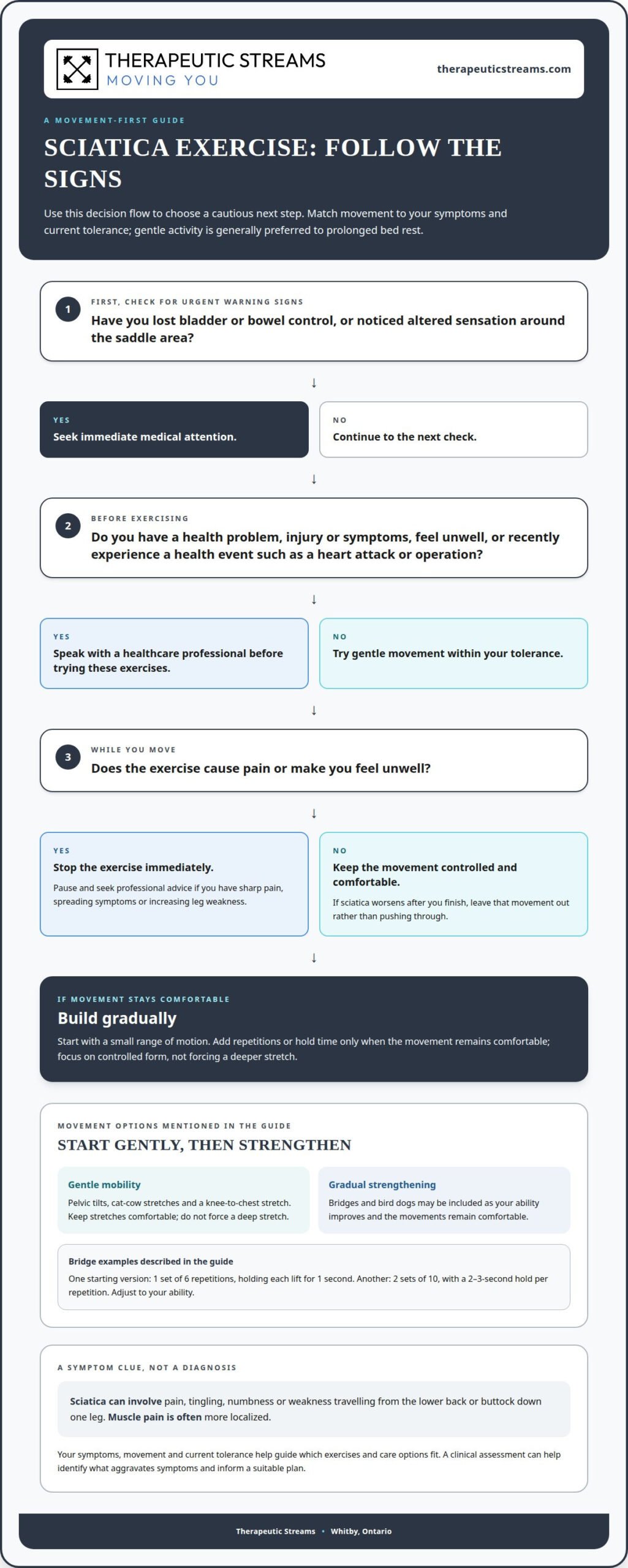
- Start with gentle mobility and build strength gradually; stop any movement that increases your pain or makes you feel unwell.
- Keep hamstring and piriformis stretches comfortable rather than forcing a deep stretch that could aggravate symptoms.
- Physiotherapy focuses on movement, exercise and rehabilitation, while chiropractic care may include hands-on treatment; your symptoms and goals help guide the approach.
- Seek immediate medical attention for loss of bladder or bowel control or altered sensation around the saddle area.
1. Chiropractic Treatment: How Many Sessions for Sciatica Relief?
Chiropractic care for sciatica may include hands-on treatment and exercises that build strength around your lower back and hips. For more severe or chronic symptoms, chiropractic visits may continue over several weeks or months. The number of visits depends on symptom severity, how your movement changes, and how you respond during care.
Exercise rehabilitation instructors can demonstrate gentle movements and help you practise each one with controlled form. Pelvic tilts, for example, involve lying on your back with knees bent, gently flattening your lower back, then releasing. A knee-to-chest stretch brings one bent knee towards your chest without forcing the movement. These exercises may support mobility and help alleviate sciatica symptoms, but the right selection depends on what aggravates your pain.
Some people notice improvement from physiotherapy exercises within a few days, while many see improvement within a few weeks. Progress can show up as easier walking, less discomfort when changing position, or better tolerance for daily tasks. Physiotherapy exercises often combine gentle movement with strengthening, then progress as your ability improves. Staying active within your tolerance can help you avoid the stiffness that may come with prolonged bed rest.
Speak with a healthcare professional before trying these exercises if you have a health problem, injury or symptoms, feel unwell, or recently experienced a health event such as a heart attack or operation. The NHS advises seeking guidance in these situations. To do a bridge, lie on your back with your knees bent, tighten your abdominal and gluteal muscles, then gently lift your hips. One starting version uses one set of six repetitions, holding each lift for one second. Another recommendation uses two sets of ten, with a two-to-three-second hold per repetition, adjusted to your ability.
Stop an exercise immediately if you feel pain or become unwell, as the NHS advises. If a movement worsens your sciatica after you finish, leave it out rather than pushing through. Gentle exercise should feel controlled, not forced. Sharp pain, spreading symptoms or increasing leg weakness are reasons to pause and seek professional advice.
Build your routine gradually. An instructor might begin with a small range of pelvic tilts, then demonstrate a bridge and check that you can lift without arching your back. Add repetitions or hold time only when the movement remains comfortable. This step-by-step approach helps you focus on technique and strength without turning a rehab exercise into another source of irritation for the sciatic nerve.
2. Complementary treatments, including chiropractic care
Chiropractic adjustments can help some people with sciatica by addressing a joint that may contribute to pressure on nerve roots. A potential concern is increased or newly spreading symptoms during treatment; report this promptly so the approach can be reassessed.
Care starts with an assessment, not an automatic adjustment. A chiropractor reviews your symptom history and checks your movement, strength, nerve mobility and lower-back range. These findings help identify movements that aggravate your symptoms and guide the choice of hands-on techniques, exercise or another treatment. The goal is to support function, not simply treat an image or a sore spot.
Chiropractic treatment can include spinal manipulation, which applies a controlled force to a joint, and joint mobilization, which uses gentler movement. Low‑force mobilization moves a joint gently when high-velocity adjustments are not appropriate. The choice depends on your examination findings, comfort, and response during treatment. Tell your practitioner if a position or technique increases your leg symptoms.
A typical chiropractic plan can have an early phase with multiple sessions per week, depending on symptom severity. An early response is sometimes described as less pain and irritation, with improved function after 2–3 visits. That point is a review opportunity, not a fixed treatment schedule: changes in walking, sitting tolerance, and leg symptoms help show whether the plan is working. As symptoms settle, care can shift towards maintaining movement and building strength.
Physiotherapy focuses on rehabilitation. A physiotherapist may combine manual therapy with exercises to improve flexibility, strength and everyday movement. For example, if standing from a chair is difficult, treatment might include practising a controlled sit-to-stand movement and progressing it as your tolerance improves. A therapist can also adapt daily activities and workstation posture when they contribute to discomfort.
Complementary options can address different parts of the problem. Massage therapy may ease muscle tension around the back and hips, while acupuncture may help relax muscles near the sciatic nerve. These treatments do not replace an assessment of radiating pain, numbness, or weakness. Your symptoms and movement findings guide which methods fit together and which should be paused.
If you’re considering hands-on care, an assessment can clarify whether joint treatment or movement-focused rehabilitation best fits your symptoms. Explore chiropractic care for sciatica as one possible part of a coordinated recovery plan.
3. Understanding sciatica: Nerve or muscle pain?
Sciatica describes symptoms along the sciatic nerve, which runs from your lower back through your buttock and down your leg. It commonly affects one side and can cause radiating pain, tingling, numbness or weakness. Muscle soreness, by contrast, often stays closer to the strained area, such as a tender buttock after lifting. These patterns can offer clues, but symptoms alone can’t confirm the cause.
Nerve irritation may feel burning or sharp, or like an electric line travelling down the leg. Sitting, standing up or bending forward may worsen it for some people. Muscle-related discomfort can feel more localized and tender when you press or move the affected muscle. Both types of pain can limit mobility, and muscle tension may occur alongside nerve symptoms, so an assessment may be needed to distinguish them.
Watch for urgent warning signs. Loss of bladder or bowel control alongside sciatica symptoms needs immediate medical attention because it may indicate serious nerve compression. New changes in bladder or bowel function also need prompt attention. Altered sensation around the saddle area, meaning the inner thighs, buttocks or area that would touch a saddle, is another serious warning sign. Don’t try to stretch these symptoms away.
New or worsening weakness or numbness in the affected leg can also signal nerve compression or damage. Seek urgent medical care if weakness progresses, affects walking or appears with saddle numbness or bladder or bowel changes. Tell a healthcare professional about fever, unexplained weight loss or a history of cancer during assessment. These symptoms can point to causes that need medical investigation beyond exercise therapy.
For symptom management, change positions regularly instead of sitting or standing for long periods. If desk work keeps you seated, take breaks to stand, move and walk around. Gentle walking can help you maintain mobility, while prolonged bed rest may leave you stiffer. If you must lift, bend at your knees and keep your back straight. Reduce activities that reliably trigger radiating pain, then gradually return to usual movement as symptoms allow.
Notice how specific tasks affect your symptoms. For example, note whether a short walk eases stiffness while prolonged sitting increases tingling down your leg. This information helps a physiotherapist assess nerve mobility, strength and lower-back movement. A therapy plan can then address the likely causes, support recovery and guide activity. If walking, bending or sitting becomes difficult, seek professional assessment rather than relying on stretches alone.
4. Hamstring and piriformis stretches
Gentle hamstring and piriformis stretches may ease tension around the buttock and back of the thigh. The piriformis muscle sits deep in the buttock, near the route of the sciatic nerve. Stretching should feel mild, not sharp or electric. If a position sends pain farther down your leg, stop rather than pushing into a stronger stretch.
For a seated piriformis and gluteal stretch, sit tall and place one ankle across the opposite thigh. Keep your back steady, then lean forward slightly from your hips until you feel a gentle stretch in your buttock. One suggested version uses one set of six repetitions, holding each for two seconds. Move slowly, and avoid bouncing or pulling your knee down forcefully.
You can also try a supine figure-four piriformis and gluteal stretch while lying on your back. Bend both knees, cross one ankle over the opposite thigh, then draw the supporting leg towards you until you feel a light stretch in your buttock. The suggested version is one set of six repetitions with a two-second hold. Keep your head and shoulders relaxed against the floor.
A supine piriformis stretch can be held for a comfortable period. Set up in the same figure-four position, then bring the supporting leg closer only until you feel a comfortable pull. Release gradually and repeat on the other side if it feels suitable. Stretching both sides can help you compare sensations, but don’t force a side that increases sciatica symptoms.
For a knee-to-chest stretch, lie on your back and bring one bent knee towards your chest while the other leg stays relaxed. Hold only within a comfortable range, then lower your leg with control. You can include this movement alongside piriformis and hamstring stretches, but it shouldn’t reproduce burning, tingling or numbness down your leg.
To stretch your hamstring, lie on your back, bend one knee, and gently straighten that leg towards the ceiling. Support the back of your thigh if needed, and stop before the stretch becomes intense. Aim for a mild pull through the back of your thigh, not nerve-like symptoms. A strong stretch can aggravate sciatica, so reduce the range or stop if discomfort increases.
Use these positions for gentle movement, not as a test of flexibility. For example, after sitting, stand and walk briefly before trying a floor stretch. Change positions if pressure or discomfort builds, and avoid holding your breath. If stretching repeatedly increases leg symptoms or affects your walking, pause the routine and seek a clinical assessment to guide your next steps.
5. Choosing between a physiotherapist and chiropractor
For moderate sciatica, physiotherapy can be a practical starting point when your main goal is rebuilding movement and strength. It focuses on rehabilitation, exercise, flexibility and everyday function. Chiropractic care may suit you when joint movement and hands-on treatment are part of the approach being considered. Neither professional title alone determines which plan fits. Your symptoms, movement and response to treatment matter.
What does evidence say about physiotherapy versus chiropractic care for sciatica? Both approaches can address symptoms through different methods: physiotherapy emphasizes exercise and rehabilitation, while chiropractic care may include spinal manipulation and joint mobilization. There is no single best choice for everyone, so compare the treatment focus with your goals and assessment findings.
Consider which task discomfort limits most. If standing from a chair, walking or bending is difficult, physiotherapy can focus on practising those movements and building strength for daily activities. A therapist may assess your range of motion, muscle strength and nerve mobility, then select exercises and manual therapy. The plan can change as your movement improves or symptoms respond.
If your assessment suggests a spinal joint may contribute to irritation, chiropractic care may involve controlled manipulation or gentler joint mobilization. A chiropractor first reviews your health history and examines your movement, strength and symptom patterns. This information helps determine whether hands-on care fits, which areas to address and how to monitor your response. Treatment should relate to your examination, not follow the same routine for everyone.
Visit patterns are not interchangeable. Chiropractic care may begin with multiple sessions per week when symptoms are more severe, while an early response is sometimes described after 2–3 visits. Physiotherapy treatment may provide symptom relief within 1–4 visits, though the focus can continue beyond early relief to restore strength and function. These timeframes describe possible early responses, not a reason to keep repeating care that isn’t helping.
Use a simple decision process: identify the activity you want to regain, describe where your symptoms travel and note which movements worsen them. Then choose an approach whose assessment and treatment plan address those specific limitations. If standing is difficult, ask about movement-based rehabilitation. If joint treatment is being considered, ask how your examination supports that choice. Review progress through practical changes, such as easier walking or less discomfort during daily tasks.
Some people benefit from combining exercise-based rehabilitation with hands-on care, provided each treatment has a clear purpose. If you want a personalized assessment to discuss physiotherapy or chiropractic care for sciatica, book an assessment for sciatica care.
Therapeutic Streams Sport Rehab: Chiropractic Care
Therapeutic Streams Sport Rehab provides chiropractic care and physiotherapy for people working towards better movement and everyday function. A clinical assessment helps shape the next step around your symptoms and goals, whether you’re considering hands-on care, rehabilitation, or both.
The clinic is located in Whitby, making it a local option for readers in Whitby and nearby Oshawa, Bowmanville, and Ajax. If sciatica is affecting your daily activities, contact Therapeutic Streams Sport Rehab to discuss your next step.
Take your next step towards confident movement
Let your next step be guided by the activities you want to return to, whether that means walking outdoors, working comfortably or enjoying time with family. The best workouts for sciatica are part of a steady rehab routine shaped around your goals, not a race to do more. Focus on progress you can carry into daily life.
If you’re ready to talk through a practical next step, get in touch. Build your confidence one comfortable movement at a time.
Frequently Asked Questions
How Does Physical Therapy Help with Sciatica?
Physiotherapy can turn your recovery goals into practical movement tasks. For example, if you’re returning to gardening, a physiotherapist can assess the bending, reaching and standing involved, then build those demands into your rehabilitation plan. You can track progress by how comfortably you manage those activities, rather than by exercise completion alone. This gives you a practical way to discuss what is improving and what still needs attention.
Chiropractic Treatment: How Many Sessions for Sciatica Relief?
There isn’t a universal number of sessions for sciatica, because treatment frequency depends on symptom severity and your response. Note whether getting dressed, preparing a meal or travelling in a car feels easier than before. If treatment isn’t helping you move towards those activities, tell your practitioner. That information can guide a review of the plan rather than assuming the same schedule suits everyone.
Understanding sciatica: Nerve or muscle pain?
A 2007 study identified physically demanding work, including manual labour and truck driving, as a common cause of sciatica. Work demands can therefore be useful context during an assessment, especially if symptoms began after repeated lifting or long periods in a driving position. Keep track of which work tasks affect your symptoms and whether they change outside work. That history helps distinguish possible triggers from the symptoms themselves.
What is Sciatica?
Sciatica is a term for symptoms associated with irritation of the sciatic nerve or its nerve roots, rather than the name of one specific injury. A herniated disc, spinal stenosis or piriformis syndrome may be among the possible causes. This is why two people with similar leg pain may need different assessments. A clinician considers your symptom history and physical findings to explore what may be driving your discomfort.
What is the difference between a physiotherapist and a chiropractor?
The key difference for your decision is the treatment emphasis, not a promise that one profession is more effective for every case. Physiotherapy typically centres rehabilitation on movement and exercise, while chiropractic care may include hands-on spinal or joint treatment. Ask how the proposed plan relates to your functional goals and how progress will be reviewed. A clear explanation connects the assessment findings to the recommended care.
Which profession should you see first?
For moderate sciatica, physiotherapy can be a sensible first step when your priority is restoring activity and building capacity for daily tasks. The choice may differ if your main concern is whether a joint-focused approach suits your symptoms. Severe symptoms or warning signs call for medical attention rather than choosing between routine therapy options. In other cases, start with the approach that addresses your main functional limitation.
What exercises are best for sciatica pain relief and rehabilitation?
The most useful exercise is one that matches your current ability and supports a meaningful goal, such as returning to an easy walk or managing household tasks. A clinician can adjust the movement range, resistance and pace based on your response. General exercise videos are not tailored to the cause of your symptoms, so treat them as broad movement examples, not an individualized rehabilitation plan.
Which sciatica exercises should be avoided, and what symptoms mean stop?
Avoid forcing a movement simply because it is labelled a sciatica stretch. Notice whether symptoms settle, stay steady or intensify after activity. If pain worsens, stop that exercise and seek guidance. Stop immediately if you feel pain during an exercise or become unwell. New bladder or bowel changes, loss of control or altered saddle sensation require immediate medical attention, not exercise modification.