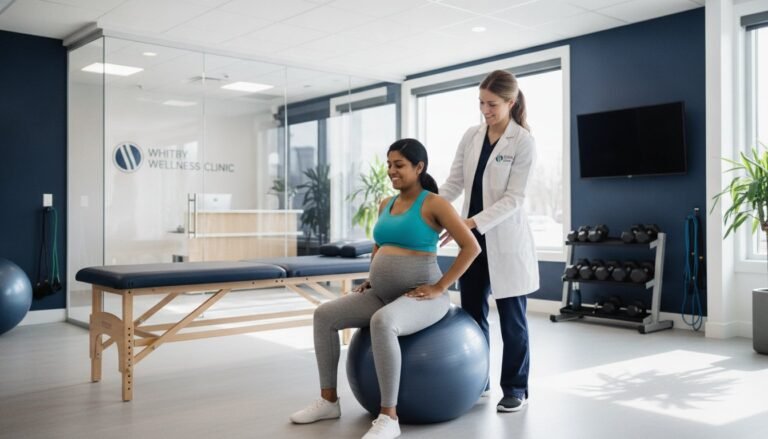
Medical Massage in Whitby: A Clinical Approach to Chronic Pain and Recovery
A massage shouldn’t just be a temporary escape from your stress; it should be a strategic intervention for your physical health. You’ve likely spent hours at your desk feeling that familiar, nagging ache in your shoulders, or perhaps you’re sidelined by a sports injury that simply refuses to heal. It’s deeply frustrating when traditional treatments offer an hour of relaxation but fail to address the underlying musculoskeletal dysfunction. This is why medical massage is becoming a cornerstone of clinical recovery, moving beyond simple relaxation to target the root cause of your pain.
We believe that true recovery requires a sophisticated blend of clinical authority and empathetic care. By bridging the gap between comfort and evidence-based rehabilitation, this targeted therapy helps you move better and recover faster. In this article, you’ll discover how an assessment-driven approach provides a clear understanding of your physical condition. We’ll also outline how a personalized treatment plan, often integrated with other disciplines like physiotherapy or chiropractic care, can finally transition you from chronic discomfort to lasting wellness.
Key Takeaways
- Understand how medical massage functions as a results-oriented clinical intervention designed to address specific physical diagnoses rather than just provide temporary relaxation.
- Learn why the rigorous training of Ontario Registered Massage Therapists ensures your treatment is safe, evidence-based, and aligned with modern healthcare standards.
- Discover how targeted clinical techniques resolve chronic back pain, sciatica, and repetitive strain injuries caused by sedentary office environments.
- Gain insight into the clinical assessment process, which uses physical testing and postural analysis to create a personalized roadmap for your recovery.
- Explore the benefits of an integrated care model that combines soft tissue therapy with chiropractic care and physiotherapy for a more comprehensive approach to wellness.
What is Medical Massage? Defining the Clinical Intent
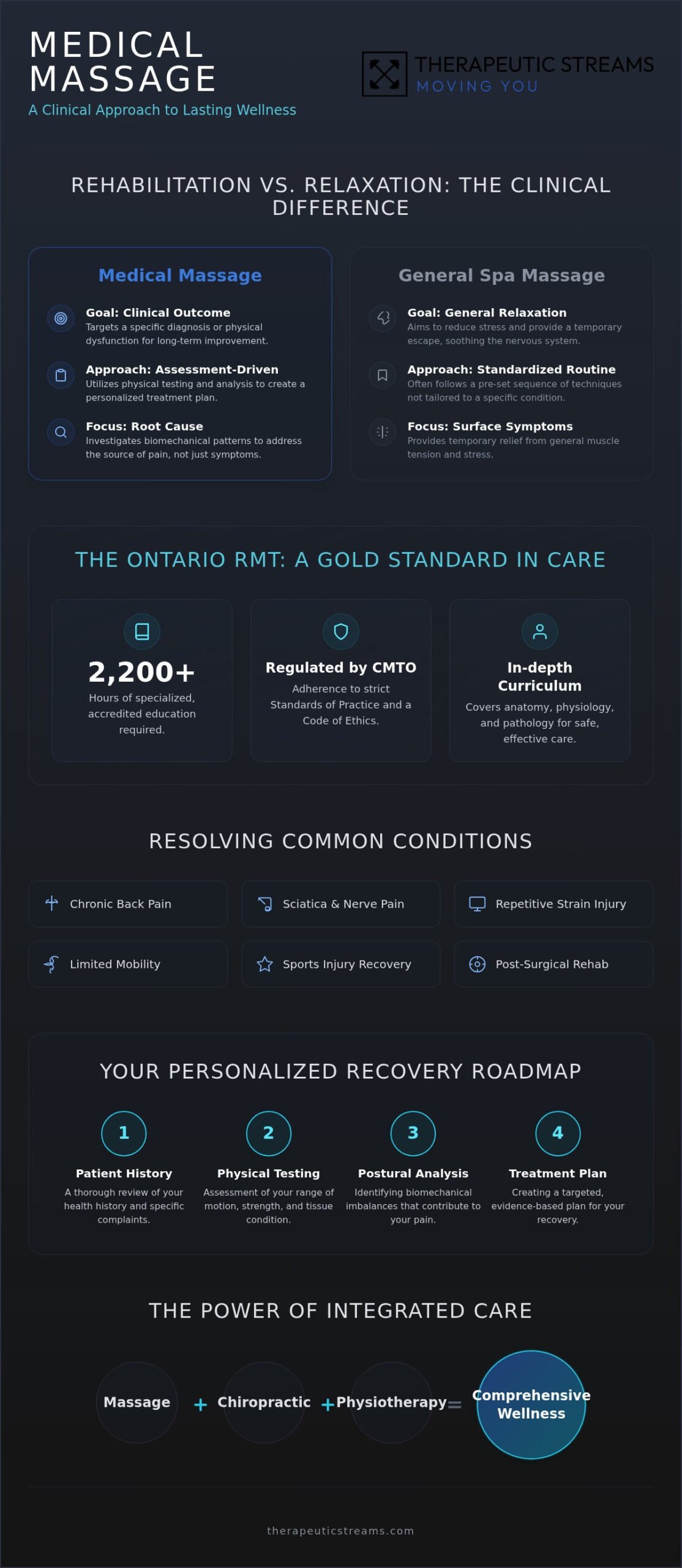
Many people view massage as an occasional indulgence, a way to decompress after a stressful week. While relaxation is a valid benefit, medical massage serves a more rigorous purpose. It’s a results-oriented treatment focused on a specific medical diagnosis or a physical outcome that you and your therapist identify together. Unlike a standard spa visit, this approach utilizes assessment-driven care to address the root of your discomfort. If you’ve ever wondered What is Medical Massage?, it’s essentially the application of targeted techniques to realize long-term relief by manipulating the deeper layers of muscle and connective tissue. We don’t just treat the symptoms; we investigate the biomechanical patterns that cause your pain to persist.
The Distinction Between Relaxation and Rehabilitation
The physiological response to a clinical session differs significantly from a general wellness massage. While light touch can soothe the nervous system, rehabilitation requires clinical pressure designed to facilitate structural changes. We focus on specific goals like increasing your range of motion or reducing restrictive scar tissue. This intent-driven work necessitates a high level of training and a thorough patient history review to ensure every movement serves your recovery. It’s not just about feeling good in the moment; it’s about how your body functions when you leave the clinic. By targeting specific anatomical landmarks, we help you regain the agency you need to return to your favourite activities without hesitation.
When to Choose a Clinical Approach Over a Spa Visit
A spa environment is wonderful for general stress, but it’s often insufficient for managing chronic pain or recovering from a sports injury. You should consider a clinical approach if you’re dealing with limited mobility, post-surgical recovery, or persistent muscle tension that doesn’t resolve with rest. At Therapeutic Streams Sport Rehab, we prioritize musculoskeletal health by employing therapists who deeply understand anatomy and biomechanics. Choosing a clinical setting means you’re partnering with an expert who views your body as an integrated system. This collaborative environment ensures that your treatment isn’t just a passive experience but a proactive step toward thriving in your daily life. We provide the clinical justifications for every technique used, ensuring you’re an informed participant in your own healing journey.
Registered Massage Therapy (RMT) in Ontario: The Gold Standard
In Ontario, the term Registered Massage Therapist (RMT) represents a commitment to patient safety and clinical excellence. The College of Massage Therapists of Ontario (CMTO) regulates the profession, ensuring that every practitioner adheres to strict Standards of Practice and a rigorous Code of Ethics. When you seek medical massage in Whitby, you are typically working with an RMT who has met these high benchmarks. This regulation is vital because it transforms massage from a simple service into a recognized healthcare intervention. These professionals don’t work in isolation; they often collaborate within multidisciplinary teams to organize a comprehensive recovery plan that addresses your specific health goals.
Education and Clinical Training of an RMT
Becoming an RMT in Ontario requires a significant investment in specialized education. Candidates must complete a minimum of 2,200 hours of training at an accredited institution. This curriculum covers deep dives into anatomy, physiology, and pathology, providing the foundation needed to understand complex musculoskeletal conditions. After completing their schooling, graduates must pass provincial competency exams to earn their registration. Even after entering practice, therapists participate in ongoing professional development to stay current with the latest research. This ensures that when you discuss Common Conditions Treated with Medical Massage Therapy, your therapist has the clinical background to treat you safely and effectively.
Insurance, Direct Billing, and Healthcare Integration
Choosing an RMT isn’t just about the quality of care; it’s also a practical decision for your finances. Most extended health care plans in Canada specifically require the services of an RMT for reimbursement. For residents in Whitby and Oshawa, the convenience of direct billing at professional clinics removes the administrative burden of filing claims. Medical massage is also a recognized component of motor vehicle accident (MVA) claims, where structured soft tissue work is essential for recovering from whiplash or impact injuries. This integration into the broader healthcare system allows for a seamless transition from acute pain to long-term wellness. If you’re ready to see how a regulated professional can improve your mobility, you can book an assessment-driven session to begin your clinical recovery.
Common Conditions Treated with Medical Massage Therapy
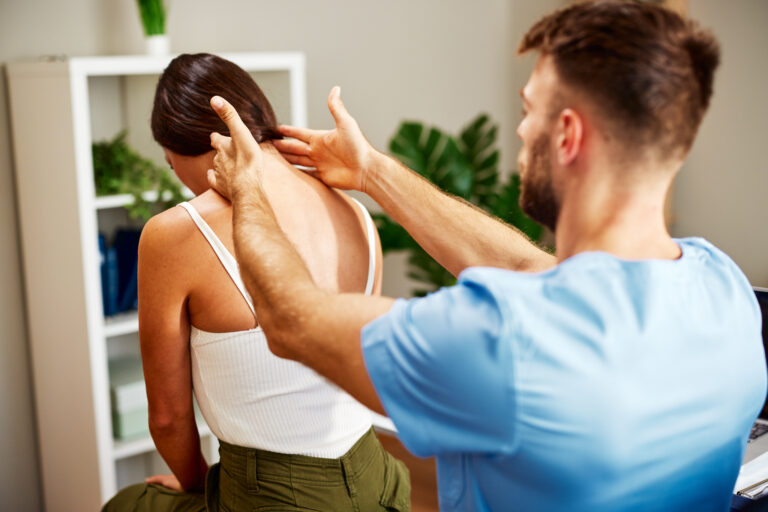
Living and working in Whitby often involves long hours at a desk or repetitive physical tasks that strain the body. Over time, these habits lead to chronic back and neck pain that doesn’t simply disappear with rest. Medical massage provides a targeted solution by addressing the specific musculoskeletal imbalances caused by sedentary office work. We focus on releasing the tension in the deep tissue layers that contribute to persistent discomfort. This clinical approach is also highly effective for managing nerve impingements and inflammatory conditions like sciatica, carpal tunnel syndrome, and tendonitis. By reducing pressure on sensitive nerves and improving circulation to damaged tendons, we help you regain the functional mobility you need for daily life.
Tension headaches and migraines are frequently linked to soft tissue restrictions in the neck and upper back. Our therapists use precise soft tissue release techniques to alleviate the triggers for these painful episodes. Beyond pain management, clinical massage is essential for post-injury rehabilitation. We work to break down restrictive scar tissue and improve the elasticity of healing muscles, ensuring that a past injury doesn’t become a permanent limitation. This methodical approach helps your body recover its natural rhythm and strength.
Sports Injuries and Athletic Performance
Athletes throughout the Durham Region rely on clinical interventions to maintain peak performance and recover from the inevitable strains of training. Whether you’re dealing with a sudden sprain or a chronic overuse injury, targeted massage therapy accelerates the healing process. We utilize pre-event strategies to prepare your muscles for exertion and post-event techniques to flush out metabolic waste and reduce soreness. For local cyclists looking to optimize their efficiency, we often recommend combining therapy with a Professional BikeFIT in Whitby. This integrated approach ensures your equipment and your body are working in perfect harmony to prevent future injuries on the road.
Chronic Pain and Postural Correction
Modern technology has introduced new physical challenges, such as “tech neck” and Upper Crossed Syndrome. These conditions occur when certain muscles become chronically shortened and tight while others become weak and overstretched. We use clinical massage to release these shortened muscles, which helps you realize better posture and reduces the strain on your spine. For those living with systemic conditions like fibromyalgia, our treatments provide a gentle yet effective way to manage widespread pain. We act as your advocate in the recovery process, helping you understand how postural correction can lead to a more energetic and pain-free life. By addressing these structural issues, we empower you to move with confidence and ease.
The Clinical Assessment: What to Expect During Your Session
A successful clinical outcome begins long before the therapist’s hands make contact with the skin. Unlike a general wellness visit, a session for medical massage starts with a rigorous health history review. We sit down with you to discuss your specific pain points, the duration of your symptoms, and how your discomfort affects your daily activities. This dialogue allows us to identify potential contraindications and ensures that every technique we use is safe and appropriate for your unique physical state. We also prioritize the “consent to treat” process, establishing clear expectations for pressure and communication so you always feel in control of your recovery.
Following the intake, we perform a physical assessment to gather objective data. This often includes range of motion testing to see where your movement is restricted and a postural analysis to identify structural imbalances. By observing how your body moves and aligns itself, we can pinpoint the specific tissues requiring intervention. These clinical findings form the foundation of a customized treatment plan. We don’t believe in a one-size-fits-all approach; instead, we create a roadmap that targets your specific functional goals, whether that’s returning to the gym or simply sitting at your desk without pain.
Step-by-Step: From Intake to Treatment
The transition from assessment to treatment is a collaborative process. During the hands-on portion of the session, we use specific palpation techniques to identify trigger points and fascial restrictions that were hinted at during the initial testing. We ask about your lifestyle and long-term goals because recovery isn’t just about the hour you spend in our clinic. We track your progress over multiple sessions, adjusting our methodology as your tissues heal and your mobility improves. This data-driven approach ensures you are meeting your wellness milestones on a predictable timeline.
Techniques Used in Medical Massage
We utilize a variety of clinical tools to address musculoskeletal dysfunction. Trigger Point Therapy focuses on releasing hyperirritable spots in the muscle, while Myofascial Release targets the connective tissue to improve overall elasticity. Deep Tissue techniques are applied with precision to reach the underlying structures causing chronic tension. Depending on your specific condition, we may also integrate advanced modalities like Shockwave Therapy to accelerate tissue repair in cases of chronic tendonitis or calcifications. If you’re ready to move beyond temporary relief and start a results-oriented recovery, you can schedule your clinical assessment today to begin your journey toward lasting wellness.
Integrated Recovery: Why Massage is Better with Chiro and Physio
While individual treatments provide significant relief, the most profound results occur when multiple disciplines work together. At Therapeutic Streams Sport Rehab, we don’t view medical massage as an isolated service. Instead, we advocate for a collaborative environment where Registered Massage Therapists, chiropractors, and physiotherapists align their expertise toward a single goal: your recovery. This integrated care model addresses the complexities of the human body, ensuring that bone, muscle, and nerve issues are treated simultaneously. By breaking down the silos between different healthcare providers, we help you achieve faster recovery times and significantly reduce the likelihood of your injury returning.
Massage and Chiropractic Synergy
Muscles and bones exist in a constant state of mutual influence. When chronic tension exists, tight muscles can exert enough force to pull vertebrae out of their optimal positions. This is why releasing soft tissue before a Chiropractic Adjustment makes the procedure more effective and comfortable. A relaxed muscle is less likely to resist the adjustment, allowing for a more precise correction. Conversely, regular massage helps maintain the alignment achieved through chiropractic care by preventing those same muscles from pulling the spine back into a dysfunctional pattern. Having your Chiro and RMT in the same Whitby clinic ensures seamless communication between your providers, leading to a more cohesive experience.
Massage and Physiotherapy for Long-Term Mobility
Physiotherapy often focuses on active rehabilitation, requiring you to perform specific exercises to strengthen weakened areas. However, it’s difficult to engage a muscle that is locked in a state of chronic contraction or restricted by fascial adhesions. Medical massage prepares your body for these movements by increasing local circulation and restoring tissue elasticity. For example, when treating a complex issue like Knee Pain Physiotherapy, soft tissue work on the quadriceps and hamstrings can improve joint mechanics before you begin your strengthening routine. We want you to realize that a multi-pronged approach isn’t just about more appointments; it’s about the most efficient path to wellness. This synergy ensures you aren’t just managing pain but actively building a more resilient body.
Our team-based approach at Therapeutic Streams Sport Rehab is designed to provide you with an advocate for your well-being. By combining these essential services under one roof, we offer a level of clinical precision that standalone treatments simply cannot match. This collaborative environment fosters transparency and knowledge-sharing, ensuring you feel informed and empowered throughout your journey. When your therapists work together, you spend less time in the treatment room and more time enjoying the activities you love.
Take the Next Step Toward Functional Recovery
Moving from chronic discomfort to lasting wellness requires more than a temporary fix; it demands a structured approach that prioritizes your unique physical condition through evidence-based, assessment-driven care. By choosing medical massage, you’re opting for a results-oriented treatment performed by highly trained Registered Massage Therapists who understand the complexities of musculoskeletal health. Our integrated sports rehab clinic ensures that your soft tissue work is perfectly aligned with your chiropractic and physiotherapy goals, creating a seamless path to recovery. We help you realize your full physical potential by addressing the root causes of your pain rather than just the symptoms.
You don’t have to navigate your recovery journey alone. Whether you’re healing from a sports injury or managing the persistent strain of a sedentary lifestyle, our collaborative team in Whitby is here to act as your advocate. We invite you to take control of your health and experience the difference that professional, clinical expertise makes. Book Your Clinical Assessment at Therapeutic Streams in Whitby and start moving toward a more active, pain-free life today. We’re dedicated to helping you thrive and look forward to supporting your journey back to wellness.
Frequently Asked Questions
Is medical massage covered by my insurance in Ontario?
Most extended health care plans in Ontario provide coverage for Registered Massage Therapy (RMT). Since medical massage is a results-oriented application of RMT, it’s typically eligible for reimbursement or direct billing at Therapeutic Streams Sport Rehab. We recommend checking your specific policy for annual limits or requirements. Our administrative team often manages direct claims for residents in Oshawa and Ajax to simplify the payment process and reduce your out-of-pocket expenses.
Do I need a referral from a doctor for medical massage therapy in Whitby?
You don’t need a physician’s referral to book a session at Therapeutic Streams Sport Rehab. RMTs in Ontario are regulated health professionals and act as primary care providers for musculoskeletal health. While we welcome patients who come to us directly, it’s important to verify if your insurance provider requires a doctor’s note for reimbursement. We frequently collaborate with local doctors to ensure your treatment plan is integrated, safe, and effective.
How is medical massage different from deep tissue massage?
Deep tissue is a specific technique used to reach underlying muscle layers; however, medical massage is a broader, goal-oriented approach. While deep tissue focuses on pressure, a medical session is driven by a clinical assessment and a specific diagnosis or physical outcome. It utilizes various modalities, including trigger point therapy and myofascial release, to address the root cause of your dysfunction rather than just applying heavy pressure to tight areas.
Will a medical massage session be painful?
You may experience moments of therapeutic intensity, but the process shouldn’t be painful. Our therapists prioritize a “consent to treat” model, where we establish clear expectations for pressure before the session begins. Some discomfort is common when releasing chronic trigger points or fascial restrictions, but we always work within your tolerance levels. Open communication ensures that the treatment remains effective without causing unnecessary stress to your nervous system or body.
What should I wear to my first clinical massage appointment?
We recommend wearing comfortable, loose-fitting clothing that allows for easy movement during your initial physical assessment. For the treatment portion of the session, patients typically undress to their comfort level while remaining securely draped with sheets at all times. If your treatment plan includes integrated movement or exercise, bringing athletic wear can be helpful. Our priority is ensuring you feel professional, safe, and comfortable throughout your time at Therapeutic Streams Sport Rehab.
How many sessions will I need to see results for chronic pain?
The number of sessions required depends entirely on your clinical findings and the severity of your condition. Many patients notice a measurable improvement in mobility after two to three sessions, but chronic conditions often require a more sustained treatment plan to realize long-term wellness. During your initial consultation, we’ll outline a personalized roadmap that includes specific milestones. We track your progress meticulously to ensure your recovery is moving at an optimal pace.
Can I receive medical massage if I am pregnant?
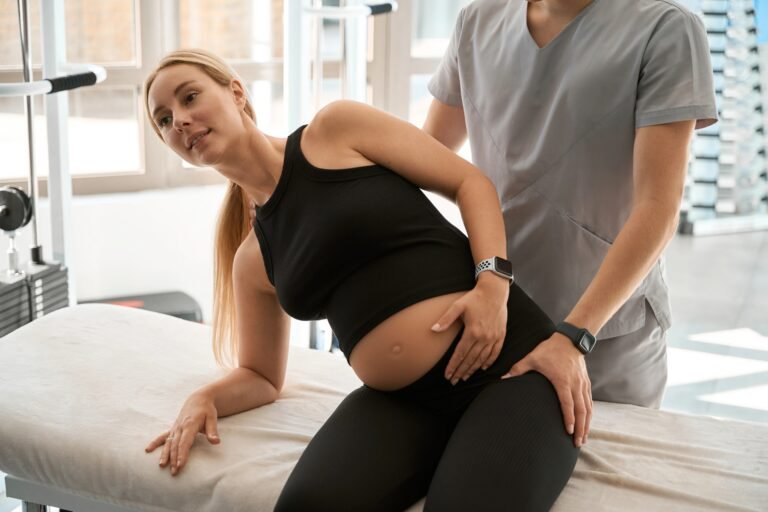
Yes, clinical massage is highly beneficial during pregnancy to manage the musculoskeletal changes that occur. Our RMTs are trained in prenatal care and understand the specific physiological adjustments needed to ensure safety for both you and your baby. We focus on relieving lower back tension, pelvic discomfort, and swelling in the limbs. This approach helps you maintain better posture and comfort levels as you transition through each trimester of your pregnancy in Whitby.
How does medical massage help with sports injury recovery?
Recovery from a sports injury involves more than just rest; it requires targeted soft tissue intervention to manage inflammation and scar tissue. medical massage accelerates healing by improving circulation to the affected area and restoring the elasticity of the muscles. When integrated with our physiotherapy and chiropractic services, it ensures that your body is structurally sound and functionally strong. This multi-pronged approach helps you return to your sport faster and prevents future recurrence.