Vestibular Therapy in Whitby: A Comprehensive Guide to Overcoming Dizziness and Vertigo
Living with persistent dizziness, vertigo, or a sense of imbalance can be a deeply unsettling experience. It’s a feeling that disrupts your ability to work, drive, or simply enjoy a walk through a Whitby park. For many in the Durham Region, these symptoms are often dismissed or misunderstood, leading to frustration and a feeling of isolation. But what if the key to reclaiming your stability wasn’t about waiting for it to pass, but about actively retraining your brain?
This is the promise of vestibular therapy. It’s not just a series of balance exercises; it’s a specialized, evidence-based field of physiotherapy designed to recalibrate the complex relationship between your inner ear, your eyes, and your body. At Therapeutic Streams, we view vestibular rehabilitation as a critical component of a holistic recovery plan, helping you resolve your balance issues and return to an active, dizzy-free life.
Understanding Vestibular Therapy: More Than Just Balance Training
Vestibular rehabilitation Therapy (VRT) is a specialized form of physiotherapy focused on treating the symptoms caused by vestibular disorders—the “invisible” conditions that affect the inner ear and the parts of the brain that process balance and spatial orientation. Because these issues aren’t visible on a standard X-ray or MRI, they are frequently misdiagnosed, leaving individuals to cope with chronic, unexplained symptoms.
It’s crucial to differentiate between a fleeting moment of lightheadedness and chronic vestibular dysfunction. The former might happen if you stand up too quickly, while the latter is a persistent disruption that can make everyday tasks feel monumental. The primary goal of VRT is to promote central nervous system compensation. In simpler terms, we teach your brain to adapt and relearn, using other senses to make up for the deficient signals coming from your inner ear. This process of neuroplasticity allows your body to regain its sense of equilibrium.
The Role of the Vestibular System
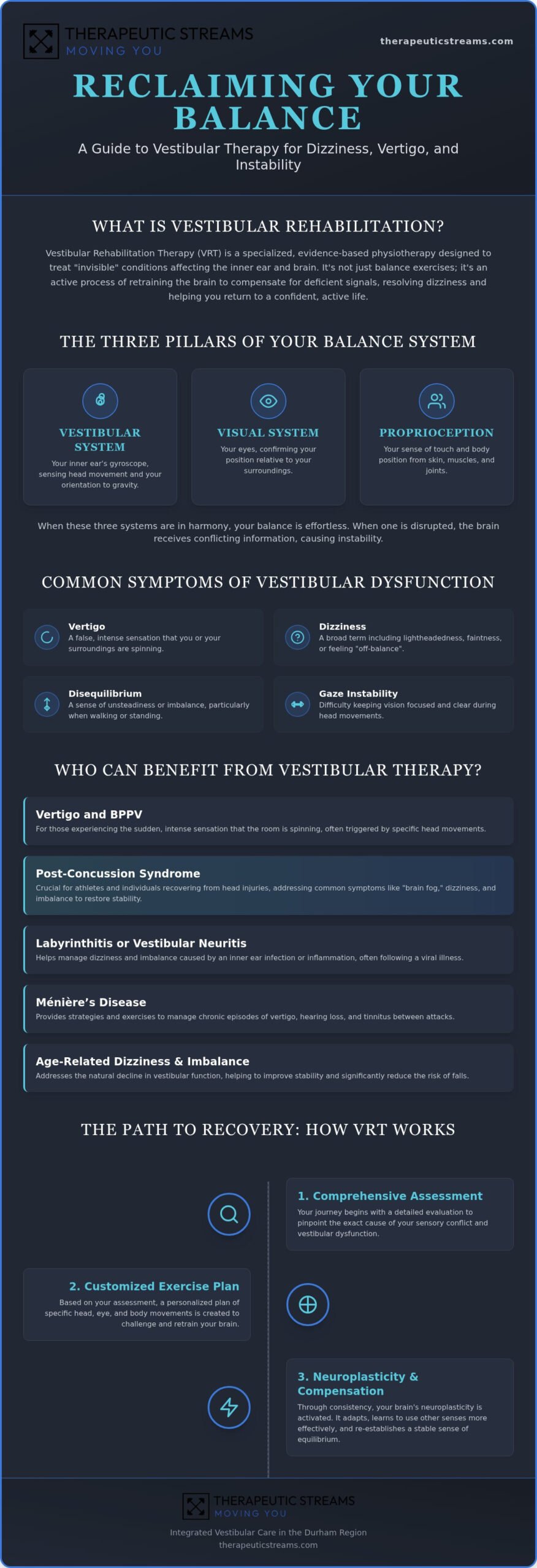
Tucked away in your inner ear is the vestibular system, a sophisticated set of canals and sensors that act as your body’s internal gyroscope. It senses head movement, orientation with respect to gravity, and motion. To maintain stability, this system works in constant coordination with your vision (what you see) and your proprioception (your sense of touch and body position). When these three systems are in harmony, your balance is effortless. When one is disrupted, the brain receives conflicting information, resulting in dizziness, vertigo, and instability. A key function of this system is the vestibulo-ocular reflex (VOR), which allows your eyes to stay focused on a target even when your head is moving.
Who Can Benefit from Vestibular Rehab in Whitby?
If you experience persistent dizziness or imbalance, you are a potential candidate for vestibular therapy. Our Whitby clinic commonly helps individuals with a range of conditions, including:
- Vertigo and BPPV: The sudden, intense sensation that you or your surroundings are spinning.
- Post-Concussion Syndrome: Dizziness, “brain fog,” and imbalance are common symptoms following a head injury.
- Labyrinthitis or Vestibular Neuritis: Dizziness caused by an inner ear infection or inflammation.
- Ménière’s Disease: A chronic condition causing episodes of vertigo, hearing loss, and tinnitus.
- Age-Related Dizziness and Imbalance: A decline in vestibular function that can increase the risk of falls.
We frequently work with local athletes in the Durham Region who need to recover their stability and spatial awareness after a sports-related head injury. Beyond the physical symptoms, we also recognize the significant emotional toll of balance issues. The constant fear of falling can lead to anxiety, a loss of confidence, and social withdrawal. Vestibular therapy addresses both the physical and emotional aspects of recovery, empowering you to move with confidence again.
The Science of Equilibrium: How Your Inner Ear Controls Stability
To understand how vestibular therapy works, it helps to know what can go wrong inside the inner ear. The system is delicate, and even minor disruptions can have a major impact on your sense of balance. The brain’s incredible ability to adapt—a concept known as neuroplasticity—is the foundation upon which all vestibular rehabilitation is built.
One of the most common issues involves tiny calcium carbonate crystals called “otoconia.” These crystals are supposed to be in a specific part of your inner ear, but they can become dislodged and migrate into one of the semicircular canals. This is what causes Benign Paroxysmal Positional Vertigo (BPPV), where certain head movements trigger intense, brief episodes of spinning. In other cases, inflammation from a viral infection can damage the vestibular nerve (vestibular neuritis) or the entire labyrinth (labyrinthitis), disrupting the signals sent from the ear to the brain.
These are examples of peripheral vestibular issues, meaning the problem originates in the inner ear. Central issues, on the other hand, stem from the brain itself, such as after a concussion or stroke. Vestibular therapy is effective for both, as it focuses on helping the brain relearn how to interpret and process sensory information correctly.
Common Symptoms of Vestibular Dysfunction
While everyone’s experience is unique, vestibular disorders share a common set of symptoms. It’s important to understand the distinctions between them:
- Vertigo: A false sensation of rotational movement, often described as the room spinning.
- Dizziness: A broader term that can include lightheadedness, faintness, or a feeling of being “off-balance.”
- Disequilibrium: A sense of unsteadiness or imbalance, particularly when walking.
- Gaze Instability: Difficulty keeping your eyes focused during head movements, which can make vision blurry.
Secondary symptoms like “brain fog,” nausea, fatigue, and difficulty concentrating are also extremely common. This is because the brain is working overtime to try and make sense of the confusing signals it’s receiving, which is mentally and physically exhausting.
Why Your Brain Gets Confused
Sensory conflict is at the heart of most vestibular symptoms. Imagine you are sitting in a stationary car, and the car next to you starts to move. For a split second, your eyes tell your brain you’re moving, but your inner ear and body say you’re still. That brief moment of confusion is a mild form of sensory conflict. For someone with a vestibular disorder, this conflict is constant.
After an injury or due to a disorder, the brain may start to “down-weight” the faulty signals from the inner ear and rely more heavily on vision or proprioception. This can work as a short-term fix, but it often leads to other problems, like feeling disoriented in visually busy environments (like a grocery store) or unsteady on uneven ground. Vestibular therapy helps the brain re-prioritize and reintegrate the correct signals, restoring a more natural and automatic sense of balance.
Common Conditions Treated: From BPPV to Concussion Management
Vestibular rehabilitation is a highly effective treatment for a wide range of conditions that cause dizziness and imbalance. At our Whitby clinic, we develop customized programs to address the specific source of your symptoms, moving beyond a one-size-fits-all approach.
- Benign Paroxysmal Positional Vertigo (BPPV): As the most common cause of vertigo, BPPV is caused by displaced inner ear crystals. It is highly treatable with specific canalith repositioning procedures, which use gravity to guide the crystals back to their proper place.
- Concussion Recovery: Vestibular rehabilitation is a cornerstone of modern concussion management. It helps resolve the dizziness, gaze instability, and imbalance that often persist long after the initial injury.
- Vestibular Migraine: For individuals who experience dizziness or vertigo as part of their migraine symptoms, VRT can help reduce the sensitivity of the vestibular system and improve tolerance to triggers.
- Ménière’s Disease: While VRT cannot cure Ménière’s, it is invaluable for helping patients manage their balance between episodes and recover function after a vertigo attack.
Specialized Care for Post-Concussion Syndrome
The old advice to simply “rest in a dark room” after a concussion is now considered outdated for many cases. Research has shown that a gradual, active approach to recovery is often more effective. For athletes in Durham and across the region, active vestibular rehab can significantly speed up recovery times by addressing the underlying sensory processing issues.
Often, post-concussion symptoms are complicated by issues in the cervical spine (the neck). A condition known as cervicogenic dizziness occurs when neck problems send incorrect orientation signals to the brain. This is a perfect example of why an integrated approach is so important. By combining vestibular therapy with expert chiropractic care, we can address both the inner ear and the musculoskeletal components of your dizziness. Learn more about our approach in our guide to evidence-based chiropractic care in Whitby.
Age-Related Balance Decline and Fall Prevention
As we age, the vestibular system, like other parts of the body, can become less efficient. This natural decline can lead to a greater risk of falls, which can have devastating consequences for older adults. Proactive balance training is one of the most effective ways to mitigate this risk.
For seniors in the Whitby community, vestibular therapy offers a powerful tool for maintaining independence and confidence. By improving gaze stability, strengthening balance reactions, and enhancing overall fitness, VRT can significantly reduce the risk of debilitating falls and help you stay active and engaged in the life you love.
What to Expect During Your Vestibular Rehabilitation Journey
Embarking on a vestibular rehabilitation program can feel intimidating, especially when you’re already feeling unwell. We believe in a transparent, step-by-step process that puts you in control of your recovery. Your journey at Therapeutic Streams is a collaborative partnership between you and your therapist, designed to uncover the root cause of your symptoms and build a clear path forward.
The process begins with a comprehensive initial assessment where we take a deep dive into your medical history, the nature of your symptoms, and your specific triggers. We then move to diagnostic testing, using specialized movements and technologies to observe your eye-tracking, balance, and gait. This allows us to pinpoint the source of the problem. From there, we develop a completely customized treatment plan, because we know that a “one-size-fits-all” approach fails in vestibular care. A crucial component of your success will be your home exercise program, as daily practice is essential for driving the neuroplastic changes that lead to lasting recovery.
Step 1: The Clinical Assessment
Your first visit will be a dedicated one-on-one session with a specially trained therapist. We’ll listen carefully to your story to understand how your symptoms are affecting your life. The physical assessment may include specific diagnostic tests like the Dix-Hallpike manoeuvre, a gentle and controlled test used to confirm BPPV. Our goal is not just to mask your symptoms but to find the precise source of the spin, instability, or fogginess so we can treat it directly.
Step 2: Habituation and Adaptation Exercises
Based on your assessment, your treatment will focus on a few key principles. Adaptation exercises are designed to help your brain adjust to permanent changes in your vestibular system by recalibrating the vestibulo-ocular reflex (VOR). This helps improve gaze stability and reduce blurriness during head movements. Habituation exercises involve repeated, controlled exposure to the movements or visual stimuli that trigger your dizziness. Over time, this systematic exposure helps desensitize your brain, reducing the intensity of your symptoms.
It is important to know that these exercises may temporarily increase your symptoms. This is a normal and expected part of the healing process—it’s a sign that your brain is being challenged to adapt. Your therapist will guide you on how to manage this and progress at a pace that is right for you.
Step 3: Balance and Gait Re-training
The final piece of the puzzle is retraining your balance and walking patterns. In the controlled environment of our clinic, we will use dynamic movements and exercises to challenge your stability. This helps your brain learn to better integrate information from your vestibular system, your eyes, and your body’s sense of position.
As you progress, we will transition these skills from simple clinical exercises to real-world activities. This might mean practicing walking on uneven surfaces, navigating obstacles, or performing tasks that mimic your daily life or sport, like walking on the grass at Iroquois Park or turning your head while shopping. The ultimate goal is to restore your confidence in any environment.
Ready to start your recovery? Book your vestibular assessment at Therapeutic Streams today.
Why Choose Integrated Vestibular Care in the Durham Region?
Vestibular disorders are rarely isolated problems. They often overlap with neck pain, stiffness, headaches, or general deconditioning from a newly sedentary lifestyle. This is why a team-based, integrated approach to care offers a significant advantage for a complete and lasting recovery.
At Therapeutic Streams, your vestibular therapist works collaboratively with our on-site chiropractors and registered massage therapists. If your assessment reveals that neck stiffness is contributing to your dizziness (cervicogenic dizziness), a chiropractor can perform adjustments to restore proper movement. If muscle tension is a factor, massage therapy can provide relief and support your rehabilitation. This multidisciplinary model ensures all contributing factors are addressed under one roof.
We are committed to providing evidence-based, assessment-driven results for residents of Whitby, Ajax, Oshawa, and the surrounding Durham Region. With the convenience of online booking and a central location, accessing expert care has never been easier.
The Intersection of Neck Health and Balance
As mentioned, cervicogenic dizziness is a condition where the neck is the primary source of balance issues. Receptors in the joints and muscles of your upper neck send important information to your brain about head position. If these joints are stiff or the muscles are tight, they can send faulty signals that conflict with information from your eyes and inner ears, resulting in dizziness.
An integrated assessment can determine if your neck is a contributing factor. For many patients, especially those recovering from a concussion or whiplash in a motor vehicle accident, combining vestibular rehab with chiropractic adjustments and physiotherapy provides a more comprehensive and effective path to recovery.
Personalized Care for the Durham Community
We believe that true healing happens in a focused, supportive environment. That’s why all our vestibular therapy sessions are conducted one-on-one in a private treatment room, away from the distractions of a crowded gym. This allows your therapist to give you their undivided attention, carefully monitoring your progress and adjusting your program in real-time.
Our team is deeply invested in the health of our community, from helping local athletes get back in the game to empowering seniors to live safely and confidently. We are passionate about being your expert guides on the journey from imbalance to stability.
Discover the difference that integrated care makes. Visit Therapeutic Streams to learn more.
Frequently Asked Questions About Vestibular Therapy
- How long does vestibular therapy take to work?
The timeline varies depending on the individual and the condition. For a straightforward case of BPPV, relief can often be achieved in just 1-3 sessions. For more chronic or complex conditions like post-concussion syndrome, rehabilitation may take several weeks to a few months of consistent effort with a home exercise program. - Will vestibular rehabilitation make me feel more dizzy at first?
It is common to experience a temporary, mild increase in your symptoms during or immediately after your exercises. This is a normal part of the process and indicates that you are challenging your brain to adapt. Your therapist will teach you how to manage these symptoms and ensure you are working at an appropriate level. - Can vestibular therapy help with long-term concussion symptoms?
Absolutely. Vestibular therapy is a primary treatment for persistent post-concussion symptoms like dizziness, brain fog, and imbalance. By retraining the brain’s ability to process sensory information, VRT can significantly improve function and quality of life, even months or years after the initial injury. - Do I need a doctor’s referral for vestibular rehab in Ontario?
No, you do not need a doctor’s referral to see a physiotherapist for vestibular rehabilitation in Ontario. You can book an appointment directly. However, some extended health insurance plans may require a referral for reimbursement, so it’s always best to check with your provider. - Is vestibular therapy covered by my extended health insurance?
Vestibular therapy is a form of physiotherapy. If your extended health benefits plan includes coverage for physiotherapy, then your vestibular rehabilitation sessions will likely be covered. We recommend checking the details of your specific plan. - Can I drive myself home after my first vestibular assessment?
Because the assessment may involve movements designed to provoke your symptoms, it is possible you may feel dizzy or “off” afterward. We strongly recommend arranging for someone to drive you home from your first appointment as a precaution. - How is vestibular therapy different from regular physiotherapy?
While both are provided by physiotherapists, vestibular therapy is a highly specialized area that requires extensive post-graduate training. A vestibular therapist uses specific diagnostic tests and treatment techniques to address the inner ear and central nervous system, which are not typically part of a general physiotherapy practice. - What should I wear to my vestibular rehabilitation appointment?
Please wear comfortable, loose-fitting clothing that allows you to move freely. You will be performing various movements involving your head, neck, and body, so athletic wear is a good choice. It is also best to avoid wearing strong perfumes or scents, as this can sometimes be a trigger for those with vestibular sensitivity.